Trump’s Iran Standoff: Caught Between War and Capitulation
Donald Trump is in a precarious position regarding Iran, caught between the costly option of war and the concession-heavy path of negotiation. Military leaders warn of immense casualties in a ground invasion, while diplomatic routes require accepting Iran's nuclear ambitions and regional influence. This standoff highlights the difficult choices in managing international conflict.

Trump’s Iran Standoff: Caught Between War and Capitulation
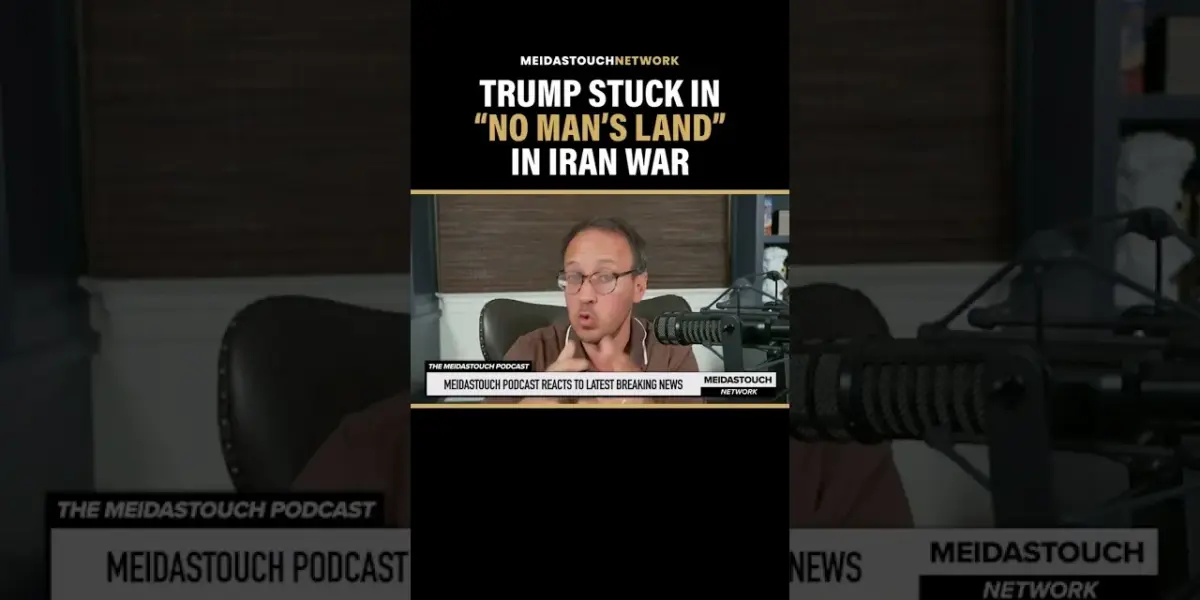
Donald Trump finds himself in a difficult spot regarding potential conflict with Iran. It’s like a tennis player stuck in the middle of the court, unsure whether to rush the net or retreat to the baseline. This “no man’s land” means any move he makes could have serious consequences.
One path is a full-scale ground invasion of Iran. Military leaders believe they could win, but at an immense cost.
This would likely result in tens of thousands, possibly hundreds of thousands, of American soldier deaths. The speaker calls this scenario “unlawful, unjust, catastrophic,” and potentially worse than World War II or Vietnam in terms of American casualties.
The military has a plan for such an invasion, outlining the steps and the expected heavy losses. However, this is not a path Trump has chosen to commit to. He is avoiding sending ground troops into a direct confrontation, which military experts suggest could lead to a devastating conflict.
The other option is negotiation. But negotiating with Iran on its current terms means accepting significant concessions.
Iran is unlikely to abandon its nuclear program or stop supporting groups like Hezbollah and the Houthis. Trump would have to agree to Iran enriching uranium, potentially allowing them to control key waterways, and accepting their regional influence.
Trying to achieve through negotiation what cannot be won on the battlefield is a risky strategy. The speaker suggests Trump might be accustomed to dealing with people who bend to his will, expecting to trick others. However, the situation with Iran is far more complex than domestic dealings.
Some believe Trump’s strategy is to delay the inevitable, perhaps through short-term ceasefires or by hoping other countries will step in. He might be hoping that by posting on social media or extending deadlines, the crisis will fade or be resolved by others. This approach mirrors tactics used for other complex issues, like healthcare plans, where prolonged discussion can sometimes lead to public fatigue and a lack of resolution.
There’s also the possibility that Gulf countries or even European and Asian nations facing fuel shortages could broker a deal. In such a scenario, Trump could then step in and claim credit for finding a solution. This strategy relies on external factors and prolonged delays rather than direct action or clear diplomatic breakthroughs.
Why This Matters
The stakes in this situation are incredibly high. A military conflict with Iran could destabilize the entire region and have global economic repercussions, especially concerning oil supplies. A failed negotiation could embolden Iran and lead to further escalation down the line.
Trump’s current position leaves him vulnerable. He is avoiding the immense human cost of war while also not securing a favorable diplomatic outcome. This indecision or strategic delay could ultimately lead to worse consequences than a decisive action, whether military or diplomatic.
The speaker’s strong opinion is that the entire situation leading to this point is flawed. They believe the US was drawn into the conflict by Israeli Prime Minister Netanyahu and that the war itself is fundamentally wrong. This perspective highlights a deep skepticism about the motivations and the righteousness of potential military engagement.
Implications and Future Outlook
This standoff reflects a broader challenge in international relations: how to manage hostile states without resorting to costly wars or accepting unacceptable concessions. Trump’s approach suggests a preference for avoiding direct confrontation and seeking unconventional exits, possibly through prolonged delays or external interventions.
The effectiveness of such tactics remains uncertain. History shows that prolonged standoffs can sometimes lead to miscalculation or accidental escalation. Alternatively, they can provide space for diplomacy to eventually work, especially if other global powers become involved.
The world is watching to see if Trump can navigate this complex situation. His ability to find a resolution without triggering a war or making major concessions will be a defining aspect of his foreign policy approach in this critical region. The outcome will significantly impact global security and energy markets.
Historical Context
Tensions between the United States and Iran have a long history, dating back to the 1953 coup and intensifying after the 1979 Iranian Revolution. Decades of sanctions, proxy conflicts, and nuclear program disputes have created a deeply complex relationship.
Previous administrations have pursued various strategies, including direct confrontation, sanctions, and diplomatic engagement, with mixed results. The Iran nuclear deal, known as the JCPOA, was an attempt at diplomatic resolution that the Trump administration later withdrew from. This withdrawal added another layer of complexity to current efforts.
The current situation echoes past challenges where the US has sought to contain Iran’s influence and nuclear ambitions. The question of how to achieve these goals without triggering a wider conflict has consistently plagued policymakers.
The speaker’s analogy of “no man’s land” is particularly apt given the history of stalled negotiations and the ever-present threat of military action. Both sides have powerful incentives to avoid a full-blown war, but their core demands remain largely incompatible, creating a dangerous stalemate.
Source: 🚨 Trump STUCK in NO MAN’S LAND in IRAN WAR (YouTube)

Related Articles
US Policy Flip Fuels Global Market Fears
Recent U.S. policy shifts on Russian oil sanctions and Iran negotiations have created global market instability. This uncertainty is impacting energy prices, business operations, and consumer confidence worldwide. The reliability of American diplomatic commitments is under scrutiny as the world watches for a clearer strategy.

Democrats Attack Trump’s Picks Amidst Global Turmoil
Democratic lawmakers are voicing strong concerns about President Trump's appointments, particularly Cash Patel, questioning his fitness and raising national security implications. Republicans largely defend the appointees, focusing on their own legislative work. The exchanges reveal a deep partisan divide on leadership and accountability.


US Stocks Hit All-Time Highs Amid Geopolitical Uncertainty
US stocks are surging towards all-time highs, fueled by investor greed despite significant holdings in cash. Geopolitical tensions are influencing oil prices and shipping stocks, while the DeFi sector grapples with recent exploits. Bitcoin remains neutral, with key levels to watch for potential direction.