Lisbon Residents Priced Out: A Housing Crisis Erodes Democracy
Lisbon's charm is driving out its residents as housing costs skyrocket. Full-time workers struggle to afford rent, leading to displacement and illegal settlements. Experts warn this crisis, fueled by tourism and luxury development, is eroding public trust and threatening democracy.

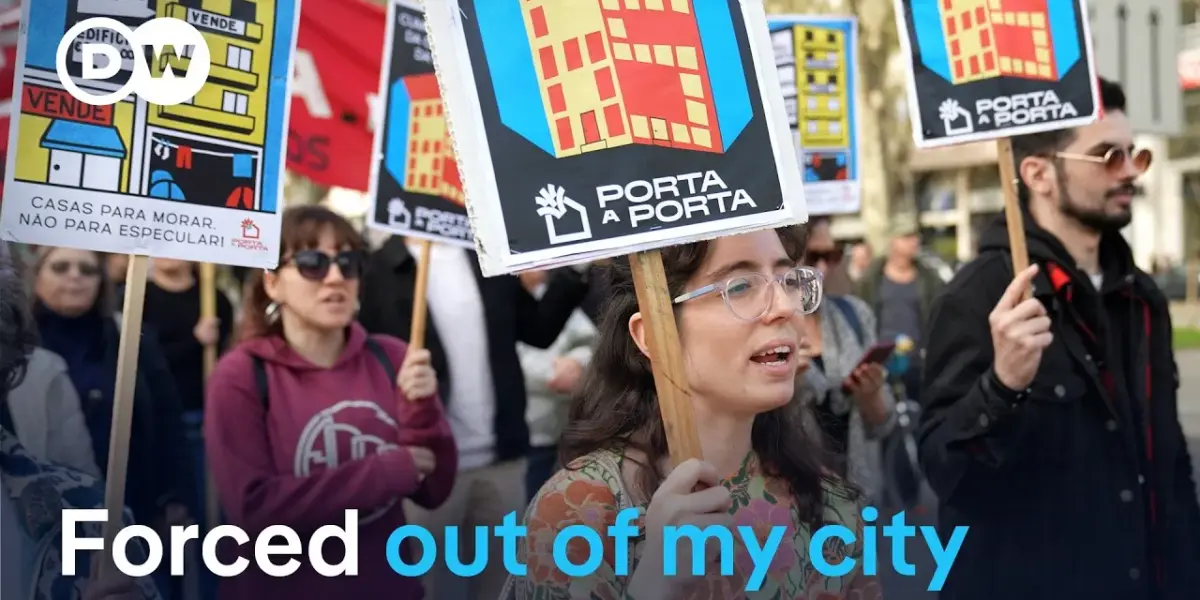
Lisbon’s Dream Fades as Housing Costs Soar
Lisbon, a city famed for its beaches, sunshine, and quality of life, is becoming a distant dream for many of its own residents. The very desirability that draws people to Portugal’s capital is now pushing long-time inhabitants out. People who work full-time jobs can no longer afford to live in the city, leading to a growing housing crisis that experts warn is more than just an economic issue.
Many are being forced from their neighborhoods and even the city itself. Some cannot afford even a single room and end up in illegal settlements, despite holding down jobs.
They simply want a home they can pay for with their salary. Meanwhile, the luxury property market is booming, highlighting a stark contrast.
The Human Cost of Rising Rents
George, a 43-year-old marketing professional from Brazil, is one of many facing this reality. After his rent increased by nearly 20%, he was forced to leave his home.
For the past six months, he has searched daily for a new apartment, but finding anything affordable is a significant challenge. He feels pushed out of Lisbon, as if the city itself is rejecting him.
George’s current situation is a temporary fix, living with friends until he can find a place of his own. He earns €2,000 net per month, well above the Portuguese average, yet a single room now costs between €700 and €800. This is the price an entire apartment used to command when he first arrived in Portugal in 2017.
Tourism and Digital Nomads Fueling the Crisis
Since 2020, rents in Lisbon have jumped by a staggering 42%. A major factor is the city’s rise as a top tourist destination, attracting around 7 million visitors in 2025 alone.
Neighborhoods once home to working-class families, like Al Fama, now see many apartments converted into short-term holiday rentals. This trend displaces long-term residents.
The influx of digital nomads has further intensified the problem. While experts suggest spending no more than 30% of income on rent, the reality in Lisbon is far different. The average person now spends around 116% of their income on housing, a figure significantly higher than in cities like Berlin (40%) or London (75%).
Resistance and Demands for Action
In response to the crisis, thousands gathered for a major demonstration in central Lisbon. Many expressed their inability to afford housing, whether buying or renting. One protester, living on a €1,000 pension, faces €550 in rent, while younger individuals express frustration at potentially living with parents indefinitely.
George is actively involved with Porta Porta, an organization founded in 2023 to advocate for the right to housing. They aim to pressure the government into treating housing as a national emergency, not just a market commodity. Their goal is to ensure housing is recognized as a fundamental right.
The Luxury Market and Shifting Blame
Meanwhile, the high end of the market thrives. Anne Brightman, an American entrepreneur, runs a successful real estate company specializing in luxury properties.
Her listings, like a €1.4 million loft, attract international buyers from Europe, the U.S., and Brazil. These properties are often seen as investments with potential for profit.
Brightman believes the core issue lies not with foreign buyers but with the government’s approach to affordable housing. She points to bureaucratic hurdles and slow processes that developers face. Cutting red tape and making affordable housing construction easier are key to her perspective.
A History of Housing Policy and Its Consequences
Portugal’s social housing provision is among the lowest in Europe, making up only about 2% of the housing stock, compared to countries like the Netherlands or Austria. This situation is partly rooted in history. After World War II, rent freezes for decades discouraged property maintenance.
The liberalization of the housing market in 2012 abolished most permanent rental contracts and actively encouraged foreign investment. While this revitalized some downtown areas, turning dilapidated buildings into vibrant spaces, it has come at a significant cost to affordability.
The Growing Threat to Democracy
Helena Roseta, a key figure in drafting Portugal’s 1976 constitution, emphasizes the right to housing. She outlines four main tools for addressing the crisis: building public housing, using tax incentives, subsidizing rents or land, and regulating the market through law. She warns that a lack of political response to such a basic need erodes public trust.
When a system fails to address fundamental problems like housing, democracy itself can begin to weaken. This erosion of trust is a serious consequence of the ongoing crisis. The feeling that the system is not working for ordinary people can lead to broader societal instability.
Illegal Settlements and Devastating Evictions
Maria, who moved to Portugal from South America five years ago seeking a better future for her daughters, lives in a tin shack settlement called Talluda, just outside Lisbon. Several hundred people reside here, many without basic utilities like running water or electricity. Despite working as a cleaner and earning Portugal’s minimum wage of around €800 net per month, she cannot afford even a two-bedroom apartment.
Maria states she doesn’t want favors, only a home she can afford through her hard work. Instead of facing homelessness, she built a makeshift home.
However, her dwelling has been demolished multiple times, forcing her to rebuild. She emphasizes that destroying homes destroys lives, forcing residents to start over.
A Call for Fundamental Change
George is moving again, not into a new apartment, but to gather the rest of his belongings to stay with friends. He hopes for real change that benefits everyone facing this struggle, not just in Lisbon but globally. The denial of a fundamental right—the right to a home and to live with dignity—is at the heart of the issue.
The situation in Lisbon is no longer just about expensive housing. It is about whether the city can remain a place for the people who live and work there. The upcoming months will be crucial in determining what actions the government will take to address this deepening crisis.
Source: Priced out of Lisbon: When a full-time job isn't enough | DW Reporter (YouTube)

Related Articles


LA Exodus Accelerates: Home Prices Dip Amidst Population Loss
Los Angeles County is experiencing the largest population exodus in the U.S., losing 53,000 residents in 2025 alone. This migration is driven by high housing costs, with the typical home price at $878,000. Amidst this exodus, home prices in LA are beginning to decline, potentially creating buying opportunities.


Housing Crisis Deepens: Why Local Rules Hamper Building
America faces a severe housing shortage, preventing a generation from achieving homeownership and independence. Experts identify restrictive zoning and complex development rules at the local level as major roadblocks. Solutions likely involve state and local governments reforming land use policies to allow for more diverse housing types.


Zoning Laws Block Working Families From American Dream
Restrictive zoning laws are preventing working families from accessing affordable housing, hindering their ability to live near jobs and opportunities. Experts argue that these hyper-local regulations, rather than federal policies, are the primary driver of the housing crisis. Emerging reforms in states like Montana and Virginia offer hope for creating more inclusive communities.