US-Iran Tensions Escalate Amid Ceasefire Confusion, Naval Showdown
Tensions between the U.S. and Iran are escalating as a critical ceasefire deadline approaches with uncertainty surrounding potential peace talks. A recent naval confrontation saw U.S. Marines seize an Iranian-flagged ship in the Gulf of Oman. Meanwhile, new polling indicates a majority of Americans disapprove of the President's handling of the situation.


US-Iran Tensions Flare as Ceasefire Uncertainty Looms
Confusion and tension are mounting between the United States and Iran as a critical ceasefire deadline approaches. Doubts linger over whether peace talks will even materialize to forge a new deal. President Trump has indicated that J.D.
Vance is prepared for negotiations, but Iran has yet to offer a firm commitment. This diplomatic uncertainty unfolds against a backdrop of dramatic confrontations at sea, with U.S. Marines recently seizing an Iranian-flagged ship that allegedly ignored warnings. New polling also suggests growing pressure on the President to find a resolution to the ongoing conflict.
Naval Standoff in the Gulf of Oman
A tense naval incident occurred in the Gulf of Oman, highlighting the volatile situation in the region. U.S. forces engaged an Iranian-flagged cargo ship, identified as the Tusca, which was operating under U.S. sanctions.
According to CENTCOM, the U.S. Navy issued warning messages for six hours before taking disabling action against the ship’s engine. Nighttime footage captured U.S. Marines approaching the vessel by helicopter, rappelling down, and taking control.
U.S. officials stated that this action was part of enforcing a naval blockade, which they estimate costs the Iranian regime approximately $435 million per day. This confrontation follows Iran’s reversal of a pledge to reopen the Strait of Hormuz, after firing on two European ships over the weekend.
The U.S. destroyer involved in the incident reportedly warned the Tusca, “Vacate your engine room. We’re prepared to subject you to disabling fire.”
Peace Talks in Doubt, Ceasefire Extension Unlikely
The prospect of peace talks, reportedly set to be hosted by Pakistan, remains uncertain. President Trump has stated that Vice President Vance would lead a U.S. delegation.
However, a high-ranking Iranian official has indicated that negotiations will not occur under threat. President Trump himself expressed in a recent interview that he is “highly unlikely to extend the truce,” adding, “Maybe I won’t extend it, but the blockade is going to remain.”
Bobby Ghosh, a geopolitical analyst, noted that while Pakistan still expects the ceasefire to be extended and talks to proceed, both sides desire an end to the conflict. Iran has faced significant pressure, and the U.S. President is dealing with declining popularity. Ghosh emphasized that both nations need a face-saving exit, which can only be achieved through actual negotiations.
Internal Divisions and Public Opinion
Reports suggest internal divisions within the Iranian regime regarding the ongoing conflict. Sources indicate that delegations visiting Islamabad last week represented differing viewpoints, with a hardline military faction and a more moderate political side, potentially including the foreign minister and president, presenting separate stances. Colonel Steve Warren, an NBC News military analyst, explained that such divisions are expected after a significant blow to leadership, especially when a regime is trying to reorganize amidst a bloody war.
Meanwhile, new polling indicates that two-thirds of Americans disapprove of the President’s handling of Iran. The economic impact was felt as oil prices rose to around $89 a barrel, and stock markets closed lower, with the NASDAQ ending a 13-day streak of gains.
Nuclear Concerns and Strategic Messaging
The underlying reason for the U.S. involvement, as stated by the President, is to prevent Iran from acquiring nuclear weapons. However, recent reporting highlights the complexity of this issue.
U.S. bombs may not be able to penetrate new, well-protected sites like Pickax Mountain, where enriched uranium could be stored. Colonel Warren described the challenge, stating that continued bombing doesn’t guarantee the uranium is out of play; only obtaining the material directly would provide certainty.
He added that a ground operation to secure the nearly 1,000 pounds of uranium, located in two separate sites deep within the country, would be extremely difficult. Given the resources and risks involved in a previous operation to rescue a single downed pilot, securing the uranium would present a far greater challenge.
Other Global Developments
In other international news, outrage has erupted after an Israeli soldier was photographed appearing to damage a statue of Jesus with a sledgehammer in the Christian village of Debel, southern Lebanon. The Israeli military confirmed the photo’s authenticity and stated the soldier’s conduct was inconsistent with expected values.
U.S. Ambassador Mike Huckabee called for swift and severe consequences. Second-round ceasefire talks between Israel and Lebanon were expected later in the week.
Tragically, a deadly shooting occurred at a popular tourist spot near Mexico City, where gunfire erupted at a historic pyramid, resulting in at least one death and six injuries. A Canadian woman was killed, and the shooter died by suicide. Officials noted that the site, which draws over a million visitors annually, does not have explicit bans on weapons, and security screenings had reportedly been reduced in recent years.
Domestically, air travel experienced several alarming incidents. In Nashville, two jets narrowly avoided a collision due to apparent confusion on air traffic control, with pilots taking evasive action based on onboard collision avoidance systems. Separately, bomb scares caused panic at airports in Pittsburgh and Denver, leading to passenger evacuations via emergency slides, though no dangerous materials were ultimately found.
Looking Ahead
As the ceasefire deadline looms, all eyes remain on Pakistan, where mediators hope for a breakthrough. The coming days will reveal whether diplomatic channels can reopen or if the conflict will escalate further. The effectiveness of ongoing U.S. naval actions and Iran’s response will be critical indicators of the path forward.
Source: Top Story with Tom Llamas – April 20 | NBC News NOW (YouTube)

Related Articles

Pakistan Steps Up as Global Peacemaker Amidst Rising Domestic Anger
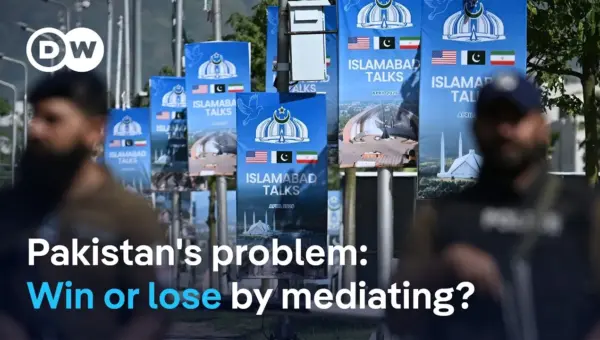
Pakistan is balancing its role as a key mediator in the U.S.-Iran conflict with rising domestic anger over American actions against Iran. While hosting crucial peace talks in Islamabad, the nation faces internal pressure and concerns about sectarian violence. This dual role highlights Pakistan's strategic importance and its complex relationship with regional and global powers.

Trump Unlikely to Extend Iran Ceasefire Amid Rising Tensions
President Trump is unlikely to extend the current ceasefire with Iran as a critical deadline approaches. Tensions remain high in the Strait of Hormuz, with a U.S. blockade in effect and recent naval encounters. Diplomatic efforts continue in Pakistan, focusing on reopening the vital waterway amidst concerns over Iran's nuclear program and regional stability.


Lebanon Warily Watches Ceasefire, Hopes for Lasting Peace
Four days into a ceasefire, Lebanon cautiously welcomes the return to normalcy but remains deeply distrustful of its longevity. The proximity to Israel fuels apprehension, despite a diplomatic meeting scheduled for Thursday in Washington D.C. offering a glimmer of hope for lasting peace.