Belgium’s Survival: A Nation Forged in Conflict
Belgium's existence has been a constant struggle, shaped by language divisions and the ambitions of its powerful neighbors. Despite internal tensions and external threats, the nation has survived through a combination of strategic alliances and the collective will of its people to remain united.

Belgium’s Survival: A Nation Forged in Conflict
Most Americans, like the creator of the “Why Belgium Exists” video, know very little about Belgium. It’s a name heard in passing, a place on a map, but its history and the very reasons for its existence remain largely unknown.
This lack of awareness highlights a gap in typical U.S. education, where European history often takes a backseat. This analysis digs into the surprising and often tumultuous journey of Belgium’s formation and survival, drawing insights from the video’s exploration.
A Divided Land’s Struggle for Identity
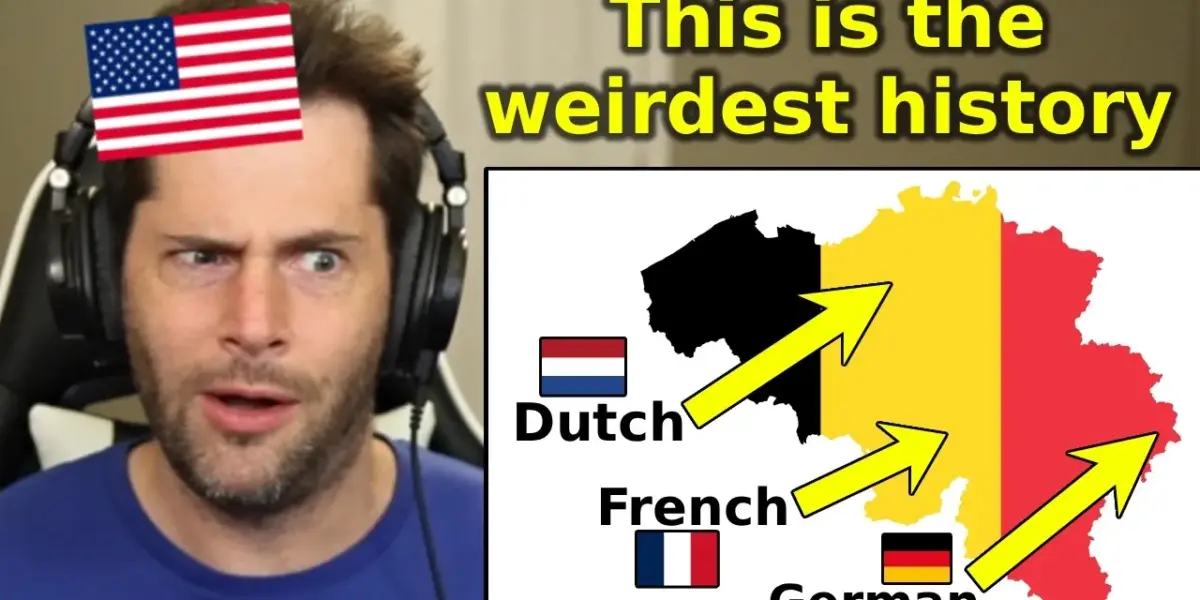
Belgium, a nation squeezed between France, Germany, and the Netherlands, faces a unique challenge: its population is split by language. People speak French, German, and Dutch, a linguistic division that has, from the country’s inception, led others to question its unity and even its right to exist. The video points out that Belgium has often had to “justify its own existence,” a concept quite foreign to many, especially those in the U.S. where such internal divisions are less pronounced on a national scale.
The very foundation of Belgium is tied to the aftermath of the Napoleonic Wars. Following these conflicts, the Austrian Netherlands was absorbed into the newly formed United Kingdom of the Netherlands.
The Dutch King, William I, a Protestant, showed little regard for the rights of the Catholic population in the south. He heavily utilized the South’s industrial economy to benefit the North and ruled with an iron fist, sparking widespread discontent.
Revolution and External Intervention
By 1830, this unhappiness boiled over into riots, and talk of secession filled the air. King William I attempted to suppress the revolt, but many of his southern troops defected.
When he sought help from the major European powers, they intervened not to help him, but to support the southern rebels. These “great powers” recognized the independence of a new country, which was to be called Belgium.
This newfound independence came with a strict condition: Belgium had to be a monarchy. The idea of a republic was firmly rejected by the powers that be.
The Belgians hoped for a king who represented them, someone local, Catholic, and not prone to despotic rule. However, they ended up with Leopold I, a German-speaking Protestant who, despite the hopes, did indeed expand the monarchy’s power.
A Buffer State and Lingering Threats
The creation of Belgium was not without external pressures. France had proposed dividing Belgium among its neighbors, a plan known as the Talleyrand plan.
This was rejected by Britain, partly due to its long-standing policy of preventing France from gaining too much power in the region. Britain viewed Belgium as a crucial buffer state, intended to limit the scale of any future wars between France and Russia.
King William I of the Netherlands initially refused to accept Belgium’s independence and even invaded in 1831. However, French forces intervened, driving the Dutch back.
By 1839, William finally accepted Belgian independence, and the Netherlands ceased its attempts to reclaim the southern territories. This was also the year Britain officially guaranteed Belgian neutrality, a significant promise of protection.
Internal Divisions: The Language Barrier
Almost immediately after its formation, tensions simmered between the Dutch-speaking Flemish in the north and the French-speaking Walloons in the south. French was established as the official language of the state, with an initial hope that the northern population would eventually adopt it. This proved to be a difficult, if not impossible, task, as language is deeply tied to culture and heritage.
The attempt to impose French on the Dutch-speaking population was met with resistance, and these tensions between the Flemish and Walloons have persisted. Despite these internal struggles, the threat of Belgium dissolving never fully materialized. Both linguistic groups largely agreed that remaining united within Belgium was a better option than the alternatives, which could have involved being absorbed by neighboring countries.
World Wars and Continued Survival
Belgium’s existence continued to be tested throughout the late 19th and early 20th centuries. French and German leaders still eyed parts of Belgian territory, but the British guarantee and concerns about upsetting the European balance of power kept these ambitions in check. The first major tangible threat came with World War I, when German troops invaded Belgium to advance into France.
Germany occupied much of Belgium during the war. Post-war, there were plans for parts of Belgium to be annexed by Germany, or for the country to be split into two states, with the northern Flemish part aligned with Germany.
These plans never came to fruition, largely because Germany lost the war. Belgium, as a victor, even gained territory from Germany, though its initial demands for land from Luxembourg and the neutral Dutch were much larger.
A second major threat emerged during World War II when Germany conquered Belgium again. Initially administered with a portion of northern France, Hitler had few concrete plans for the country.
Belgian collaborators hoped for Flanders to merge with the Netherlands, but Germany was too preoccupied with the war to enact such changes. By late 1944, Germany formally annexed Belgium, but this plan was thwarted as the country had already been liberated.
Why This Matters
Belgium’s history is a compelling case study in national survival against significant odds. Sandwiched between powerful nations with expansionist ambitions, and internally divided by language, Belgium’s continued existence is remarkable. It highlights how a nation’s identity can be forged not just through shared culture, but through the collective will to remain independent and the strategic interests of other global powers.
The story of Belgium highlights the complex interplay of geography, language, politics, and international relations in shaping a nation’s destiny. It is a reminder that the borders and existence of countries are often the result of prolonged struggles, compromises, and external guarantees, rather than simple historical inevitability. For Americans, it offers a valuable glimpse into a different facet of European history, one often overlooked in standard curricula.
Implications and Future Outlook
The enduring unity of Belgium, despite its deep linguistic divides, suggests that the benefits of independence and self-determination can sometimes outweigh internal differences. The nation’s ability to navigate external threats and internal pressures has created a unique national identity. While the linguistic tensions persist, the fundamental agreement that being united is better than the alternatives has been the bedrock of its survival.
Looking ahead, Belgium continues to grapple with its linguistic and regional identities within the framework of the European Union. The success of its continued existence will likely depend on its ability to manage these internal dynamics while maintaining its place on the international stage. The country’s future, much like its past, will be shaped by the ongoing negotiation between its diverse communities.
The historical narrative shows that Belgium’s existence is not a given, but a continuous achievement. The people of Belgium, through their collective will, have repeatedly chosen union over division, making it a nation that, against considerable odds, continues to stand. The next significant anniversary for Belgium is the upcoming Belgian National Day on July 21st, a day that celebrates its independence and national identity.
Source: American Reacts to "Why Belgium Exists" (YouTube)

Related Articles


Hungary’s Past Fuels Present Anti-Russian Sentiment
A journalist's personal connection to Hungary's 1956 Revolution highlights the nation's historical resistance to Moscow. Finding a revolutionary flag from the uprising serves as a reminder of Hungarians' long-standing desire for independence. This historical legacy continues to shape national identity and influence current geopolitical views.


Race Dictates US Immigration Policy, Critics Claim
Critics argue the Trump administration's immigration policies are racially motivated, citing actions like removing TPS from minority groups and favoring certain refugees. Supporters claim policies focus on national identity and economic benefit, not race. This debate reflects historical tensions over who belongs in America.


Ukraine’s Historical Narrative Challenges Russian Identity
A Ukrainian historian reveals how 17th and 18th-century intellectuals from Kyiv shaped early Russian historical narratives and national identity. The 'Synopsis,' a key textbook, placed Kyiv at the center of historical development. This challenges Russia's historical self-perception and highlights Ukraine's distinct intellectual heritage.