China’s Island Gambit Threatens US Security, Exposing Global Deception
China's strategic expansion across Pacific islands and alleged disinformation campaigns pose significant threats to U.S. national security. From the potential compromise of Diego Garcia to manufactured narratives surrounding military purges, Beijing's global ambitions are increasingly apparent.

Pacific Power Play: China’s Strategic Island Expansion Raises Alarms
The geopolitical landscape in the Indo-Pacific is becoming increasingly fraught with tension, as China’s strategic maneuvers on key islands threaten to undermine vital US national security interests. Recent developments highlight a disturbing pattern of Beijing leveraging diplomatic channels and economic influence to expand its reach, often with seemingly benign justifications that mask more ambitious military objectives.
The Chagos Islands: A UK-Mauritius Deal with Global Ramifications
A potential deal between the United Kingdom and Mauritius over the Chagos Islands has ignited significant controversy, primarily due to its implications for the strategically vital U.S. military base on Diego Garcia. British Prime Minister Keir Starmer’s government is reportedly moving forward with a plan that would transfer sovereignty of the islands to Mauritius, a government with perceived ties to the Chinese Communist Party (CCP). This move has drawn sharp criticism, with opponents arguing it could pave the way for the People’s Liberation Army (PLA) to lease an island adjacent to the joint U.S.-UK base. The sentiment from some observers is one of incredulity, likening the potential decision to self-sabotage. Former U.S. President Donald Trump has decried the deal as “an act of great stupidity.”
Cleo Pascal, a commentator, emphasizes the urgency of preventing this deal, suggesting that the UK government may be attempting to “slip it through” legislative channels. The call to action is clear: sustained public pressure is needed to ensure the deal is “killed once and for all.” The strategic importance of Diego Garcia cannot be overstated; it serves as a critical hub for U.S. military operations in the Indian Ocean. Allowing potential CCP influence in such close proximity is viewed by many as an unacceptable risk.
Micronesia’s New Runway: A Trojan Horse in the Pacific?
In a similar vein, China’s development of a new runway on the island of Woleai in the Federated States of Micronesia raises further concerns. While ostensibly for civilian use, the runway’s location—roughly halfway between China and Hawaii—is strategically significant. Critics argue that this infrastructure could easily be repurposed to support PLA aircraft and logistics in the event of a conflict, particularly over Taiwan. The U.S. has a special agreement with Micronesia that grants it rights of “strategic denial,” yet no apparent action has been taken to halt or even closely monitor this development. The lack of U.S. representation at the runway’s opening further fuels speculation about a passive approach to this growing threat.
Philippines’ Bold Stance and Shifting Dynamics
The Philippines has adopted a more confrontational posture towards Beijing, openly mocking Xi Jinping. A spokesperson for the Philippine Coast Guard, Jay Tarela, posted an image of himself presenting at a university, a subtle jab at Xi’s known aversion to being caricatured. This public defiance led to a formal complaint from the Chinese Foreign Ministry, summoning the Philippine ambassador. However, this friction is juxtaposed with a moment of cooperation: a joint rescue operation in the South China Sea following the sinking of a Singapore-flagged cargo ship. China dispatched vessels and aircraft, successfully rescuing 17 out of 21 Filipino crew members, though tragically, two lives were lost. This brief display of shared humanity was short-lived, as China soon accused a Philippine aircraft of intruding in the area, leading to the scrambling of naval and air units. This highlights the volatile and unpredictable nature of Sino-Philippine relations.
Global Scrutiny of China’s Environmental and Political Integrity
Beyond the immediate geopolitical concerns, China’s environmental impact and political dealings are also coming under intense scrutiny. A recent study revealed that China emits the equivalent of Australia’s annual carbon output every 12 days, casting doubt on the sincerity of its climate commitments and the praise it has received from international figures like Canadian Prime Minister Mark Carney.
Furthermore, Peru’s interim president, Dina Boluarte, is facing a scandal involving alleged secret meetings with Chinese businessmen, including Yang Johnny Gera and Ji Wu Xiao Dong. Videos have surfaced showing the president in clandestine meetings, one of which involved him wearing a hood. While Boluarte claims the meetings were for coordinating a friendship anniversary celebration and dismisses the allegations as a political smear campaign, the presence of individuals with alleged ties to illegal activities, like timber trafficking, has raised serious questions. Her apology was limited to her attire, not the meetings themselves, suggesting a potential undercurrent of impropriety.
Defensive Measures and Disinformation Campaigns
In response to growing security concerns, Poland has banned Chinese cars from some of its military bases, citing fears of data collection and surveillance. Israel has implemented similar measures. This defensive posture is understandable, particularly for Poland, given its history with authoritarian regimes.
Meanwhile, the narrative surrounding China is increasingly complicated by sophisticated disinformation campaigns. A left-wing activist group, Code Pink, is organizing a “community trip” to China, promising an unvarnished look at the country. However, critics argue that such state-sponsored tours are heavily curated and fail to provide an authentic view. The group’s co-founder’s marriage to a Shanghai-based billionaire allegedly linked to spreading CCP propaganda further fuels skepticism. This individual has also ignored a congressional subpoena regarding his China-funded activities, prompting calls to freeze his assets.
The U.S. is also taking steps to counter CCP influence. In Arizona, a proposal for a “foreign adversary fraud office” aims to pursue legal claims against CCP-affiliated companies. This proactive approach is seen as essential in combating what is described as a “slasher villain”-like persistence of CCP influence.
The Purge of General Zhang Youxia: A Fake Letter and Real Power Plays
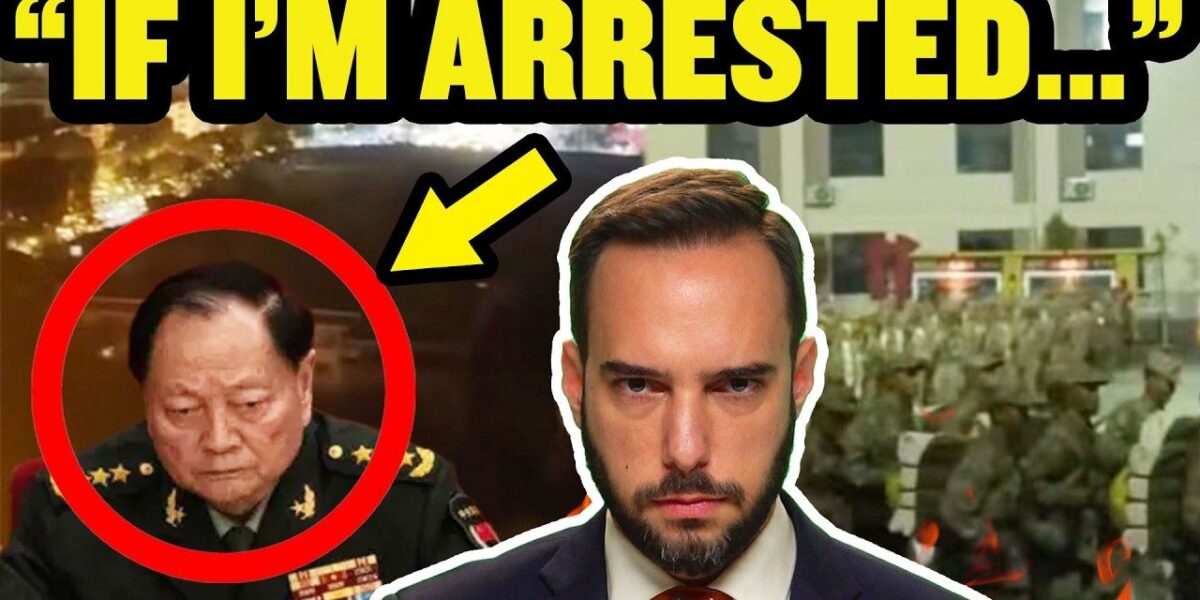
The most dramatic development, however, involves the recent purge of General Zhang Youxia, previously the second most powerful figure in China’s military. Rumors have swirled around his downfall, with speculation about his opposition to Xi Jinping’s consolidation of power and his alleged efforts to prevent an invasion of Taiwan. A supposed open letter attributed to Zhang, intended for release upon his arrest, has circulated widely. This letter portrays Zhang as a heroic figure, anti-corruption, and a proponent of democratic reform within the military, even urging Xi to step down and reconsider the U.S. as an adversary.
However, the authenticity of this letter is highly dubious. Analysts point out that such a narrative is “too good to be true” and serves to cast Xi Jinping as the sole villain, potentially absolving the CCP as a whole. The letter’s content, which paints Zhang as a principled opponent of Xi’s policies, is seen as a strategic fabrication designed to sow division and mislead international perceptions. The assertion that a top general within the CCP could harbor such views and survive prior purges without consequence is considered highly improbable, especially given the party’s history. The warning is clear: such narratives are often part of a disinformation strategy to shift blame from the system to an individual, thereby preserving the CCP’s long-term influence and ability to secure foreign investment.
Why This Matters
The confluence of these events—strategic island expansion, diplomatic provocations, environmental discrepancies, political scandals, and sophisticated disinformation campaigns—paints a complex picture of China’s global ambitions and the challenges it presents. The potential vulnerability of critical U.S. military installations like Diego Garcia, coupled with China’s growing influence in strategically vital Pacific regions, demands a robust and vigilant response. The manipulation of information, exemplified by the supposed letter from General Zhang, underscores the need for critical media consumption and a deep understanding of the CCP’s tactics. Ultimately, the pursuit of a truly free China, rather than relying on internal reforms that may be mere facade, remains the most sustainable path to global stability and security.
Implications, Trends, and Future Outlook
The trend of China leveraging its economic power to gain strategic footholds in critical geographic locations is likely to continue. This expansionist strategy, often cloaked in civilian infrastructure projects or diplomatic overtures, poses a significant long-term challenge to U.S. and allied security. The increasing assertiveness of regional players like the Philippines, alongside defensive measures taken by countries like Poland and Israel, suggests a growing global awareness and resistance to Beijing’s influence.
The future outlook will likely involve an intensified information war, where distinguishing truth from CCP-driven disinformation will be paramount. The effectiveness of U.S. and allied diplomacy will be tested in countering China’s influence operations and ensuring that strategic assets remain secure. The debate over how to engage with China—whether through containment, cooperation, or a combination of both—will remain central to international relations.
Historical Context and Background
China’s current assertiveness is rooted in its post-Mao economic reforms, which have fueled its rapid rise as a global power. The “peaceful rise” narrative has gradually given way to a more assertive foreign policy, often referred to as the “China Dream,” which seeks to restore China’s perceived historical prominence. This includes reclaiming territories considered by Beijing to be its own and expanding its influence across the globe. The historical context of territorial disputes in the South China Sea, the legacy of Cold War-era strategic positioning, and the ongoing evolution of international alliances all play a role in the current geopolitical dynamics. The CCP’s long-standing emphasis on national sovereignty and security, coupled with its strategic use of economic tools, provides a framework for understanding its current actions on the global stage.
Source: China's "Civil War" Just Took a SHOCKING Turn (YouTube)

Related Articles
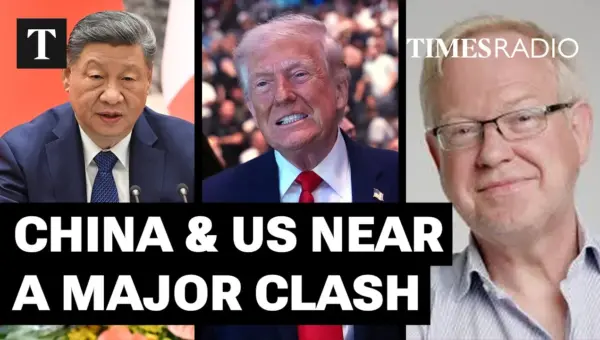
China-US Tensions Flare: Blockade Risk Sparks Superpower War Fears
The U.S. blockade in the Strait of Hormuz has intensified tensions with China, raising fears of a potential superpower conflict. Expert Roger Boyes highlights China's use of a "shadow fleet" and military support for Iran, while President Trump attempts a delicate diplomatic approach ahead of a key meeting with President Xi Jinping.
Trump Sees Iran Conflict Near End, Analysts Urge Caution
President Trump believes the conflict in Iran is "very close to over," but former advisor Keith Kellogg urges a cautious approach. The potential de-escalation could impact global markets, particularly oil prices. Investors should monitor the specifics of any resolution and its long-term implications for regional stability.
Trump’s Middle East Gambit: Escalation or Empty Threat?
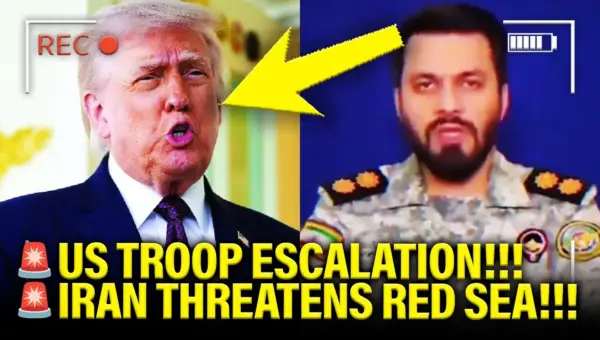
The US is sending troops and imposing a blockade in the Middle East, signaling escalation. Yet, conflicting messages from Donald Trump suggest peace is near. This analysis explores the contradictory actions, Iran's defiant response, and the potential global economic and political fallout.