Starmer’s Leadership Crisis Deepens Amid Diplomatic Blunder
Prime Minister Keir Starmer is facing severe criticism following the controversial appointment of Peter Mandelson as ambassador to the United States. Critics, including former Conservative leader William Hague and ex-Scottish Labour leader Kazia Dugdale, argue that the decision reflects poor judgment and a failure to take responsibility, potentially undermining Starmer's integrity. The scandal has reportedly left the civil service in a "defensive crouch," hindering effective governance.

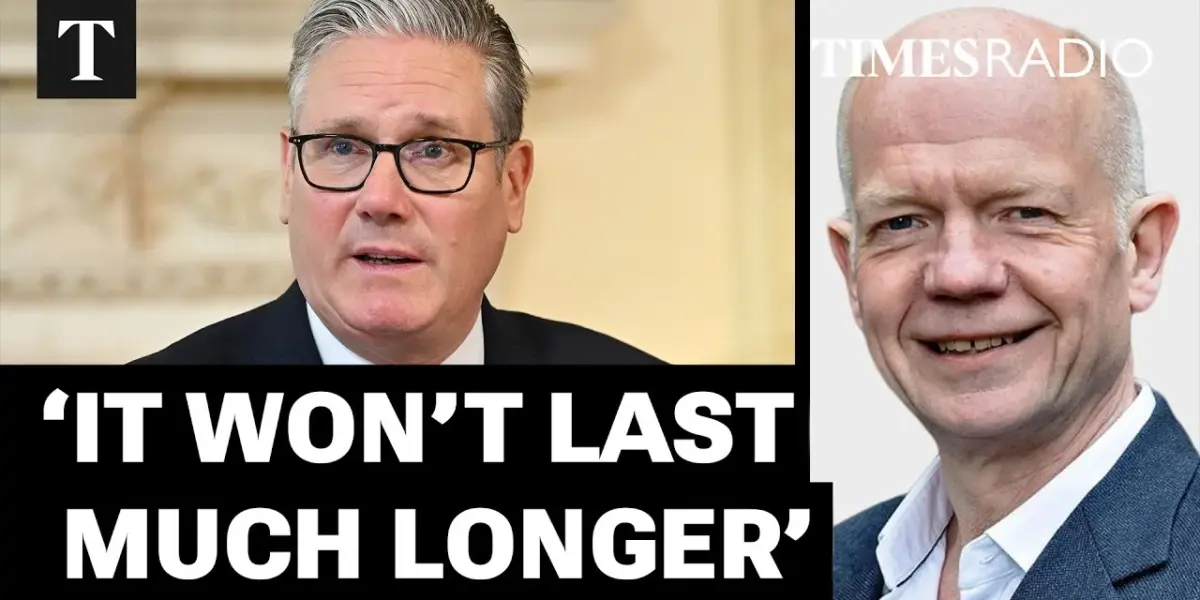
Starmer Faces Backlash Over Diplomatic Appointment Scandal
Prime Minister Keir Starmer is facing intense criticism following a diplomatic appointment scandal that has shaken confidence in his leadership. The controversy centers on the decision to appoint Peter Mandelson as ambassador to the United States, a move that has led to accusations of poor judgment and a failure to take responsibility. This situation has caused widespread despair among Labour MPs and civil servants, with many believing Starmer’s premiership is now in serious jeopardy.
Foreign Office Officials Under Fire
Former Conservative leader William Hague has strongly condemned the handling of the Peter Mandelson appointment, calling it “disgraceful.” Hague argued that officials like Sir Ollie Robbins, who was reportedly made a scapegoat, were unfairly treated. The decision, according to Hague, was not made by Foreign Office staff but was a political directive from 10 Downing Street. He noted that if Foreign Office officials had their way, Mandelson would never have been appointed ambassador.
Hague pointed out that even previous senior officials, including Jonathan Powell, who served as national security adviser, had voiced opposition to the appointment. He emphasized that the subsequent problems were not the fault of civil servants like Robbins, who had only been in his role for two weeks when faced with the situation. Robbins was left to manage the fallout of an appointment that was already announced and in motion, a task Hague suggested should not be considered a sackable offense.
Judgment and Integrity Questioned
Kazia Dugdale, former leader of the Scottish Labour Party, echoed Hague’s sentiments, highlighting the central issue of judgment and integrity. She stated that the decision to appoint Mandelson, knowing he was still in contact with Jeffrey Epstein after Epstein’s conviction, was a critical error. This decision was reportedly made before any vetting process had taken place, raising serious questions about the Prime Minister’s decision-making.
Dugdale suggested that these issues have damaged the very qualities that were Starmer’s strongest assets: his record of public service, judgment, and integrity. These qualities were seen as essential for leading the country through difficult times. The handling of the Mandelson appointment, she argued, has undermined this crucial public perception.
Starmer’s Grip on Power Weakens
Dugdale believes Starmer is currently in power but not truly in office, suggesting his position is propped up by two factors: global insecurity and the lack of a strong, unifying challenger within the Labour Party. She anticipates devastating local election results for Labour, particularly in Scotland and Wales, which may not be enough to trigger a challenge to Starmer’s leadership.
The current geopolitical climate, such as the war in the Middle East, and the absence of a figure capable of uniting the party mean Starmer’s leadership could continue for months or even years. The tipping point, Dugdale suggested, will come when Labour MPs see the next general election approaching and realize their own seats are at risk due to the current leadership.
Civil Service in “Defensive Crouch”
William Hague expressed deep concern over the impact of the scandal on the civil service. He described the atmosphere as one where civil servants are hesitant to make decisions or take initiative, doing the minimum to get by. This “defensive crouch” makes governing a difficult task even harder, especially when the nation faces significant challenges like war and economic instability.
Hague recalled that Sir Ollie Robbins had previously worked to make the Foreign Office more efficient, cutting layers of management and aiming to achieve more with less. Such actions typically energize an organization, encouraging hard workers. However, the very person who was implementing these positive changes has now been removed, apparently to take blame for the Prime Minister’s oversight regarding the risks associated with the Mandelson appointment.
The Role of Vetting and Confidentiality
Discussing the vetting process, Hague explained that details of the DV (developed vetting) process are typically kept highly confidential, even from ministers. He noted that during his time overseeing intelligence agencies, he never saw DV details. Therefore, he argued, it is not unbelievable that the Prime Minister was not informed of the specific concerns that arose during Mandelson’s vetting.
However, Dugdale countered by pointing out that many of the issues surrounding Mandelson, such as his association with Jeffrey Epstein and past allegations of misconduct, were already publicly known. She suggested that the Prime Minister must have been aware of the reputational risks involved in appointing Mandelson, regardless of the specific vetting details. This brings the focus back to Starmer’s initial decision and his responsibility.
Future Uncertainty for Starmer
Both commentators agree that the current situation is unsustainable for effective governance. The civil service’s reluctance to act and the Labour Party’s internal divisions create a paralysis that hinders progress on crucial domestic issues. Starmer appears “frozen in aspic,” caught between a desire to engage on the international stage and the growing urgency of domestic challenges.
The ongoing war and international tensions may offer Starmer a temporary distraction, allowing him to focus on global affairs rather than domestic policy. However, this approach risks further alienating the public and exacerbating the economic problems facing the country. Without clear direction and a strong leadership presence, Starmer’s premiership faces an increasingly uncertain future.
Source: I Don’t See Keir Starmer Surviving | William Hague (YouTube)

Related Articles

Mandelson Vetting Scandal: Civil Service Faces Scrutiny
Senior civil servant Sir Olly Robbins faces scrutiny over the vetting process for Peter Mandelson's ambassadorial appointment to Washington. Reports suggest the vetting agency deemed the appointment 'borderline,' raising questions about potential political interference. The controversy has created friction between the government and the civil service.

Mandelson Vetting Scandal Dominates UK Politics
Prime Minister Keir Starmer admitted his judgment was flawed in appointing Lord Mandelson ambassador after the nominee failed security vetting. The controversy has led to intense scrutiny of the vetting process and Sir Oliver Robbins, who is set to testify before a parliamentary committee. Political strategists criticize the focus on the scandal as a distraction from major public concerns like the cost of living crisis.

PM Fires Top Officials in Vetting Scandal Fallout
Prime Minister Keir Starmer is facing severe criticism for dismissing senior civil servants, including Oliver Robbins, in the wake of a vetting scandal. The controversy, likened to 'Yes, Minister,' highlights concerns over transparency, accountability, and the Prime Minister's handling of personnel decisions. The situation has damaged relations between the government and the civil service, raising questions about future recruitment and trust.