Bulgaria Elects Pro-Russia Leader in Political Shake-Up
Bulgaria has elected former President Rumen Radev, seen as pro-Russia, in a landslide victory, ending a decade of conservative rule. Radev's party secured over 44% of the vote, with promises of stability and anti-corruption efforts appealing to voters. Experts suggest while Radev may be critical of EU policy, major disruptive actions are unlikely in the short term.

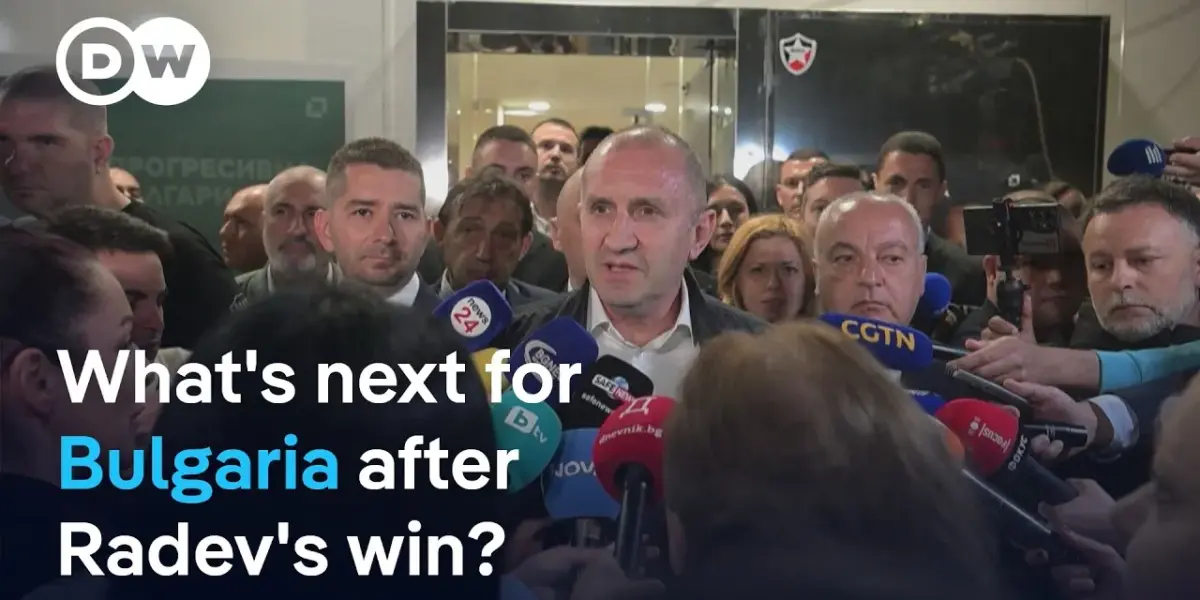
Bulgaria Elects Pro-Russia Leader in Political Shake-Up
Bulgaria is set for a major political shift after voters overwhelmingly chose a center-left party with ties to Russia. The Progressive Bulgaria coalition, led by former President Rumen Radev, secured a decisive victory in recent elections. This outcome signals an end to a decade of conservative rule and brings a figure often seen as friendly to Moscow to the forefront of Bulgarian politics.
Official results are expected later this week, but early tallies show Radev’s party capturing over 44% of the vote. Many believe Radev’s promises of stability and his focus on combating corruption resonated with voters. His supporters celebrated a clear win, viewing it as a rejection of past complacency and a step towards a more hopeful future.
Radev’s Rise to Power
Following the close of polls, Radev declared a new direction for Bulgaria. “This is a victory of hope over mistrust.
It is a victory of freedom over fear,” he told supporters. He emphasized that voters had rejected the “complacency and arrogance of the old parties.” This message appears to have struck a chord with citizens tired of the status quo.
The former ruling party, the center-right GERB, came in a distant second with only 13% of the vote. GERB had been a dominant force in Bulgarian politics until recent protests, driven by younger generations, led to the government’s downfall. These demonstrations were fueled by anger over the country’s economic policies and widespread concerns about corruption.
Voter Hopes and Cautious Optimism
Some voters expressed cautious optimism about Radev’s victory. “Hope we beat corruption or at least there is way less corruption than there is right now,” said one voter. “I hope that we have a better future for for the youth and I hope that people vote more and use their voice more.” These sentiments highlight a strong desire for change and a better future, particularly for the younger generation.
However, Radev’s past statements have raised questions about Bulgaria’s future direction. He has made controversial remarks that have been described as euroskeptic and pro-Russian.
This has created a contrast with other members of his party who advocate for closer ties with the European Union. Regardless of the path chosen, Radev’s coalition has received a clear mandate from the voters for significant change.
Expert Analysis: Parallels and Differences with Hungary
Maria Simeonova, head of the Sofia office for the European Council on Foreign Relations, discussed the election results. She noted comparisons between Bulgaria’s situation and that of Hungary under Viktor Orbán.
Radev, like Orbán, has made statements questioning Western policy towards Russia. For instance, he has referred to Crimea as Russian and has questioned the effectiveness of sanctions against Russia and aid to Ukraine.
Simeonova pointed out key differences, however. Unlike Orbán, who spent years building political influence to block EU decisions, Radev’s party has achieved a significant win in a shorter time. Importantly, Radev’s party does not hold enough seats to easily change the constitution or gain a supermajority needed for sweeping institutional changes, unlike Orbán’s approach in Hungary.
Implications for the European Union and Ukraine
Radev’s past comments, particularly regarding the war in Ukraine, have led to concerns about Bulgaria’s stance within the EU. He has suggested that “Europe has fallen victim to its own ambition to be a moral leader in a world without rules.” This rhetoric suggests a potential shift away from current EU policies, though Simeonova believes disruptive actions within the EU are unlikely in the short term.
Simeonova explained that Radev’s political program shows some similarities with sovereignist policies, but he is unlikely to abandon Bulgaria’s pro-European path or NATO membership. His criticism is likely aimed more at a domestic audience, as he now faces the challenge of delivering on promises as a party leader, not just as president. To achieve his goals, he will need support from reformist opposition parties and will rely on EU funds, which may limit his ability to act disruptively within the bloc.
Future Policy Directions
Regarding specific policy changes, Simeonova believes Radev may question the effectiveness of sanctions against Russia and discuss Russian gas and oil deliveries. However, she does not expect him to become a sole blocking actor within the EU, suggesting that the era of figures like Orbán acting as such is over. “There’s no Orban anymore,” she stated.
Concerning Ukraine, Simeonova anticipates that Bulgaria will not be its strongest supporter under Radev. However, she does not foresee a complete reversal mirroring Orbán’s stance.
Factors such as the Bulgarian defense industry’s gains from the war, a significant Bulgarian minority in Ukraine, and the pro-European majority in Bulgaria will likely limit any drastic pro-Russian shift in the short to medium term. The focus for Radev’s government is expected to be on fighting corruption and addressing high living costs for Bulgarian citizens.
What to Watch Next
The formation of a new government and Radev’s specific policy decisions in Brussels and regarding Ukraine will be closely watched. His ability to balance domestic promises with international commitments will be key in the coming months. The next steps will reveal how Radev intends to navigate Bulgaria’s role within the EU and its relationship with Russia.
Source: Bulgaria’s political earthquake: Russia-aligned Radev wins big (YouTube)

Related Articles

Hungary’s Orbán Loses Kremlin Ally Amid EU Sanctions Probe
Hungary's alignment with Russia is under scrutiny following accusations of document shredding related to EU sanctions. This development, coupled with ongoing Russian influence efforts elsewhere in Europe, signals a potential setback for Moscow. Meanwhile, optimism surrounding Ukraine peace talks is tempered by strategic messaging and unresolved territorial disputes.
France Urges Ambitious EU Agenda Amid Global Challenges
France is advocating for a more unified and ambitious European Union, urging stronger defense capabilities and a unified voice in global affairs. Minister Delegate Jean-Baptiste Barra Hadad highlighted the need for increased cooperation between France and Germany to address geopolitical challenges, including Russia's aggression and trade pressures. He also stressed that EU enlargement is a geopolitical necessity, provided it remains demanding and merit-based.
Russia Rejects Ukraine’s EU Path, Warns Europe
Russia has rejected Ukraine's pursuit of European Union membership, warning that any move to integrate Ukraine into a Western military bloc would trigger severe consequences for Europe. Moscow views Ukraine's European future as a direct threat and aims to block its accession to the EU.