Ukraine Downs Drones, Crippling Russia’s Black Sea Edge
Ukraine has achieved a significant strategic advantage by developing the ability to shoot down Russian drones over the Black Sea. This capability cripples a key Russian advantage and comes as Moscow's battlefield gains shrink and costs soar. Ukraine's multi-pronged strategy targets Russian supply lines, economic infrastructure, and military production, aiming to make the war unsustainable for the Kremlin.

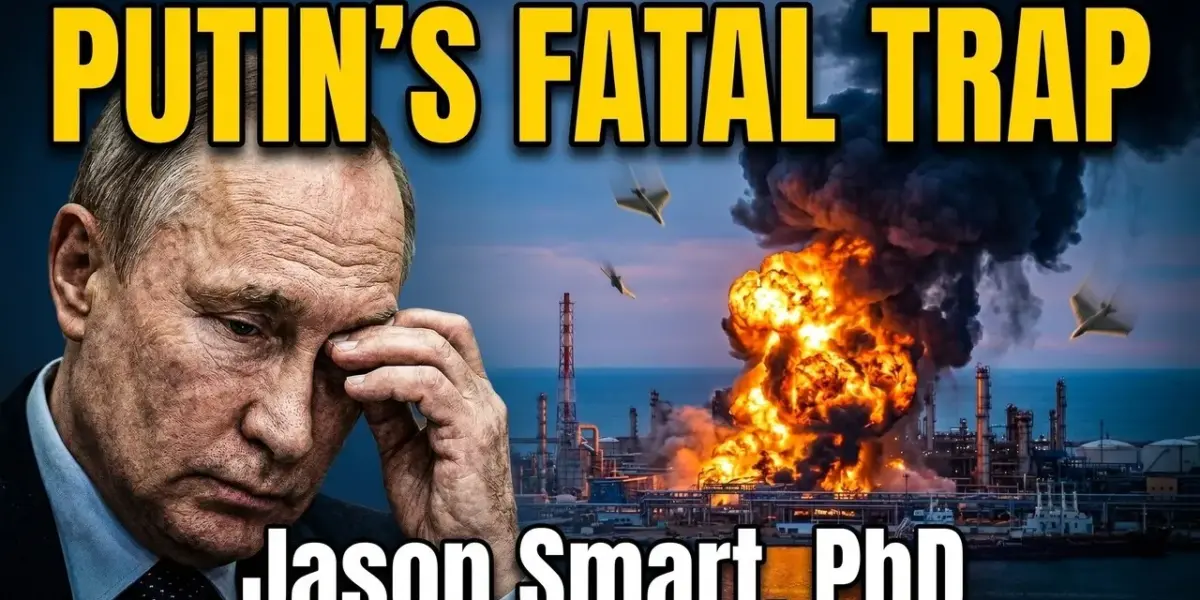
Ukraine Downs Drones, Crippling Russia’s Black Sea Edge
Russia’s battlefield momentum in Ukraine is fading, with costly assaults yielding less territory. The initiative is shifting away from Moscow as failures spread beyond the front lines.
Ukraine is now regularly striking refineries, factories, and military sites crucial to Russia’s war effort. These attacks are not only straining Russia’s ability to fight but are also inflicting significant economic damage.
A critical development is Ukraine’s new ability to intercept Russian drones over the Black Sea. Previously, these drones were difficult to counter while flying over water, giving Russia a significant advantage. Ukraine’s success in stopping these aerial attacks removes a key strategic benefit for Moscow, fundamentally changing how the war is fought and allowing Ukraine to dictate terms on the battlefield.
Ukraine’s Strategy: Disrupting the Cash Flow
Dr. Jason Smart, a key post special correspondent and national security adviser, explains Ukraine’s strategy is focused on breaking Russia’s financial and logistical support. The objective is to make it impossible for Russia to produce the weapons it needs by targeting its cash flow and supply routes. This new advancement in air defense over the Black Sea has effectively halted one of Russia’s last remaining advantages in the southern region.
The short travel time for some drones, around 40 minutes, made them a potent tool for Russia. However, Ukraine’s ability to neutralize these threats directly impacts Russia’s offensive capabilities and its ability to advance. This development comes as Russia’s battlefield gains have drastically decreased.
Shrinking Gains, Soaring Costs
Recent data reveals a dramatic decline in Russia’s territorial gains. In January, Russia captured 319 square kilometers (123 square miles).
This figure fell to 123 square kilometers (47 square miles) in February and further to just 23 square kilometers (8.9 square miles) in March. This represents a 92.8% decrease from January and an 81.3% drop from February.
The cost of these minimal gains has skyrocketed. In January, Russia lost approximately 99 men per square kilometer gained. By March, this figure had surged to about 1,537 men and $600 million for each square kilometer gained.
This represents a 15.5 times increase in cost compared to January, a 1,453% rise. At this rate, Russia’s entire annual military budget of $165.6 billion would be insufficient to achieve significant territorial control.
Russia’s Drone Reliance and Ukraine’s Countermeasures
Despite battlefield setbacks, Russia has become increasingly reliant on drones. In 2025, Russia launched over 54,000 drones, with more than 32,000 being strike drones. By March 2026, daily drone launches increased by 41% compared to the previous year, with Russia launching a drone approximately every 7 minutes.
Drones are a cost-effective tool for Russia, used not only for direct attacks but also to overwhelm Ukrainian air defenses. This saturation allows for more effective missile attacks.
For instance, one 24-hour period saw 659 drones and 44 missiles fired, a ratio of about 15 drones per missile. By successfully intercepting these drones, Ukraine directly hinders Russia’s ability to conduct missile strikes and significantly raises the cost of its operations.
Economic and Military Strikes Intersect
Ukraine’s strategy also includes targeting Russia’s economic infrastructure. Recent successful strikes on facilities like Tuapse, a major Russian oil facility, have had a destabilizing effect on the Russian economy. Ukraine has targeted Russian air defense systems, such as Pantsir and OSA systems, as well as oil depots and ammunition storage sites in occupied Crimea.
These attacks on Russia’s war-making capabilities are interconnected with Ukraine’s advancements in air defense. By denying Russia the ability to wage a war of attrition or hold any battlefield advantage, Ukraine is effectively disrupting Moscow’s strategic objectives. In March alone, Ukraine neutralized 90.25% of incoming drones, a remarkable feat considering the rapid improvement in its air defense effectiveness, which rose from 80.2% in December to 89.9% in March.
Technological Advantage and Strategic Objectives
Ukraine’s growing effectiveness and technological advantage allow it to pursue a war strategy that suits its objectives. While Russia aims to physically seize territory, requiring direct battlefield engagement, Ukraine’s goal is to halt the invasion by degrading Russia’s ability to wage war. This includes targeting factories producing weapons and oil refineries, thereby destabilizing the Putin regime and making it politically unsustainable.
Ukraine has also successfully attacked facilities that produce critical components for Russian drones, such as the Atlant facility in Taganrog, which manufactures Orion drone components. Without these components and facing Ukrainian technology to block their drones, Russia has limited options for replenishment.
Historical Parallels and Political Instability
The accumulation of battlefield pressure, strikes within Russia, and economic damage creates significant political danger for the Kremlin. Russian history shows that military defeats can quickly spread inward, exposing rulers. The Russo-Japanese War of 1905, which saw Japan defeat the Tsarist Empire, shattered the image of competence at the top and weakened the regime, contributing to its eventual collapse during World War I.
Similarly, the Soviet Union’s prolonged and costly war in Afghanistan exposed its inability to project strength and led to public questioning. The war in Ukraine is increasingly showing similar signs, with growing public doubt within Russia about the war’s continuation and President Putin’s decisions. This mounting pressure makes the war increasingly dangerous for the Russian leadership.
Vladimir Putin has initiated a conflict he cannot win. While his pride may prevent him from acknowledging it, these accumulating pressures suggest the end of the Putin regime is drawing closer.
Source: Kremlin's LAST Black Sea Advantage SHOT DOWN (YouTube)

Related Articles

Markets Shrug Off Iran Tensions as AI Drives Stocks Higher
Global stock markets are defying geopolitical tensions surrounding Iran, with major indices holding near record highs. Investors are increasingly focusing on the powerful growth narrative of artificial intelligence (AI), which is overshadowing concerns about oil prices and regional instability. Economic resilience and strong corporate earnings are providing a stable backdrop for this market behavior.


US Navy Fires on, Seizes Iranian Tanker Amid Escalating Tensions
The U.S. Navy has escalated tensions with Iran by firing upon and seizing an Iranian cargo ship in the Strait of Hormuz. This action occurred just before crucial peace talks were set to begin, casting doubt on diplomatic efforts. Meanwhile, a devastating mass shooting in Louisiana has left a community in mourning, and Japan is responding to a major earthquake and tsunami warning.

Canada Charts Its Own Course Amid Global Uncertainty
Canadian Prime Minister Mark Carney delivered a powerful address emphasizing national sovereignty and self-reliance. He drew historical parallels to assert Canada's independence and signaled a strategic shift away from over-reliance on the United States. The speech highlighted Canadian resilience and a commitment to building a stronger nation amidst global uncertainty.