Global South Walls Off US, Demands New World Order
Leaders from the Global South, particularly Brazil, are challenging US foreign policy, citing unilateral actions and their negative global impact. They call for a new world order with greater representation and accountability, as current global governance structures are seen as ineffective in addressing rising conflicts and economic instability.

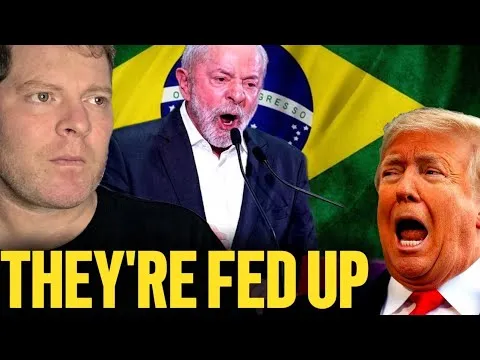
Global South Challenges US Dominance, Seeks New World Order
The world is increasingly pushing back against what it sees as unilateral American foreign policy. Leaders from the Global South, particularly Brazil, are voicing strong criticism.
They argue that the United States acts without considering global consequences. This sentiment was highlighted at a recent summit in Barcelona, where Brazilian President Lula da Silva spoke passionately about these issues.
Lula’s speech pointed to a growing divide. He stated that no nation’s president has the right to dictate terms to others.
He specifically called for changes within the UN Security Council. Lula criticized the practice of making decisions without consulting the UN, citing historical examples like the US invasion of Iraq, the intervention in Libya, and Russia’s invasion of Ukraine as actions taken without broad international consent.
US Actions Draw Global Ire
The transcript details a pattern of perceived American overreach. It questions the justifications for past military actions, such as the search for weapons of mass destruction in Iraq.
It also points to interventions in Libya and Venezuela as examples of unilateral decisions. These actions, the speakers argue, disregard international law and established diplomatic forums.
The criticism extends to the impact on global stability and economics. When the US makes decisions without consultation, it can disrupt trade and supply chains.
This affects ordinary people worldwide, especially in poorer nations. For example, potential US actions towards Iran could lead to rising food prices in Brazil and Mexico, making basic necessities unaffordable for many.
Middle Powers Rise Amidst US Isolation
The current global situation is described as one where middle-tier powers are gaining influence. Brazil is highlighted as a significant global trade player with vast resources.
Its growing assertiveness signals a shift in global power dynamics. This rise is seen as a response to the US’s perceived abandonment of international cooperation.
Canada has also felt the impact of unpredictable US trade policies. Shifting tariffs and conflicting statements regarding cooperation with China have created uncertainty.
This erratic behavior, described as “unhinged,” disrupts global stability and strains alliances. It pushes other nations to seek more reliable partnerships.
Critique of Global Governance and UN Ineffectiveness
The article strongly criticizes the current state of global governance. It notes a rise in armed conflicts globally since World War II.
Yet, the UN Security Council often fails to act effectively. The veto power held by permanent members frequently paralyzes decision-making, preventing timely responses to crises.
There’s a call for reform in global institutions like the UN, IMF, and World Bank. The need for greater representation from regions like Africa, Latin America, and Asia is emphasized. The creation of the G20 after the 2008 financial crisis is mentioned as an attempt to address such issues, but fundamental changes remain elusive.
Economic Impacts and the Dollar’s Role
The global economy is deeply intertwined with the US dollar. Fluctuations in the dollar, often influenced by geopolitical events like wars, directly impact commodity prices.
When the dollar strengthens due to such events, the cost of essential goods like beans and rice increases. This disproportionately harms developing nations that operate on tight financial margins.
The article suggests that the US has disrupted the stable flow of global macroeconomics. This has made it harder for necessities to reach those who need them at affordable prices. The speaker expresses concern that the actions of one nation, driven by the desires of its leadership, can cause widespread suffering.
A Call for Accountability and a New Order
The sentiment expressed is that the world is moving towards a new order. Nations are seeking stability through regional diplomacy and localized economic blocs.
Brazil, for instance, emphasizes its desire for peace and development, not war. This stance is presented as a contrast to what is perceived as the US pushing for global conflict.
The critique extends to the US’s role in global affairs. It is argued that the US is the primary driver of global instability.
This perspective challenges the notion of American exceptionalism. The call is for a fundamental reassessment of US foreign policy and its impact on global civilization.
Future Scenarios and the Path Forward
The article posits that the old world order is ending. A new system is needed, one that includes rising powers like India.
These nations, with large populations and significant economic output, should have a greater say in global decision-making. The speakers believe that ignoring these shifts will not lead to stability.
The situation demands a serious global discussion about sovereignty and international cooperation. Without it, the current problems will likely worsen.
The emphasis is on the need for countries to stand together, as individual nations may find it difficult to navigate these challenges alone. The path forward requires a fundamental change in how global politics and economics are managed.
Source: The World Is Finally Quarantining The United States: The Global South Just Walled Off Washington (YouTube)

Related Articles
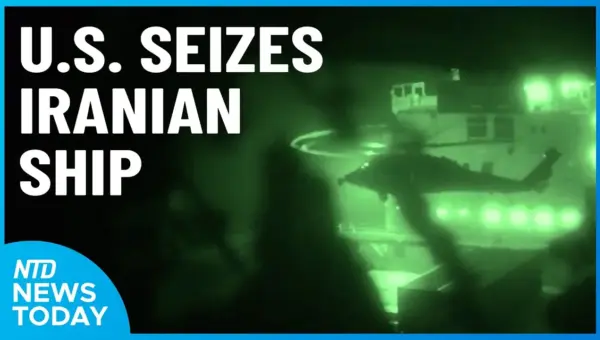
US Seizes Iranian Ship Amid Escalating Tensions
US forces have seized an Iranian ship attempting to breach a naval blockade, escalating tensions ahead of crucial peace talks. Iran has vowed retaliation, while the US warns of further action if a deal isn't reached. The Strait of Hormuz remains a flashpoint, impacting global energy markets.
Dem Lawmaker Clashes with Maria Bartiromo Over Iran Deal
Maria Bartiromo and a Democratic lawmaker engaged in a heated debate over the Obama administration's Iran policy. The lawmaker defended the previous administration's approach, citing broad international support, while Bartiromo questioned the effectiveness of those policies.

Hungary’s Orbán Loses Kremlin Ally Amid EU Sanctions Probe
Hungary's alignment with Russia is under scrutiny following accusations of document shredding related to EU sanctions. This development, coupled with ongoing Russian influence efforts elsewhere in Europe, signals a potential setback for Moscow. Meanwhile, optimism surrounding Ukraine peace talks is tempered by strategic messaging and unresolved territorial disputes.