Iran War Strains US Power, Bolsters China’s Global Ambitions
The ongoing conflict with Iran has significantly weakened the United States' global standing and depleted its military resources. This has created an opening for China to expand its influence, potentially impacting the future of Taiwan. Analysts suggest the war may be a pivotal moment, marking a potential decline in American power.

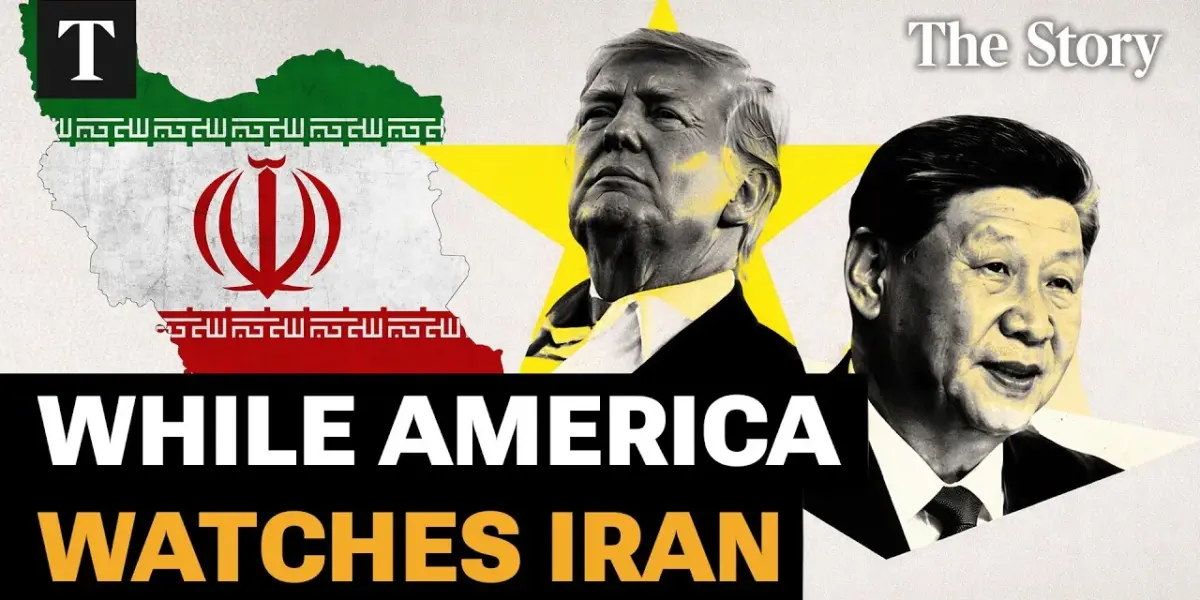
US Faces Setback as Iran Conflict Impacts Global Standing
The recent conflict with Iran, initially framed by the Trump administration as a strategic move to counter Iranian threats and diminish Chinese influence, appears to have backfired. Seven weeks after the war began, with global trade disrupted and a fragile ceasefire in place, the United States’ international standing has been weakened. This, in turn, has created an opening for China to expand its global influence, potentially impacting future geopolitical dynamics, including the future of Taiwan.
China Navigates Global Uncertainty
Cindy Yu, a columnist for The Times and The Sunday Times, reported from China in early March as the war commenced. While ordinary Chinese citizens were less concerned about immediate oil price impacts due to China’s diverse energy mix, there was widespread shock at the sudden escalation and its disruption to global stability. The Chinese government showed no explicit signs of anticipating the conflict, such as withdrawing diplomats, though they, like many nations, were monitoring the increased US military presence in the region.
Complex China-Iran Relationship
China and Iran have maintained a relationship since the 1979 Iranian Revolution, with China becoming a crucial trading partner and an essential escape route from Western sanctions. US government estimates suggest that Chinese revenue supports half of Iran’s government budget. However, this relationship is asymmetrical.
Iran relies heavily on China, while Iran represents only a small fraction of China’s overall energy consumption, about 7%. A significant $400 billion investment deal signed in 2021 has yet to materialize substantially, and public opinion in Iran towards China has been negative since 2020.
China has largely remained on the sidelines during the conflict, similar to its approach with Venezuela and Russia. The nation prioritizes trade and diplomatic recognition over expending its own resources to defend allies like Iran. This approach highlights China’s preference for transactional relationships, seeking benefits without significant commitment or risk.
China’s Role in the Conflict
While unlikely to offer direct military support, China has been involved in ways that challenge democratic norms. Reports indicate China’s export of dual-use technologies, such as facial recognition cameras, has been utilized by Iran for domestic repression.
More recently, a Chinese satellite purchased in 2024 has reportedly aided the IRGC’s strikes on Gulf States. China maintains these are dual-use items, not intended for military purposes.
Intelligence reports suggest China may be considering supplying Iran with MANPADS (man-portable air-defense systems), which could significantly impact low-altitude air defense. The US has warned of repercussions if such a transfer occurs, though China denies considering it.
Beyond potential arms sales, China has also played a subtle role as a negotiator. Both Donald Trump and Iranian officials have credited China with facilitating aspects of the fragile ceasefire, though Beijing has not explicitly confirmed its involvement.
Disruption in the Strait of Hormuz
The conflict has involved blockades and counter-blockades in the Strait of Hormuz, a critical chokepoint for global oil supply. Donald Trump announced the permanent reopening of the strait, claiming China agreed not to send weapons to Iran as part of the deal. The specifics of the US blockade and its conclusion remain unclear, with some Chinese-linked tankers reportedly rerouted or stationary outside the strait.
China’s Energy Security and Diversification
China has been a net oil importer since 1993 and a net gas importer since 2013, making energy security a significant national concern. The nation imports oil primarily from Russia, Saudi Arabia, Iran, and Iraq, seeking diversification. China’s substantial investment in renewable and nuclear energy, aiming for over 30% of its energy consumption by 2035, is driven by the desire for domestic control and reduced reliance on international shipping lanes like the Strait of Hormuz.
Despite these efforts, China has faced economic impacts, including increased petrol prices, which the government has subsidized to protect consumers. However, compared to other nations, China is not considered the primary victim of the war’s economic fallout. China also maintains significant strategic petroleum reserves, estimated to be around six months’ worth, which can be used during supply disruptions.
China’s Growing Ties with the Gulf
China has long-standing relationships with Gulf states, driven by their need for oil and the Gulf states’ desire to hedge their traditional alliances with the US. Trade and Chinese investment in the region have boomed. As Gulf states consider their future beyond oil, they are increasingly interested in China’s expertise and investment in clean energy.
The conflict has highlighted for Gulf nations the limitations of US security guarantees, especially when compared to the US response to attacks on Israel. This perceived US unreliability could create an opportunity for China to strengthen its ties. However, China is hesitant to assume the role of a global security provider due to its high cost, preferring to pick its battles as a rising power.
Taiwan: A Geopolitical Flashpoint
The war in Iran is seen by many as a strategic failure for the US, raising questions about its impact on China’s ambitions towards Taiwan. Taiwan, an island chain visible from the Chinese mainland, was part of China until 1949 when the Nationalist government fled there after losing the civil war. The island has since transitioned to a democracy, creating a complex political identity separate from mainland China.
The Chinese Communist Party (CCP) views Taiwan as a renegade province, and President Xi Jinping reportedly sees its reunification with the mainland as a key legacy goal. While a military invasion is a difficult and potentially protracted endeavor, as seen in Russia’s invasion of Ukraine, China also considers other avenues. These include gradual economic integration, potentially leading to a vassal state relationship, or an economic takeover that mirrors Belarus’s position relative to Russia.
Shifting Alliances and Future Tensions
A recent meeting in Beijing between Taiwan’s opposition leader, Eric Chu, and Xi Jinping signals a potential shift in cross-strait relations. The Kuomintang (KMT) party, historically a major political force in Taiwan, now advocates for closer ties with Beijing, contrasting with the ruling Democratic Progressive Party’s (DPP) stance. This meeting suggests China is building bridges with key political factions in Taiwan.
While US intelligence has previously suggested a potential Chinese invasion of Taiwan by 2027, recent assessments indicate this timeline may not be firm. The US military’s depleted stockpiles of critical munitions, such as Tomahawk missiles, following the Iran conflict, could weaken its ability to defend Taiwan. War games have shown that US forces could run out of munitions within weeks in a Taiwan scenario, a situation now exacerbated by the Iran war.
A New Era of Geopolitics?
The ongoing war in Iran has inadvertently weakened America’s global influence and strained its military resources. This has created a window of opportunity for China to consolidate its position as a rising global power. The conflict’s outcome and its resolution will likely shape the geopolitical landscape for years to come, with significant implications for regional stability and the future of Taiwan.
The potential meeting between Donald Trump and Xi Jinping, though delayed by the Iran war, could further redefine US-China relations. Discussions are expected to focus on trade and security guarantees regarding Taiwan. The current geopolitical climate, marked by American challenges and Chinese assertiveness, suggests a significant shift in global power dynamics may be underway.
Ultimately, whether this period marks the decline of American power and the ascent of China remains to be seen. Historians may look back at the Iran conflict as a key moment. As former Chinese Premier Zhou Enlai famously said regarding the French Revolution, “It’s too early to tell.” The conclusion of the Iran situation and China’s strategic responses will be crucial in determining the long-term consequences.
Source: How The Iran War Could Help China Take Taiwan (YouTube)

Related Articles

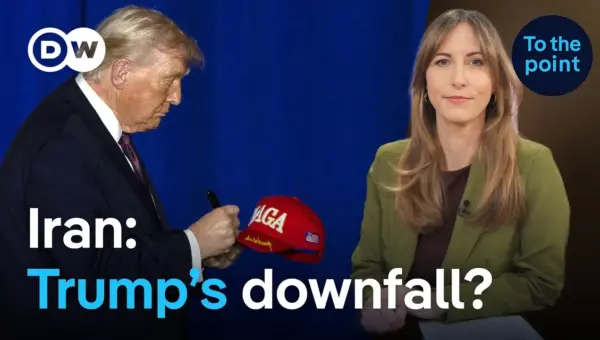
Trump Faces Backlash: Iran War, Pope Spat Risk Base Support
President Trump is facing growing challenges as the Iran conflict and controversial public statements strain his relationship with core supporters. His political future is being scrutinized amid parallels drawn to allies' recent electoral defeats and concerns over his foreign policy approach.
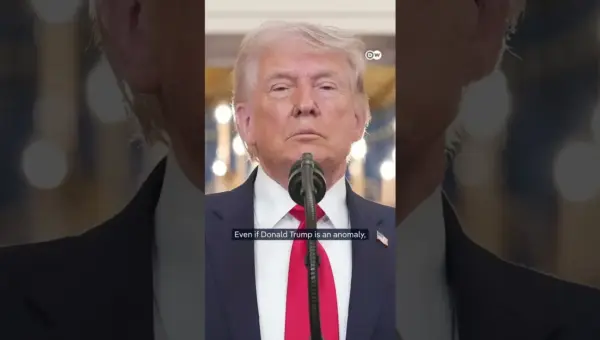
US Acts Like Rogue State, Threatens Global Peace: Analyst
An analyst argues the United States is acting like a "rogue state," threatening global peace and economic stability with its actions. This behavior is seen as impulsive and predatory, even towards allies. While past U.S. administrations have seen image recoveries, future trust may be harder to regain due to unpredictable policy swings.
Trump Predicts Lower Oil Prices Despite Tensions
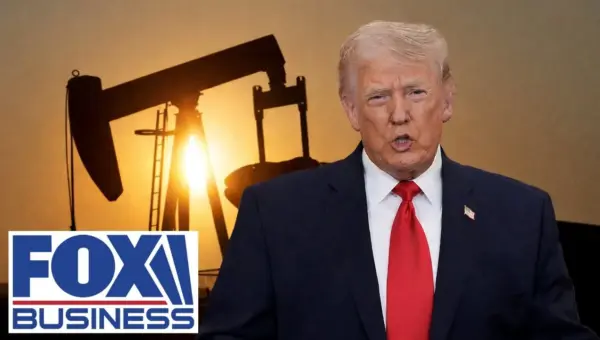
President Trump anticipates lower oil prices later this year, citing increased U.S. production and strategic actions like the Strait of Hormuz blockade. The administration also highlighted progress on domestic energy infrastructure, including a new natural gas pipeline for the Northeast, promising cost savings for millions of households.