Iran Calls Trump’s Bluff on Ceasefire
Iran is refusing to back down on a ceasefire deal, calling President Trump's bluff. They insist on their own 10-point framework and appear to be exploiting perceived weaknesses in Trump's domestic political standing. This standoff highlights complex international relations and potential shifts in global power dynamics.

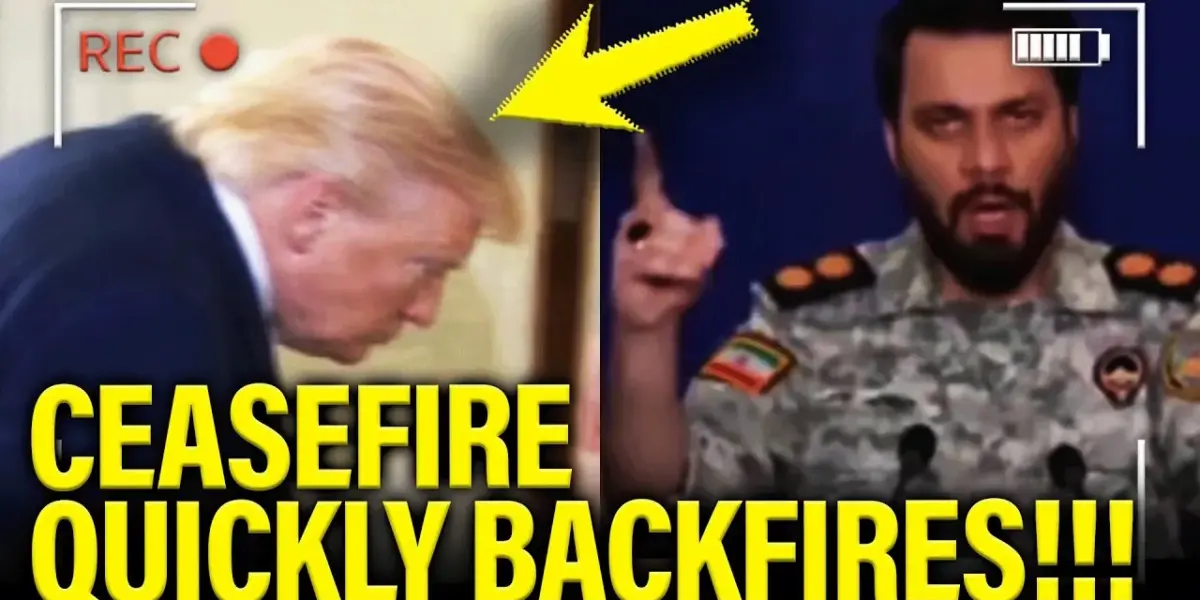
Iran Stands Firm, Calls Trump’s Bluff on Ceasefire
The situation between Iran and the United States regarding a ceasefire has taken a sharp turn, with Iran appearing to call President Trump’s bluff. Instead of agreeing to a quick deal, Iran has stated it will wait out the Trump administration, rejecting the idea that economic pressure or blockades in the Persian Gulf will force their hand.
Iran’s position is clear: no deal will be made until the U.S. agrees to their 10-point framework. They have indicated that if Trump intends to continue with aggressive tactics, he should be prepared for renewed conflict, with potential negative impacts on the U.S. economy and upcoming elections.
Iran’s Strategy and U.S. Domestic Politics
Iran seems to be keenly aware of the domestic political climate in the United States. They observe that President Trump’s approval ratings are at historic lows, even lower than Richard Nixon’s at the time of his resignation. This perception of weakness emboldens Iran’s stance, as they feel they can afford to mock and pressure the U.S. administration.
The leader of Iran’s parliament, Mohammad Bagher Ghalibaf, has emphasized that the 10-point plan is the only acceptable basis for negotiation. A key demand within this framework is a promise of security guarantees for Hezbollah in Lebanon, without which Iran states no deal will be reached.
Trump’s Apparent Agreement and Iran’s Interpretation
Interestingly, President Trump himself announced a ceasefire approximately two weeks prior, stating on social media that he agreed to Iran’s 10-point plan. This public statement is now being used by Iran as confirmation of a prior agreement, influencing their current negotiating position.
Following Trump’s announcement, Ghalibaf posted that a lasting ceasefire in Lebanon would be the result of Hezbollah’s efforts and the unity of the ‘axis of resistance.’ He also stated that the U.S. must commit to the agreement, implying America should withdraw from supporting Israel and acknowledge Iran’s regional influence.
Diplomatic Engagements Beyond the U.S.
Iran has also been engaging with other global powers, including China and Japan. Iran’s Foreign Minister, Javad Zarif, has warned his Chinese and Japanese counterparts about the dangerous consequences of the U.S. actions in the Strait of Hormuz.
In calls with China’s Foreign Minister Wang Yi and Japan’s Foreign Minister Toshimitsu Motegi, Zarif discussed regional developments and the economic and security impacts of the ongoing conflict. He specifically warned against the U.S. posture in the Persian Gulf and thanked China and Russia for opposing a U.S.-backed UN Security Council resolution.
China and Japan’s Reactions
China’s Wang Yi reportedly praised Iran’s resilience and affirmed China’s support for diplomatic efforts to end the war. Japan’s Motegi expressed concern over disruptions to shipping in the Strait of Hormuz and indicated Japan’s willingness to help de-escalate tensions.
Iran also welcomed Pakistan’s Army Chief, General Qamar Javed Bajwa, to Tehran, thanking Islamabad for hosting ceasefire talks and reaffirming strong bilateral ties. This suggests Iran is building a network of support and seeking alternative diplomatic avenues.
Iran’s Demands and Trump’s Perceived Weakness
Iran’s demands are extensive, including control over the Strait of Hormuz, continued uranium enrichment, and maintaining its ballistic missile and drone programs. Crucially, they are demanding security guarantees for Iran, Hezbollah, the Houthis, and Shiite proxy groups in Iraq.
Iran is seeking reparations and intends to charge fees for ships passing through the Strait of Hormuz. They view Trump’s threats and blockades as ineffective, comparing his approach to his criticisms of NATO as a ‘paper tiger,’ suggesting Trump himself is the one lacking real power.
Historical Context and Shifting Alliances
The current situation can be viewed against a backdrop of shifting global alliances and a perceived decline in U.S. influence. The transcript suggests that many Middle Eastern and Asian nations no longer see the U.S. security umbrella as reliable.
Saudi Arabia’s decision to cancel LIV Golf events in the U.S. is cited as an example of potential economic repercussions. The narrative presented is that countries are reconsidering investments in the U.S. due to perceived American unreliability, especially after actions taken without consulting regional allies.
Critique of Trump’s Negotiating Style
The analysis criticizes Trump’s negotiating tactics, arguing that his approach of increasing pressure and threats is counterproductive. True negotiation, it is argued, requires respecting the sovereignty and right to exist of counterparts, not issuing threats of violence.
The transcript contrasts this with what it calls ‘grown-up negotiations,’ which involve compromise and avoiding unilateral demands. Iran, feeling it has the upper hand, is unlikely to back down to threats, especially when they believe the U.S. has already lost influence.
Wider Geopolitical Implications
The transcript suggests that the world sees the U.S. as having lost ground, not just in the Middle East but globally. This perception is attributed to a weakening of alliances and a loss of goodwill built after World War II.
The author expresses strong disapproval of this perceived weakness, stating it is a critical issue regardless of political affiliation. The focus on attacking perceived enemies, like the Catholic Church, is presented as a distraction from more pressing international matters.
Regime Change and Iranian Leadership
A significant point raised is the alleged change in Iran’s regime leadership for the worse, following actions attributed to the Trump administration. An article in The Wall Street Journal is referenced, suggesting that the killing of more moderate Iranian figures has cleared the way for more hardline leaders.
Individuals like Mohammad Bagher Zalgadar, a former Revolutionary Guard commander with a violent background, and Ahmad Vahidi, accused of involvement in the 1994 bombing in Buenos Aires, are now in positions of power. Their extreme views and past actions are presented as a direct consequence of U.S. policy, potentially leading to increased regional instability.
Why This Matters
The escalating tensions and Iran’s firm stance highlight the complexities of international diplomacy and the challenges of achieving lasting peace. Iran’s willingness to defy U.S. pressure and its cultivation of relationships with other global powers like China and Russia indicate a shift in the geopolitical balance.
The perceived erosion of U.S. credibility among allies and adversaries alike could have long-term consequences for global stability, economic relations, and the effectiveness of U.S. foreign policy. The rise of more hardline elements within Iran, if accurate, could also lead to increased regional conflict and a more volatile international environment.
Future Outlook
The future of the U.S.-Iran relationship remains uncertain. Iran’s current strategy suggests a long-term approach, waiting for a more favorable political climate or a U.S. administration willing to negotiate on their terms. The effectiveness of Trump’s strategy of ‘maximum pressure’ is being directly challenged.
The involvement of other major powers like China and Japan in diplomatic efforts could lead to new avenues for resolution, but also risks further complicating the situation. The internal political dynamics within both Iran and the U.S. will undoubtedly play a key role in shaping future events.
Conclusion
As the situation unfolds, Iran’s unwavering adherence to its 10-point framework and its willingness to challenge U.S. authority suggest a confident and strategic approach. The coming weeks and months will reveal whether Trump’s tactics can yield the desired results or if Iran’s patience and diplomatic maneuvering will prevail.
Source: Trump PANICS as CEASEFIRE goes SIDEWAYS QUICKLY!!! (YouTube)

Related Articles
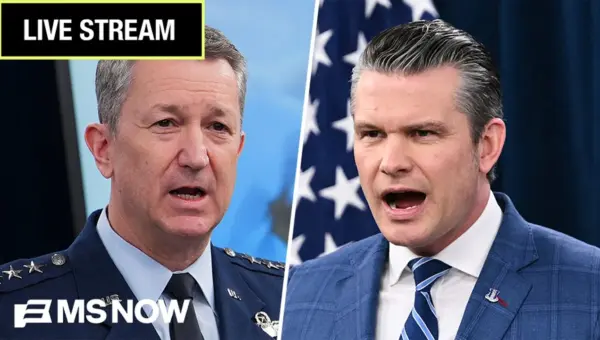
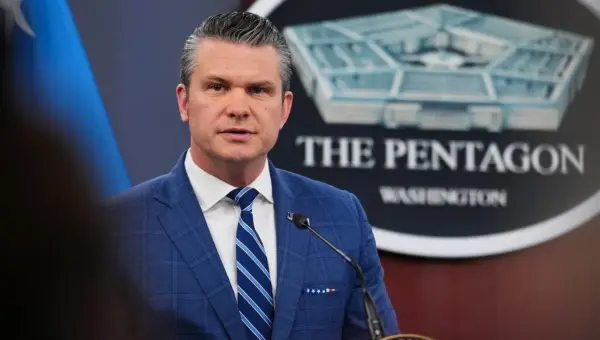
Pentagon Briefs on Iran Port Blockade Amid Ceasefire Deal
The Pentagon briefed reporters on Operation Epic Fury, a U.S. naval blockade of Iranian ports, following a two-week ceasefire agreement. Defense Secretary Pete Hegseth and Gen. Dan Caine detailed the operation's goals, which include preventing the transfer of materials that destabilize the region. The military action aims to support diplomatic efforts and counter Iranian influence.
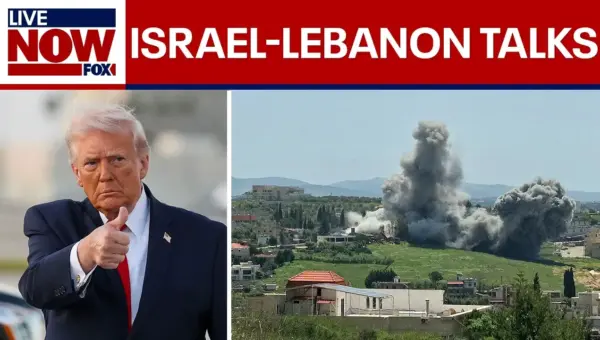
Trump: Israel-Lebanon Talks Set for Today Amid Escalating Tensions
President Trump announced that Israel-Lebanon talks are set for today amid escalating Middle East tensions. The U.S. is also increasing economic pressure on Iran, while ongoing military operations continue in southern Lebanon. Diplomatic efforts face significant challenges due to Hezbollah's influence and Iran's nuclear program.
US Navy Blockades Iran, Offers Deal Amid “Operation Epic Fury”
The U.S. Navy has initiated a blockade of Iran's ports and coastline as part of "Operation Epic Fury," aiming to pressure the regime into accepting a deal. The operation involves thousands of personnel and numerous vessels, supported by Treasury's "Operation Seamless" to cut off financial aid. Iran faces a choice between a peaceful future or severe consequences.