First Lady Champions Foster Youth Reforms in Congress
First Lady Melania Trump joined the House Ways and Means Committee to advocate for reforms supporting foster youth. The discussion highlighted urgent needs, bipartisan legislative efforts, and personal stories from young people impacted by the system.

First Lady Champions Foster Youth Reforms in Congress
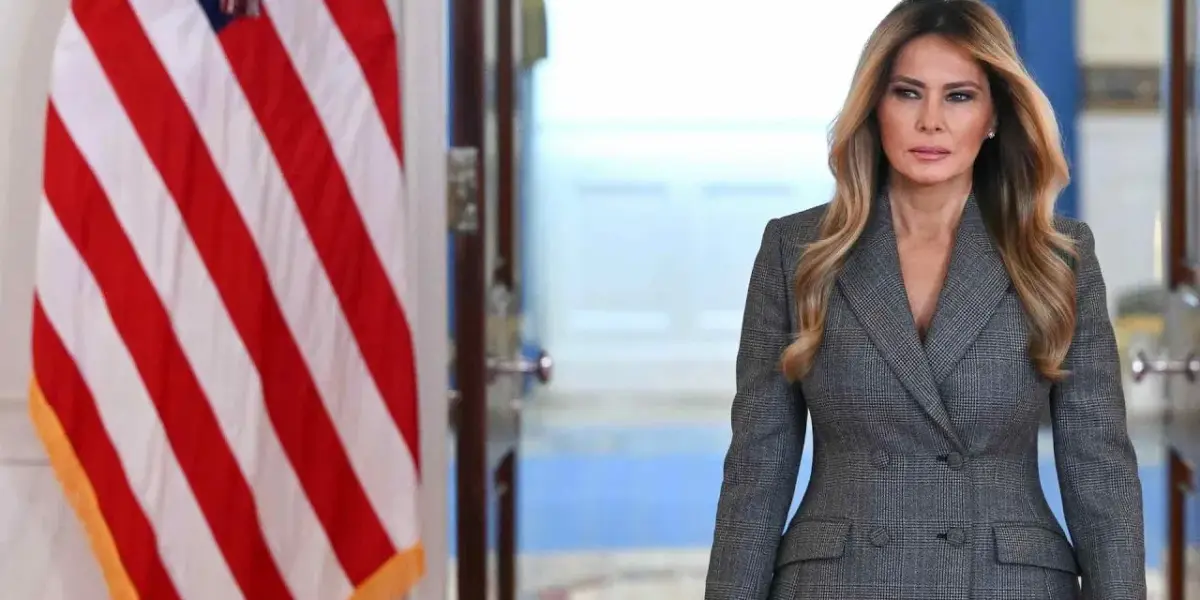
Melania Trump recently joined members of the House Ways and Means Committee for a roundtable discussion focused on improving the foster care system. The meeting highlighted the urgent need for legislative action to support young people aging out of foster care. This initiative, combining the First Lady’s “Fostering the Future” program with ongoing efforts by committee leaders, aims to create significant reforms.
The roundtable served as a vital platform for the First Lady to share the stories of foster youth, emphasizing their calls for change. Committee members also had the chance to present the reforms they are actively working on. The presence of foster youth like Jaden Martinez and Jocelyn Fetting highlighted the personal impact of these policy discussions.
The Stark Reality for Foster Youth
Each year, approximately 20,000 young people leave the foster care system without finding a permanent home. These individuals often face immense challenges because they cannot return to their biological families and are not connected to relatives or adoptive parents. While programs like the Chafee program exist to help older foster youth, many remain unaware of these resources or face limited funding.
As a result, fewer than a quarter of youth aged 16 to 21 actually receive Chafee services. The path for these young people is fraught with difficulty.
Many struggle with dropping out of school, early parenthood, untreated mental health issues, trauma, and homelessness. These are not abstract statistics but the lived experiences of thousands of young Americans.
A Bipartisan Push for Change
Committee leaders, including Chairman Darren LeHood and Ranking Member Danny Davis, have engaged in a collaborative, bipartisan process to find common ground on policies affecting foster youth. This approach, commended as a model for legislative work, has resulted in six pieces of legislation. These bills aim to address critical needs identified by foster youth themselves.
A key area of focus is increasing funding for programs that support these young people. For example, Chafee funding has seen only a $3 million increase since its creation in 1999, aside from pandemic-related boosts. The amount needed for significant impact is described as relatively small compared to other government expenditures, yet it could be life-changing for foster youth.
“Fostering the Future” Initiative
Melania Trump’s “Fostering the Future” initiative, launched in 2021, aims to provide individuals from the foster care community with access to university-level education. The goal is to prepare them for entry-level jobs, financial independence, and eventually, entrepreneurship. The program has expanded to include over 20 universities across the country.
Despite these efforts, the First Lady stressed that the foster care community requires action over mere awareness. While roughly 3% of individuals in foster care earn a college degree, she expressed confidence that this gap can be closed. However, she noted that challenges outside the classroom, such as housing instability and financial barriers, significantly impact academic performance.
Stories from the Front Lines
Jaden Martinez, who entered foster care at age six and spent years waiting for adoption, shared his experience of turning 18 alone in a boys’ home with just $42. He emphasized that success for foster youth should not depend on luck but on opportunity, urging Congress to pass the bipartisan Chafee bills. He highlighted how even modest funds from programs like the Education and Training Vouchers (ETV) can make a difference in obtaining necessities like bedding, a laptop, or professional clothing.
Jocelyn Fetting, who spent eight and a half years in foster care and recently earned her master’s degree, spoke about the systemic gaps that leave young people struggling despite their efforts. She shared how she worked three jobs in college to cover basic needs and how the lack of accessible support, even when available, affected her academic performance. Jocelyn stressed that these reforms shorten the distance between survival and success, emphasizing that foster youth are ready but need access and support.
Legislative Proposals and Future Outlook
Several pieces of legislation were discussed, including the Foster Youth Housing Opportunity Act, which aims to improve coordination between child welfare programs and housing initiatives. This bill would allow states to use Chafee funds for housing support and align age eligibility, addressing a major barrier to access. Another mentioned bill, the Connect Act, prioritizes family connections for youth.
The Foster Youth Postsecondary Education Access and Success Act and the Foster Youth Workforce Opportunity Act were also highlighted as crucial for providing resources for various paths to success, whether academic or vocational. The consensus among speakers was clear: these bipartisan reforms are essential for providing transition-age foster youth with the tools they need for greater opportunity and long-term success.
Why This Matters
The roundtable discussion and the proposed legislation represent a critical moment for addressing the systemic failures that impact hundreds of thousands of young people annually. By focusing on practical reforms and increasing essential funding, Congress has a tangible opportunity to change lives. The bipartisan nature of these efforts suggests a strong potential for passage and implementation.
This focus on foster youth reflects a broader understanding that investing in vulnerable populations yields significant societal benefits. Providing stable housing, educational support, and workforce training can help these young people become self-sufficient, contributing members of society, breaking cycles of poverty and instability.
Implications and Future Outlook
The collaborative efforts between the First Lady’s initiative and congressional leaders signal a renewed commitment to the foster care system. The proposed legislation could lead to more effective use of existing funds, better coordination of services, and increased access to crucial support systems for youth aging out of care.
The direct testimony from Jaden Martinez and Jocelyn Fetting powerfully illustrated the gap between the intent of programs and their real-world impact. Their advocacy, alongside the legislative work, creates a strong case for increased investment and policy improvements. The commitment expressed by committee members to turn words into action offers hope for transformative change.
Historical Context
The foster care system in the United States has evolved significantly over time, with various legislative efforts aimed at improving outcomes for children and youth. Programs like the Chafee Foster Care Independence Program, established in 1999, were designed to help youth transition to adulthood. However, as the GAO report mentioned by Chairman LeHood indicated, the effectiveness of these programs has been hampered by issues like unused funds and lack of awareness.
The current push for reform builds upon decades of advocacy from individuals, organizations, and former foster youth. The recognition of housing instability as a major barrier, for instance, is a more recent understanding that has gained prominence in policy discussions. The bipartisan nature of the current legislative package is a positive development, suggesting a shared recognition of the problem’s urgency.
Moving Forward
The commitment from both sides of the aisle, amplified by the First Lady’s advocacy, creates a powerful momentum. The next step involves the legislative process, where these bipartisan bills will be considered and potentially passed. The goal is to move beyond incremental changes and achieve transformative results for America’s foster youth.
The roundtable concluded with a call for press to exit, signaling a transition to more private deliberations. The focus now shifts to the legislative process, with the hope that these proposed reforms will become law, offering a brighter future for young people transitioning out of foster care.
Source: Melania Trump Participates in House Ways and Means Roundtable (YouTube)

Related Articles

Melania Trump Denies Epstein Ties, Demands Justice for Victims
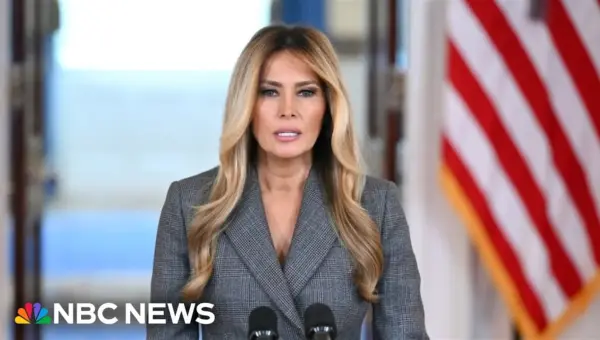
First Lady Melania Trump has publicly denied any ties to Jeffrey Epstein and called for public hearings for his victims. The White House was reportedly unaware of her statement's content until she delivered it. Her address aims to clarify her position amid renewed scrutiny of the Epstein case.
Melania Trump Denies Epstein Links, Urges Public Hearing for Victims
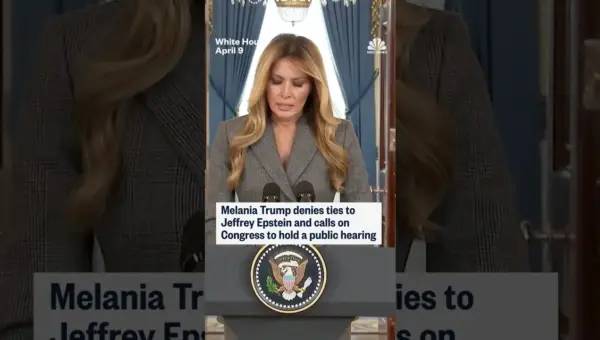
Melania Trump has strongly denied any association with Jeffrey Epstein, calling for an end to rumors linking her to the disgraced financier. She also urged Congress to hold a public hearing for Epstein's survivors to testify under oath.


Trump’s Policies Spark Controversy, Fox Poll Stuns GOP
Former President Donald Trump's policy ideas, including a controversial plan for ICE at airports, are drawing criticism and impacting his approval ratings, according to a new Fox News poll. The week also saw Melania Trump attend a tech conference escorted by a humanoid robot, while Iran policy and the standing of figures like Kristi Noem remain under scrutiny.