Russia’s Economy Under Strain: Debt and Sanctions Bite
Russia's economy is facing a severe debt crisis, with companies struggling under the weight of high interest rates and international sanctions. A surge in loan restructurings indicates underlying financial fragility, raising concerns for the banking sector.

Russian Economy Faces Mounting Debt Crisis Amidst Sanctions
Moscow, Russia – Russia’s economy is grappling with a significant debt crisis, particularly within its banking sector, as companies struggle to service their obligations. This situation is largely attributed to the lingering effects of international sanctions and a slowdown in economic growth. Recent data indicates that while state-sponsored enterprises are buoyed by Kremlin support, commercial entities are facing severe financial distress, leading to a surge in loan defaults and restructurings.
Economic Slowdown and Staggering Interest Rates
Vladimir Putin’s recent announcement regarding a projected 1% GDP growth in 2025, a stark contrast to the over 4% growth seen in the preceding two years, highlights the economic headwinds Russia faces. A significant portion of this projected growth is reliant on Kremlin-backed companies, underscoring the challenges faced by independent commercial enterprises. These businesses, historically reliant on international markets for exports such as oil, gas, steel, and coal, have seen their markets severely limited by sanctions.
The consequence of reduced export revenues and market access has been a rise in corporate losses, compelling many companies to take on more debt. Compounding this issue are Russia’s exceptionally high interest rates. Prior to the invasion of Ukraine, interest rates hovered around a manageable 4%. However, they were abruptly hiked to 20% in response to the conflict and have remained elevated, currently standing at a prohibitive 15.5%. This environment makes servicing existing debt, especially variable-rate loans or those coming up for renewal, extremely costly. For new debt, the cost is even more daunting, making business expansion and investment difficult to justify.
Key Companies Seek Government Lifelines
Evidence of the strain on Russian businesses is emerging from reports detailing requests for substantial financial assistance. The Russian railway system has reportedly sought a 65 billion ruble loan from the government to navigate its current difficulties. Similarly, Samlette, Russia’s largest property developer, has requested a deferral of 50 billion rubles in taxes, citing that immediate payment would necessitate significant price hikes on new properties, potentially stifling the market.
The Double-Edged Sword of Loan Restructuring
The banking sector is showing clear signs of distress, with a notable increase in both problem loans and restructured loans. As of the third quarter of 2024, problem loans stood at 9.2 trillion rubles, a figure that rose to 9.7 trillion rubles by the third quarter of 2025, marking a 12.5% increase over the year. While these figures are concerning, the volume of restructured loans is even more telling. In the third quarter of 2024, 10.9 trillion rubles worth of loans were restructured, a figure that surged to 14 trillion rubles in the most recent reported quarter, an increase of over 28% year-on-year.
Loan restructuring, while a mechanism to prevent immediate defaults and write-offs, often serves as a temporary measure. It involves modifying loan terms, such as reducing debt amounts, extending repayment periods, or lowering interest rates, to help struggling borrowers stay afloat. However, in many cases, it essentially defers the inevitable, allowing banks to report loans as performing assets on their balance sheets without resolving the underlying financial instability of the borrowers. This practice is akin to ‘kicking the can down the road,’ delaying the recognition of bad debt.
Sectors Under Pressure
Several key sectors are disproportionately affected by these economic pressures. The oil and gas industry, long a cornerstone of the Russian economy, has been severely impacted by sanctions limiting buyers and driving down prices. India’s recent decision to step away from trade relationships with Russia, prioritizing its ties with the US, further exacerbates this situation for 2026.
The industrial sector, heavily reliant on the export of raw materials, has also been devastated by sanctions. The metals and coal industries are similarly struggling. The financial sector itself has been hit by Russia’s exclusion from global payment systems, forcing institutions to operate within a more restricted domestic and friendly-nation market.
Bank of Russia’s Outlook and Future Concerns
The Bank of Russia’s latest forecasts paint a cautious picture. Inflation is expected to remain above the target rate, hovering between 4.5% and 5.5% over the next 12 months, which will continue to erode profit margins for businesses. The projected GDP growth of 1% for the current year is a significant slowdown compared to previous years, with much of this growth attributed to state-backed entities rather than commercial enterprises, which are likely experiencing contraction.
Interest rates are forecast to remain high, between 13.5% and 14.5% over the next year, presenting a persistent challenge for companies with substantial debt. The projected average oil price of $45 per barrel for 2026 is also significantly lower than initially budgeted, indicating further financial strain for the energy sector. The concentration of financial losses within Russia, due to the closure of international markets, raises concerns about the potential for liquidity and solvency issues within Russian banks in the coming years.
Conclusion: A System Under Strain
The Russian economy is currently navigating a complex web of challenges characterized by high debt burdens, the impact of international sanctions, and elevated interest rates. The surge in loan restructurings, while a short-term palliative, masks underlying financial fragility. The continued reliance on state support for key industries and the struggles of commercial enterprises point towards a period of sustained economic pressure. As international sanctions remain in place and global economic conditions evolve, the resilience of Russia’s banking sector and its broader economy will be closely watched.
Source: RUSSIA Restructures (YouTube)

Related Articles

High Debt Forces Fed’s Hand, Paving Way for Rate Cuts
Massive U.S. debt is limiting the Federal Reserve's ability to fight inflation, potentially forcing interest rate cuts. This delicate balancing act risks higher inflation and impacts the real estate market, creating both challenges and opportunities.


Trump Threatens Fed Chair Powell, Faces Nomination Blockade
President Trump is threatening to fire Fed Chair Jerome Powell over a renovation probe, creating a political stalemate. Senator Tom Tillis is blocking Trump's nominee, Kevin Warsh, until the investigation concludes. Warsh himself faces scrutiny over his vast personal wealth, estimated between $135-226 million, raising conflict of interest concerns.
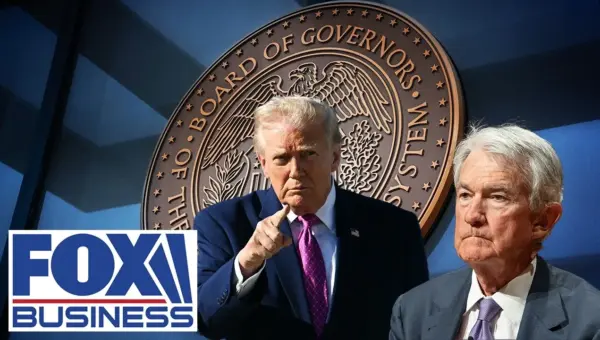
Trump Threatens to Fire Fed Chair Powell Over Building Project
Former President Donald Trump issued a strong ultimatum to Federal Reserve Chair Jerome Powell, threatening to fire him over perceived incompetence and excessive spending on a building project. Trump also expressed support for lowering interest rates and the confirmation of Kevin Warsh.