Trump Declares Victory in Iran Conflict: A War Still Raging?
Donald Trump has repeatedly claimed victory in the ongoing conflict with Iran, stating the war was won in its first hour. However, key shipping routes like the Strait of Hormuz remain blocked, suggesting the conflict is far from over. This disconnect raises questions about the reality of the situation and its global impact.

Trump Declares Victory in Iran Conflict: A War Still Raging?
One month into a conflict with Iran, former President Donald Trump has repeatedly stated that the United States has won. He made these claims just days apart, even saying on March 11th, “We’ve won. We won.
We won the bet. In the first hour it was over.” This strong declaration of victory comes while major shipping lanes remain blocked.
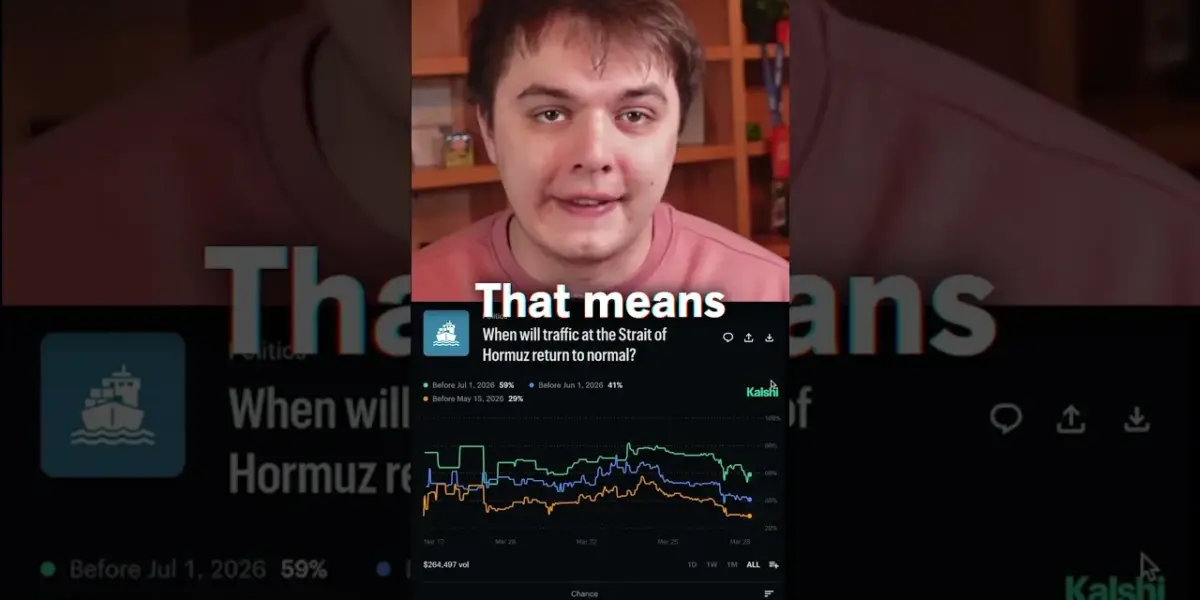
Despite Trump’s assertions, key indicators suggest the conflict is far from resolved. Prediction markets, like Khi, estimate that the Strait of Hormuz may not reopen until July. This ongoing blockage means oil prices will likely remain high, and global markets will continue to face instability.
The Disconnect Between Claims and Reality
The central question arises: if the war has indeed been decisively won, why can’t a single ship safely pass through the Strait of Hormuz? This vital waterway is crucial for global oil transport. Its continued closure directly contradicts claims of a swift and successful conclusion to the conflict.
Trump’s repeated pronouncements of victory seem out of step with the ongoing challenges. The inability to secure passage for even one vessel through the Strait of Hormuz raises serious doubts about the actual state of the conflict. It suggests the war is still very much active.
Historical Context of Declarations of Victory
Declarations of victory in the midst of ongoing conflict are not new in military history. Leaders often face pressure to project strength and assure the public of success, even when the situation on the ground is complex. This can be a way to strengthen public support or influence international perceptions.
However, such early claims can also backfire if events on the ground do not align. When reality doesn’t match the rhetoric, it can lead to a loss of credibility. This is especially true when the stakes, like global energy markets, are so high.
Why This Matters
The implications of this situation are far-reaching. For the United States, a prolonged conflict and continued disruption of oil supplies could have significant economic consequences. It also impacts the nation’s standing on the world stage and its ability to ensure stability in a critical region.
For global markets, the continued closure of the Strait of Hormuz means persistent uncertainty and potential price spikes for oil. This affects everything from the cost of gasoline at the pump to the price of goods transported by sea. The ripple effect can be felt by consumers and businesses worldwide.
Trends and Future Outlook
The current situation highlights a broader trend of complex, often prolonged, geopolitical conflicts in the modern era. These conflicts are rarely resolved with a single decisive battle but rather through a series of ongoing engagements and diplomatic efforts.
The future outlook depends heavily on diplomatic progress and the ability to de-escalate tensions. If the Strait of Hormuz remains closed, the economic fallout could intensify. This could lead to increased pressure for a more robust military or diplomatic solution.
The simple question remains for Donald Trump and the public: if victory has truly been achieved, why is the Strait of Hormuz still choked, and when can the world expect safe passage for ships to resume?
Source: SIMPLE QUESTION For Trump #new #fyp (YouTube)

Related Articles
Iran Conflict: Trump’s Desperation Fuels Iranian Confidence
Retired four-star general Barry McCaffrey and Middle East expert Stephen Cook suggest President Trump's approach to Iran has emboldened the nation, making it feel in control of the Strait of Hormuz. This perception, coupled with domestic political pressure on Trump, creates a complex situation for U.S. foreign policy and global economic stability. The experts also raise concerns about the lack of a coherent national security process and the impact on negotiations.
Europe Charts a New Course Amid Global Shifts
European leaders are prioritizing strategic independence, driven by global uncertainty and shifting U.S. policies. Discussions focus on deepening defense cooperation, bolstering capabilities, and playing a more active diplomatic role in global conflicts. While challenges remain, the continent is charting a course towards greater self-reliance.


Trump’s Security Clearance Questioned Amidst Secret Military Briefings
Senior officials reportedly limited then-President Trump's access to sensitive military planning due to concerns about his impulsiveness and potential to leak information. This exclusion raises serious questions about his fitness for the job and highlights a deep lack of trust within national security circles.