Trump’s Pakistan Meeting Gambit Stalls Amidst Iran’s Demands
Donald Trump's reported attempts to negotiate with Iran via Pakistan are faltering as Iran insists on preconditions. Public statements from both sides reveal deep mistrust and conflicting narratives, particularly concerning the JCPOA and the blockade of the Strait of Hormuz.

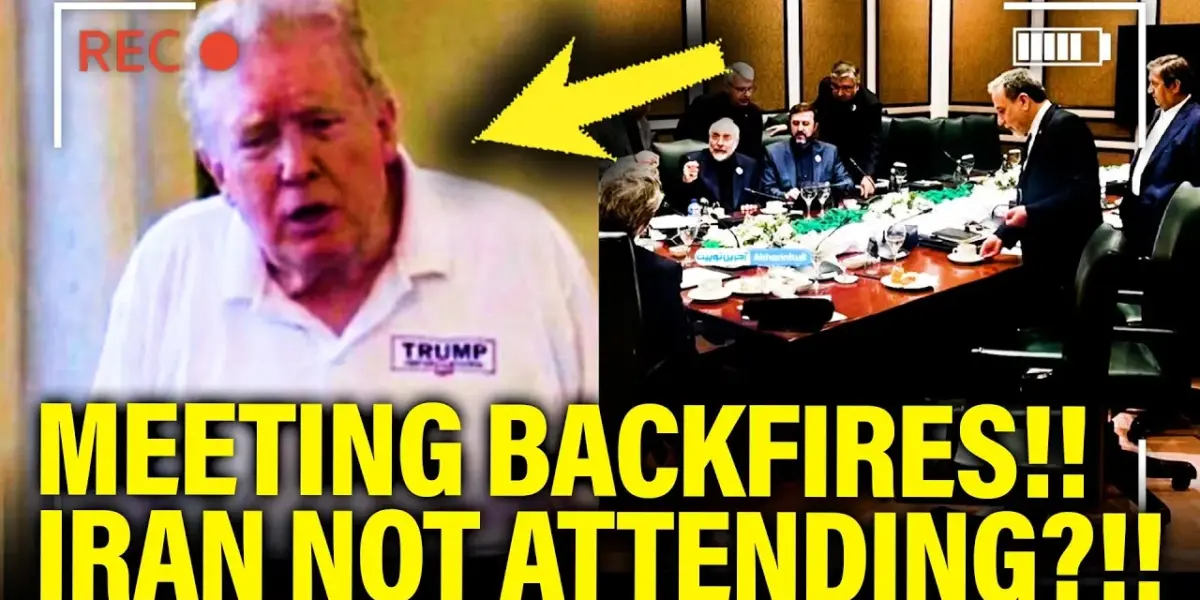
Trump’s Pakistan Meeting Gambit Stalls Amidst Iran’s Demands
Donald Trump is reportedly seeking a meeting with Iran, with Pakistan acting as a go-between. However, these efforts appear to be hitting significant roadblocks.
Iran has publicly stated that they will not attend any talks unless their preconditions are met. This stance directly contradicts the image Trump’s team is trying to project of a willing negotiating partner.
Sources indicate that Iran’s President and Foreign Minister have made public statements outlining their conditions. These statements suggest a deep mistrust of the US and a demand for concrete actions, not just words.
The inclusion of specific individuals like J.D. Vance in potential talks, while excluding others like Witcoff and Kushner, highlights Iran’s desire for a specific type of engagement.
Pakistan’s Role and Trump’s Messaging
Senior Pakistani government officials have expressed confidence in their ability to facilitate the meeting. They are reportedly leaning on Trump to pressure Iran into attending.
Yet, Trump’s own public statements and social media posts paint a different picture. He has claimed victory in a war and suggested that media reports are misleading the enemy.
Trump’s online posts have also touched on regime change and the role of the media, often using strong and sometimes contradictory language. He has also made claims about Iran forcing ships towards the US for oil, a statement that has been met with confusion and is factually questionable in its framing.
Iran’s Preconditions and Sticking Points
Iran’s position is clear: unless Donald Trump agrees to their 10-point framework, there is no point in proceeding with discussions. This framework is seen as a fundamental obstacle, particularly the issue of the US blockade of the Persian Gulf. Iran views this blockade as a threshold negotiating issue.
Iranian officials have communicated through Pakistani intermediaries that they will not participate in what they call an “American theater.” They believe the US is not approaching negotiations realistically and that continuing with current misguided calculations will lead to a waste of time. Iran is prepared for military confrontation if its interests and national security are not protected.
Historical Context and the JCPOA
The discussion often circles back to the Joint Comprehensive Plan of Action (JCPOA), also known as the Iran nuclear deal. Trump has claimed any deal he makes will be far better than the JCPOA, which he criticizes for giving Iran $1.7 billion in cash. However, the transcript suggests this figure is misrepresented and that the money was part of a settlement, not tied directly to the JCPOA, and was not simply “green cash.”
The transcript argues that the Obama administration secured a multilateral deal with inspection mechanisms that made America safer. It also points out that sanctions relief provided by the Trump administration allowed Iran to sell more oil and control the Strait of Hormuz, effectively giving Iran more financial benefit than the disputed $1.7 billion. The current situation is described as a blockade of the Persian Gulf, a stark contrast to the conditions under the JCPOA.
Trust and Future Outlook
The deep historical mistrust between Iran and the US is a significant factor. Iranian President Puzeshkian has stated that unconstructive and contradictory signals from American officials carry a bitter message, suggesting a desire for Iran’s surrender. He emphasizes that Iranians do not submit to force, and aggressive social media posts are not an effective strategy.
Despite Trump’s claims of being under no pressure, the actions of sending envoys and relying on Pakistan to broker a meeting suggest otherwise. Iran’s consistent public statements about preconditions and their distrust of certain US negotiators highlight the challenges ahead. The situation remains fluid, with Iran monitoring US behavior and ready to make decisions to protect its interests.
Why This Matters
The ongoing tensions and the stalled diplomatic efforts have significant implications for global stability and the international oil market. The rhetoric and actions from both sides contribute to uncertainty, potentially leading to economic pain due to supply shocks. The effectiveness of diplomacy hinges on clear communication and a willingness to address core issues, which currently seems to be lacking.
The situation also raises questions about the reliability of information and the role of media in international relations. When conflicting narratives emerge from official sources and public statements, it becomes difficult to assess the true state of affairs. This ambiguity can be exploited for political gain or lead to unintended escalations.
Broader Geopolitical Concerns
Beyond the direct US-Iran negotiations, other regional events are unfolding. The transcript mentions that the ceasefire in Lebanon is not holding, with reports of Israeli strikes and Hezbollah attacks. This indicates a broader pattern of instability in the Middle East.
The transcript touches upon a suspicious car accident in Mexico involving US Embassy officials working with local authorities against drug cartels. The Mexican government is reviewing the incident, highlighting the sensitive nature of US involvement in internal security matters and potential national security law violations.
The article concludes by noting Iran’s stance: until fundamental obstacles are removed and a clear horizon for an acceptable agreement emerges, Iran will not participate in what it views as a deceptive American process. They are prepared for military confrontation and renewed punishment of America if their conditions are not met.
Source: Trump CRASHES OUT as PAKISTAN MEETING BACKFIRES!!!! (YouTube)

Related Articles

Trump’s Iran Threats Expose Desperation Amidst Falling Approval
Donald Trump's recent online statements about Iran, including threats of "total destruction," have alarmed global leaders. These aggressive pronouncements come amidst low approval ratings and a complex geopolitical climate, raising concerns about potential escalation.
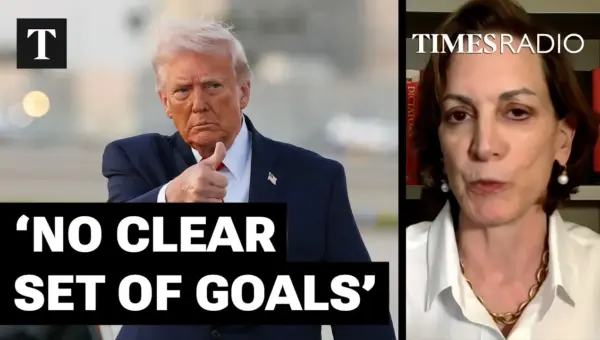
Trump’s Iran Policy Lacks Strategy, Says Journalist
Pulitzer Prize-winning journalist Anne Applebaum criticizes Donald Trump's foreign policy, stating he lacks strategic thinking and a clear "endgame." She points to his unpredictable approach to the Iran conflict and concerns raised within the White House about his decision-making process. Applebaum also discusses allegations of unprecedented corruption and draws lessons from Viktor Orban's recent electoral defeat in Hungary.
Trump Seeks Medal of Honor: A Tarnished Legacy?
A report suggests Donald Trump is considering awarding himself the Medal of Honor, the U.S.'s highest military award. This potential move has sparked debate about presidential power and the integrity of military honors. Critics argue it would devalue the medal and disrespect genuine heroes.