Putin’s Fear: Expert Analyzes Russian Leader’s Inner Doubts
International politics expert Scott Lucas analyzes Vladimir Putin's psychological state, suggesting his strongman image masks fear and uncertainty. The discussion covers stalled peace talks, critiques of external interference, and the transformative impact of the war on both Putin and Zelensky, highlighting Ukraine's resilience and forged national identity.

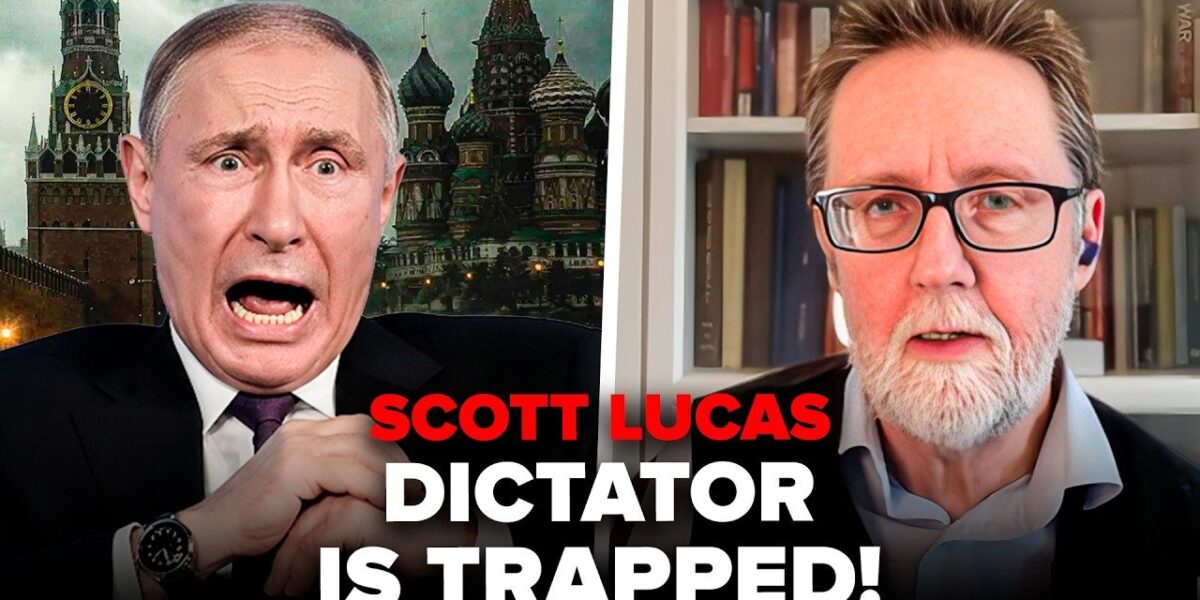
Putin’s Projected Confidence Masks Deep-Seated Uncertainty, Analyst Claims
In the wake of Russia’s ongoing full-scale invasion of Ukraine, an international politics expert has offered a stark assessment of Russian President Vladimir Putin’s psychological state, suggesting that the strongman image carefully cultivated by the Kremlin leader conceals a profound sense of doubt and fear about his own ability to achieve his objectives. Speaking on the fourth anniversary of the full-scale invasion, Professor Scott Lucas of University College Dublin’s Clinton Institute argued that Putin’s actions on the global stage are driven by a desperate attempt to secure a legacy, even as he grapples with the potential for failure.
Zelensky’s ‘World War III’ Claim and Broader Security Threats
The discussion began with Ukrainian President Volodymyr Zelensky’s assertion that Vladimir Putin has initiated a “third world war” and must be stopped. Professor Lucas acknowledged the dramatic impact of such a statement, agreeing that it highlights the broader security threat posed by Russia, extending far beyond Ukraine’s borders. While not labeling the conflict as World War III in a traditional military sense, Lucas concurred that Putin’s ambitions aim to dismantle European and global security structures through a multifaceted approach involving economic, cyber, espionage, and disinformation warfare.
“Putin is trying to undo all of that… it doesn’t mean World War III in the sense of a global military conflict but it means that all areas of your life could be affected by this Russian aggression.”
Lucas emphasized that Putin’s decision to launch the full-scale invasion in February 2022 irrevocably altered lives across Ukraine, Europe, and the world, and that this aggression is indefensible. He noted the irony of Putin, a significant aggressor in post-1945 Europe, simultaneously portraying himself as a victim.
Stalled Peace Talks and Key Obstacles
Addressing the prospects for peace negotiations, Professor Lucas expressed pessimism, stating, “I don’t think we’re close to a deal.” While Ukraine and Europe desire to keep dialogue open, Lucas pointed to significant roadblocks. He explained that while technical discussions on monitoring a ceasefire, such as those held in Geneva, have seen some progress, the political group of negotiations remains completely stalled. A key point of contention is Russia’s insistence on dictating historical narratives rather than engaging in specific compromises.
Lucas identified four critical issues hindering progress:
- The Fate of Donetsk: Russia’s refusal to accept Ukraine’s proposal for a demilitarized zone in Donetsk, despite Ukraine’s willingness to withdraw troops from its controlled areas.
- Security Guarantees: Russia’s opposition to substantial security guarantees for Ukraine, preferring to keep the nation vulnerable and neutral.
- Zaporizhzhia Nuclear Power Plant: The ongoing Russian occupation and attempted seizure of Ukraine’s nuclear facility.
- Priorities for Recovery: Disagreement over whether the focus should be on Ukraine’s recovery and reconstruction, or on US-Russia economic projects.
Lucas argued that until Putin is convinced he cannot achieve his desired legacy of conquering Ukraine and keeping it weak, an agreement remains elusive. This shifts the focus back to supporting Ukraine militarily and financially.
Critique of Steve Witkoff’s ‘Silly War’ Remarks
The interview also addressed controversial comments made by Steve Witkoff, who described the war as “silly” and questioned the value of dignity in the face of extensive killing. Professor Lucas strongly condemned Witkoff’s remarks, questioning his qualifications and impartiality, particularly given Witkoff’s extensive meetings with Putin versus zero visits to Ukraine.
“Who is Steve Wickoff to tell Ukrainians that it is silly to defend their country, their nation, their communities, their families?”
Lucas asserted that dignity has been a driving force behind Ukraine’s resistance since 2014, and particularly since the 2022 invasion. He highlighted President Zelensky’s and the Ukrainian people’s choice to resist rather than surrender, emphasizing their commitment to sovereignty and dignity. Lucas criticized the notion that Ukrainians should surrender their dignity, stating, “Shame on you, sir. Shame on you.” He also touched upon the influence of figures like Witkoff and Jared Kushner, suggesting their involvement, potentially aligned with Donald Trump’s interests, poses an obstacle to ending the invasion, though internal US divisions may prevent Ukraine from being forced to surrender.
Transformation of Putin and Zelensky
Professor Lucas offered insights into how the war has reshaped both Vladimir Putin and Volodymyr Zelensky. He described Putin as having “dug further into his mental and his emotional trench,” driven by a desire to elevate himself to the historical pedestal of Russian leaders by recreating an empire, with Ukraine as a key component. When faced with setbacks, Putin cannot give up, leading to a projection of confidence that masks his underlying fear and uncertainty about achieving his goals.
In contrast, Lucas portrayed Zelensky’s transformation from an actor and TV personality into a resolute leader. He recalled Zelensky’s defiant stance on the night of February 24, 2022, stating, “that was someone who became a president.” While acknowledging Zelensky is not infallible, Lucas praised his ability to connect with his people and the world, maintaining a sense of humor and humanity amidst the conflict. He believes that facing the existential threat of extinction has forged a stronger sense of Ukrainian nationhood.
Skepticism Towards Boris Johnson’s Troop Deployment Proposal
The discussion turned to former British Prime Minister Boris Johnson’s suggestion of deploying non-combat troops to Ukraine before the war’s end. Professor Lucas expressed strong disapproval, calling the proposal “extremely unhelpful” and driven by a desire for headlines rather than practical solutions.
“Mr. Johnson, please stop. Please, please stop saying things to get headlines. You are not helping the situation here.”
Lucas reminded the audience of Johnson’s previous intervention during the Istanbul talks in 2022, which Russia exploited for propaganda purposes, falsely claiming Britain prevented a settlement. He argued that deploying troops without a ceasefire is impractical and dangerous, potentially making them legitimate targets. Lucas believes Johnson’s priority is personal relevance, not the well-being of Ukrainians, and that such statements distract from the need for carefully arranged, coordinated security guarantees.
The Future of Ukraine: Resilience and Rebuilding
Looking ahead, Professor Lucas acknowledged the immense heartbreak and trauma Ukrainians will face even after the war ends. He stressed the importance of remembering what has happened and focusing on building a safe and better Ukraine for future generations. He drew a parallel to post-World War II Britain, where a vision for a better future emerged. Lucas expressed hope that Ukraine will not be defined by Vladimir Putin, but by its own resilience, dignity, and values.
He concluded by stating that Ukraine became a nation on February 24, 2022, when faced with the choice between surrender and persistence. This shared struggle, he believes, has forged a stronger national identity, emphasizing that “We survived. And not only did we survive, we survive because we kept our dignity and we kept our values.”
Source: ⚡️Putin is FRIGHTENED! The TRUTH behind the strongman image (YouTube)

Related Articles
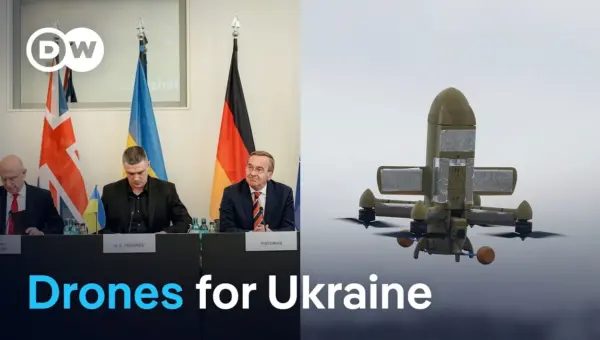
UK Pledges 120,000 Drones to Ukraine in Major Aid Package
Britain has pledged 120,000 drones to Ukraine, marking its largest aid package of its kind, during a meeting of the Ukraine Defense Contact Group in Berlin. The meeting highlighted both strong international solidarity and ongoing challenges in aid delivery, as Germany also boosts its own defense capabilities.
Russia’s War Costs Strain Putin’s Elite Bargain
Russia's prolonged war in Ukraine is straining President Putin's grip on power. Declining oil revenues and escalating military costs are forcing internal power shifts, with intelligence services reportedly gaining influence. This financial pressure is creating significant discontent among the elite and risking broader instability within the Kremlin.
Ukraine Strikes Russian Oil, Army Pushes Westward
Ukraine's spring offensive is underway, with Ukrainian forces making gains and forcing difficult choices for the Russian army. Meanwhile, Ukraine has intensified drone strikes on Russian oil infrastructure, aiming to cut off war funding. International interest in Ukraine's drone technology is growing, potentially reshaping global defense markets.