Dwarf Planet Eris Reignites Solar System Planet Debate
The discovery of Eris, a massive object in the outer solar system, challenged the definition of a planet. This led to the IAU's 2006 decision to reclassify Pluto as a dwarf planet and establish new criteria for planetary status, expanding our understanding of the solar system's diverse populations.

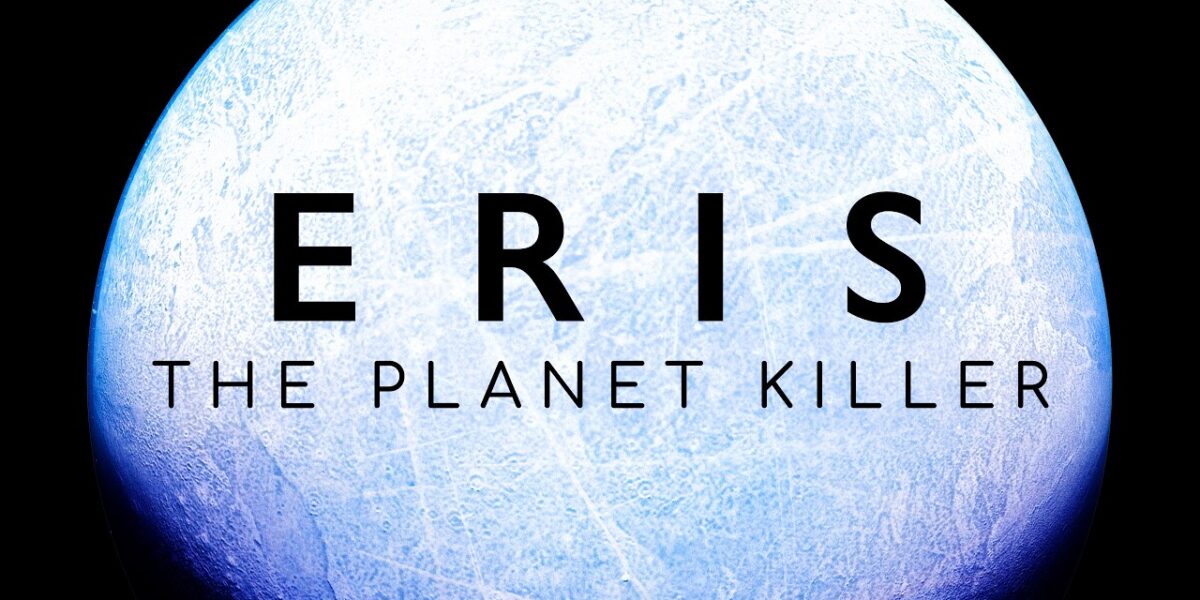
Dwarf Planet Eris Reignites Solar System Planet Debate
For over seven decades, our understanding of the solar system’s architecture was seemingly complete, a neat arrangement of nine planets. However, lurking in the frigid, distant reaches beyond Neptune, a celestial body was waiting to challenge this established order. Its discovery would not only introduce a new name to our planetary roster but would ignite a profound debate over the very definition of a planet, ultimately redrawing our cosmic map and forever altering our perception of the solar system.
The Hunt for Distant Worlds
The story of this celestial disruptor, eventually named Eris, begins not with a serendipitous observation but with a dedicated, systematic survey of the solar system’s outer fringes. Astronomers Mike Brown, Chad Trujillo, and David Rabinowitz, working at the Palomar Observatory in California, embarked on a mission to catalog Trans-Neptunian Objects (TNOs). Using the Samuel Oschin telescope, they captured vast swathes of the sky, employing automated software to flag objects moving against the backdrop of static stars. Their efforts had already yielded discoveries like Quaoar, Orcus, and Sedna, gradually illuminating the dim, distant realm.
Yet, Brown harbored a conviction that a more significant discovery awaited. As he famously wrote, “There had to be a tenth planet. The possibility that Pluto was a unique planetary oddball out at the edge of the solar system seemed absurd to me.” Driven by this intuition, he began manually re-examining older datasets that his software had overlooked. On January 5, 2005, after months of meticulous review, Brown scrutinized a sequence of images taken on October 21, 2003. There, a faint point of light, moving with almost imperceptible slowness, caught his eye. Its brightness suggested a substantial size or high reflectivity, and its glacial pace indicated an immense distance. Brown’s immediate thought was exhilarating: “I found a planet!”
A Competitive Discovery and a Name of Strife
The team, provisionally designating the object 2003 UB313, began the crucial work of tracking its orbit and determining its size. They intended to keep their findings confidential until further observations were complete. However, the competitive nature of planetary science intervened. On July 27, 2005, another team controversially announced the discovery of Haumea, another large TNO, after accessing Brown’s team’s public observation logs. To avoid being preempted again, Brown’s team was compelled to go public. On July 29, 2005, they announced the discovery of not only Haumea but also the new, significant object that would soon be known as Eris.
The choice of name for this cosmic interloper was deliberate and symbolic. In Greek mythology, Eris is the goddess of strife, known for instigating quarrels. Her act of tossing a golden apple inscribed “For the fairest” among goddesses led to the Trojan War. In 2005, the discovery of the celestial body bearing her name served as a modern-day equivalent, casting a golden apple into the halls of astronomy and igniting a fierce debate over the definition of a planet.
The Great Planet Debate: Defining Our Solar System
The core of the controversy lay in the simple yet profound question: what constitutes a planet? Initial estimates suggested Eris was larger than Pluto, and subsequent calculations, based on the orbit of its moon, revealed it was 27% more massive. If Pluto qualified as a planet, then Eris, its more massive counterpart, unequivocally should as well. This raised a critical question: where would the line be drawn? If Eris were a planet, what about other large TNOs like Makemake, Haumea, and Sedna that had also been discovered? The situation presented an unavoidable logical quandary: as Mike Brown put it, “We were either going to have to add new planets, or subtract one.”
The International Astronomical Union (IAU), the global authority on astronomical nomenclature, was tasked with resolving this issue. At its 26th General Assembly in Prague in August 2006, the question of “what is a planet?” was formally debated and voted upon for the first time in history. The discussion exposed a deep schism within the astronomical community, broadly dividing into two camps.
- Geophysical Definition: Proponents argued that a planet should be defined by its intrinsic physical properties. If an object is massive enough for its gravity to shape it into a nearly round form (hydrostatic equilibrium), it should be considered a planet. Under this definition, Pluto, Eris, Ceres (formerly considered an asteroid), and potentially dozens of other bodies would have been classified as planets.
- Dynamical Definition: This perspective emphasized an object’s gravitational influence on its surroundings. A true planet, they contended, must be the dominant gravitational force in its orbital zone, having “cleared the neighbourhood around its orbit.”
The voting process itself was mired in controversy. The final vote occurred on the last day of the ten-day conference, by which time a significant number of the 2,500 attendees had already departed. Only 424 astronomers were present to cast their ballots, a small fraction of the global community. Ultimately, the dynamical definition prevailed.
A New Classification: Dwarf Planets
The IAU passed Resolution 5A, establishing a three-part definition for a planet in our solar system: it must (a) orbit the Sun, (b) be in hydrostatic equilibrium, and (c) have cleared its orbital neighborhood. Pluto, sharing its orbital path with Neptune and numerous Kuiper Belt Objects, failed to meet the third criterion. Consequently, a new category was created: the “dwarf planet,” for objects that satisfy the first two criteria but not the third. Crucially, a subsequent resolution that would have classified dwarf planets as a sub-category of planets was defeated. Instead, the IAU declared planets and dwarf planets as distinct classes of celestial bodies.
In an instant, the solar system was officially recognized as having only eight planets. Critics quickly pointed out the ambiguities in the definition, particularly the phrase “cleared the neighbourhood,” and noted that the criterion “in orbit around the Sun” was specific to our solar system, neglecting the thousands of exoplanets discovered. The definition was seen by many as a reactive, localized solution rather than a universal, elegant principle.
Eris: The Renegade World
With the debate officially settled, the discovery team bestowed upon their troublemaking world the name Eris, a fitting tribute to its role in sowing discord. Formally accepted in September 2006, the name cemented Eris’s legacy as the celestial apple of discord. While Pluto was reclassified, the discovery brought recognition to other bodies like Ceres, which joined the dwarf planet ranks in 2006.
Eris resides not in the relatively stable Kuiper Belt but in the more chaotic “scattered disk.” This region is home to icy bodies with extreme orbits, likely scattered into their current paths by Neptune’s migration billions of years ago. Eris’s orbit is a vast ellipse, taking 557 Earth years to complete. It ranges from approximately 38 AU (Astronomical Units) at its closest approach to nearly 98 AU at its farthest, a distance nearly three times Pluto’s average orbit. Furthermore, Eris’s orbit is highly inclined at 44 degrees to the ecliptic, the plane of the major planets, causing it to soar high above and plunge far below the rest of the solar system.
For years, Eris was believed to be larger than Pluto. However, a stellar occultation in 2010 allowed for precise measurement. The result was surprising: with a diameter of 2,326 kilometers, Eris was almost exactly the same size as Pluto, and slightly smaller. The key difference emerged from its mass: 27% greater than Pluto’s, packed into a slightly smaller volume, indicating Eris is significantly denser. Its density of 2.43 g/cm³ suggests a predominantly rocky composition with a thin ice mantle, unlike Pluto’s estimated 70-30 rock-to-ice ratio.
Eris boasts one of the most reflective surfaces in the solar system, with an albedo of 0.99. This brilliance is likely due to a phenomenon called atmospheric collapse. Like Pluto, Eris possesses an atmosphere of nitrogen and methane. As Eris journeys to its distant aphelion, this atmosphere freezes and falls as bright frost. Upon returning closer to the Sun, the frost sublimates, renewing the atmosphere before freezing again centuries later. Recent observations from the James Webb Space Telescope suggest that isotopes of methane on Eris’s surface may indicate geothermal activity, hinting at unexpected internal heat.
A Moon and a Legacy
The discovery that sealed Pluto’s fate, however, came in September 2005: Eris has a moon. This companion, named Dysnomia after Eris’s mythological daughter, allowed astronomers to precisely calculate Eris’s mass by observing its gravitational pull. This calculation definitively proved Eris was more massive than Pluto, making the planet debate a pressing necessity.
Dysnomia, while only 25% of Eris’s diameter, is one of the largest moons of any dwarf planet. In stark contrast to Eris’s brilliant white surface, Dysnomia is incredibly dark, suggesting a different surface composition. The leading hypothesis for Dysnomia’s origin is a giant impact event early in the solar system’s history, similar to the formation of Earth’s Moon. This violent birth likely stripped away volatile ices, leaving a darker, rockier body.
Mike Brown has earned the moniker “the Pluto killer,” but his discovery’s true legacy is more profound. Finding Eris did not destroy Pluto’s status; rather, it revealed Pluto’s true family and expanded our understanding of the solar system. Eris helped us move from a flawed model of eight planets and one oddity to a more coherent picture: the inner terrestrial planets, the gas and ice giants, and a vast third realm of thousands of icy dwarf planets. Eris and Pluto reign as the most prominent members of this trans-Neptunian population.
Eris remains the most massive known object in our solar system yet to be visited by a spacecraft. A mission to Eris would take an estimated 25 years, a journey spanning generations. For now, the goddess of discord guards her secrets. Her discovery resolved a great debate but opened a new chapter in solar system exploration, reminding us that the most exciting discoveries are those that reveal the vastness of what remains to be explored.
Source: The Discovery That Demoted Pluto (YouTube)

Related Articles

Artemis II Astronauts Set New Human Distance Record
The Artemis II mission set a new human distance record, reaching 413,145 km from Earth. The mission also established a record for the greatest distance between two groups of humans, with astronauts on China's Tiangong space station being 419,656 km away from the Artemis II crew.


Distant Galaxy Appears to Break Light Speed Limit
A distant galaxy, GN-z11, appears to be moving away from Earth faster than the speed of light due to the expansion of space. This phenomenon, while seemingly violating Einstein's laws, is a key indicator of the universe's dynamic growth and offers insights into its early history.


Artemis 2 Crew Captures Stunning Earth Views from Moon Orbit
The Artemis 2 mission has captivated the world with stunning images of Earth from lunar orbit and record-breaking distances. Meanwhile, proposed NASA budget cuts, new insights from the James Webb Telescope, and novel approaches to exploring Mercury highlight the dynamic nature of space exploration.