Physicists Devise Clever Ways to Detect Gravity’s Quantum Particle
Physicists are exploring innovative methods, such as resonant mass detectors and optical Weber bars, to overcome the immense challenges of detecting the elusive graviton, the quantum particle of gravity. These experiments aim to leverage gravitational waves and advanced quantum sensing techniques to probe the quantum nature of spacetime.

Physicists Devise Clever Ways to Detect Gravity’s Quantum Particle
For decades, physicists have pursued the elusive graviton, the theoretical quantum particle that mediates the force of gravity. While direct detection has long seemed an insurmountable challenge, bordering on the impossible, recent theoretical and experimental advancements are offering ingenious new pathways to potentially glimpse this fundamental building block of spacetime.
The Graviton: A Needle in a Cosmic Haystack
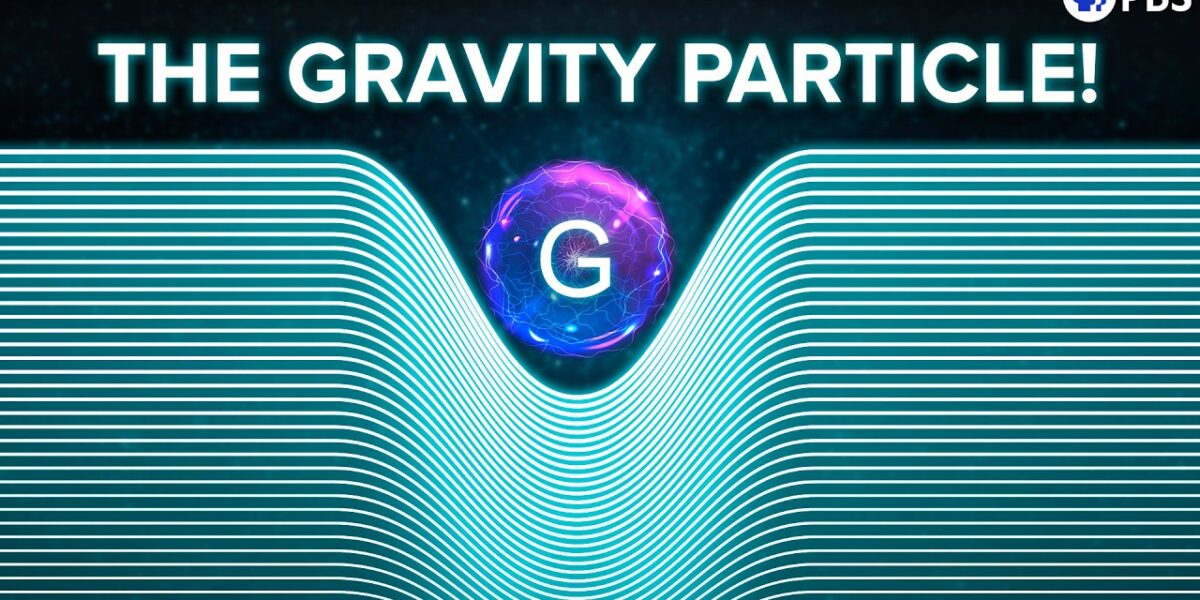
Gravity, as described by Einstein’s theory of general relativity, is a smooth curvature of spacetime. However, at the quantum level, physicists theorize that this force, like others such as electromagnetism, is carried by discrete packets of energy – gravitons. The immense difficulty in detecting a graviton stems from two primary factors: gravity is extraordinarily weak, and elementary quantum particles are incredibly tiny. This means the probability of a graviton having a sufficiently direct and energetic interaction with another particle to be detected is minuscule. Previous conceptual approaches suggested the need for detectors the size of planets and graviton sources like stellar remnants, pushing practical detection into the distant future.
A Macroscopic Quantum Particle: The Resonant Mass Detector
A breakthrough proposal, outlined in a 2024 paper by Turbar, Manacandon, Badel, and Pikovsky, suggests a novel approach using quantum sensing and a “resonant mass detector.” Instead of trying to detect the graviton’s subtle gravitational field, this method focuses on its direct interaction with a larger, human-scale quantum object. The proposed detector is a metal cylinder, cooled to temperatures near absolute zero (a fraction of a Kelvin). At such extreme cold, the atoms in the cylinder’s crystal lattice are nearly motionless, and the collective vibrational modes of the metal – known as phonons – enter a quantum state. These phonons, akin to quanta of sound, act as the macroscopic quantum particles. A phonon has a vastly larger “cross-section” (a measure of interaction probability) for a graviton than a single electron. Thus, a passing graviton has a non-negligible chance of exciting a phonon in the cylinder, a phenomenon that could then be detected using sophisticated quantum sensing techniques.
Leveraging Gravitational Waves for Detection
While the resonant mass detector offers a more accessible target for gravitons, a significant hurdle remains: distinguishing a graviton-induced phonon excitation from the overwhelming noise of thermal fluctuations, seismic vibrations, cosmic rays, and electromagnetic interference. The paper proposes a brilliant solution: synchronizing the detector with existing gravitational wave observatories like LIGO. Since 2015, LIGO has detected hundreds of gravitational waves, which are essentially coherent floods of many gravitons. A gravitational wave from a black hole merger, for instance, could contain an estimated 10^36 gravitons, all oscillating at a well-defined frequency. By designing a resonant mass detector whose specific phonon frequency matches the expected frequency of a gravitational wave, scientists could look for a phonon excitation that occurs precisely when LIGO detects a gravitational wave of the same frequency. If the rate of random noise-induced excitations is sufficiently low, a coincident detection would provide strong evidence for the presence of gravitons.
Material Choices and Challenges
The choice of material and size for the detector depends on the target gravitational wave frequency. For a neutron star-neutron star merger, a 15 kg beryllium bar might suffice. To detect gravitons from a black hole merger (around 175 Hz), a 10-ton niobium bar cooled to 1 millikelvin would be required. Reaching temperatures of 1 millikelvin is currently at the edge of our technological capabilities, with state-of-the-art cooling reaching a few hundred millikelvin. Furthermore, the challenge of continuous, precise quantum sensing without disturbing the delicate quantum state of the detector remains a significant engineering feat, though potentially achievable within decades.
The Photoelectric Effect Analogy and a Deeper Question
Even with a successful coincident detection, a subtle point remains: does this definitively prove the existence of gravitons? The authors draw an analogy to the photoelectric effect, which was historically used to argue for the existence of photons. The photoelectric effect demonstrates that light of a certain frequency is needed to eject electrons, regardless of its intensity. This was interpreted as light being composed of discrete energy packets (photons). However, a purely classical electromagnetic field can also explain this by slowly increasing the probability of an electron absorbing enough energy to make a quantum jump. Similarly, a classical gravitational field, if it has the correct frequency, could potentially excite a phonon in the resonant mass detector without the need for discrete gravitons.
Towards Definitive Proof: Non-Classical States
To truly prove the existence of gravitons, experiments would need to prepare the gravitational field in a “non-classical state” – analogous to using extremely low-intensity lasers in the photoelectric effect experiment to ensure only a few photons hit at a time. By analyzing the distribution of energy transfers, scientists can then distinguish between a quantized field (photons) and a smooth, classical field. Applying this to gravity is exceptionally challenging, as there are no known natural sources of non-classical gravitational fields or single gravitons. This brings the challenge back to creating suitable graviton sources or developing even more sophisticated detectors.
Optical Weber Bars: A New Frontier
Another promising avenue is the “optical Weber bar,” proposed by Ralph Schutz. This concept replaces a solid resonant mass with laser pulses within an interferometer. A passing gravitational wave can impart a tiny but lasting energy to the light, causing a measurable phase shift. Unlike LIGO, which measures the arm length changes caused by a wave, this method aims to convert the gravitational wave’s modulation into a permanent frequency and energy shift of photons. This energy transfer, in graviton terms, can be seen as stimulated emission or absorption of gravitons by light, akin to lasing a gravitational wave. While the baseline optical Weber bar might be feasible with current technology, a version capable of detecting the signature of quantum gravity would require preparing the light in a strongly non-classical state. Such an experiment could reveal a quantum superposition of the gravitational wave, providing definitive evidence of its quantum nature.
The Future of Quantum Gravity Detection
While the universe may have seemed intent on hiding the quantum nature of gravity, brilliant minds are devising clever ways to probe its secrets. Experiments like the resonant mass detector and the optical Weber bar, though facing significant technical hurdles, offer realistic pathways to potentially detect the graviton or at least reveal the quantum characteristics of gravity. These endeavors, pushing the boundaries of quantum sensing and interferometry, represent humanity’s persistent quest to understand the fundamental fabric of reality, moving us closer to a complete picture of the cosmos.
Source: The Universe Tried to Hide the Gravity Particle. Physicists Found a Loophole. (YouTube)

Related Articles


Astrophysicist Shares Breast Cancer Journey & Science Insights
Astrophysicist Dr. Becky Smethurst shares her breast cancer diagnosis journey and emphasizes the importance of evidence-based medicine over unproven treatments. She also discusses her passion for space and scientific discovery.


Universe’s End Time Shrinks Dramatically
New research suggests the universe's end may arrive much sooner than previously thought, with a revised timeline of 10 to the power of 78 years. This 'heat death' theory posits that all matter will decay, not just black holes. While still an immense duration, it's a significant shift from earlier predictions.


Loeb Challenges Musk’s Mars Dream, Eyes Space Habitats
Astrophysicist Avi Loeb criticizes Elon Musk's Mars colonization plans, calling the planet uninhabitable. He proposes building large, city-sized space platforms instead, arguing this is a more scientifically sound and achievable goal for humanity's future in space.