Trump’s Bold Claim Undermines Military Findings on School Bombing
Former President Trump's claim that Iran, not the US military, bombed a boys' school contradicts official findings. This analysis explores the critical difference between fact and opinion, the implausibility of alternative narratives, and the implications for trust and accountability in public discourse.

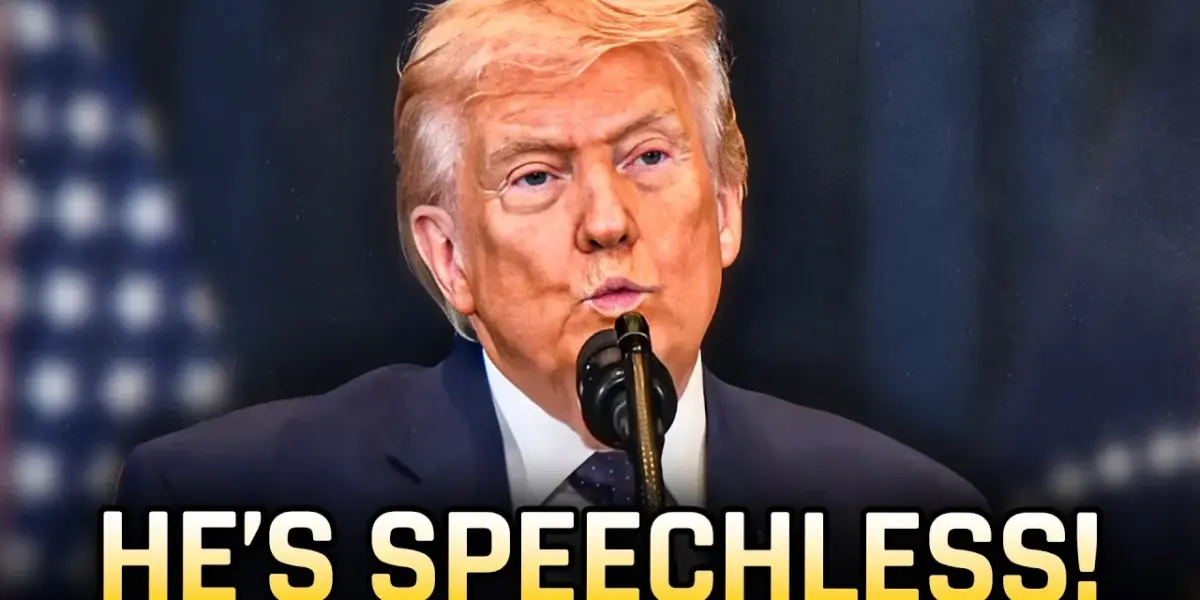
Trump’s Bold Claim Undermines Military Findings on School Bombing
In the midst of a developing conflict, a tragic incident involving the bombing of a girls’ school in Iran, resulting in at least 160 confirmed deaths, has been followed by further devastating news: a boys’ school was also bombed days later. The military, after an investigation, confirmed its responsibility for the latter attack, stating it was not intentional but indeed carried out by their forces. However, former President Donald Trump has publicly contradicted this official military assessment, asserting his opinion that Iran was responsible for the bombing of the boys’ school.
The Nature of Fact and Opinion
This assertion by Trump raises a fundamental question about the distinction between fact and opinion. The speaker in the video transcript argues forcefully that one cannot have an opinion on a factual event that has demonstrably occurred. To state, “In my opinion, the sun comes up every day,” is not an expression of personal belief but a mischaracterization of an observable reality.
Similarly, when military investigators confirm their forces conducted an operation that resulted in civilian casualties, that confirmation represents a factual finding, not a matter open to subjective interpretation or opinion. While one can offer opinions on the meaning, implications, or consequences of a fact, the fact itself is established through evidence and investigation.
Contradicting the Official Narrative
The transcript highlights a stark contrast between Trump’s declaration and the response from other public figures. For instance, the interviewer, Hegseth, when presented with Trump’s claim, reportedly responded by stating that the matter was under investigation, indicating an unwillingness to echo Trump’s definitive assertion.
Further, Mike Waltz, identified as a US Ambassador to the UN and a veteran, emphasized the military’s commitment to avoiding civilian casualties while acknowledging that tragic mistakes can occur. This measured approach from those in positions of authority or with military backgrounds stands in direct opposition to Trump’s unvarnished and, according to the transcript, factually unsupported declaration.
The Tomahawk Missile Discrepancy
Adding another layer to the controversy is the reported use of a Tomahawk missile in the bombing of the school. The transcript points out that the United States military is the sole entity possessing Tomahawk missiles. This fact makes the argument that Iran somehow acquired and used these sophisticated weapons against its own school particularly implausible.
Some conservative commentators, as noted, have attempted to defend Trump’s statement by suggesting Iran might have stolen or obtained US Tomahawk missiles. The logic presented is that Iran would then use these advanced weapons to bomb its own school, a scenario the transcript deems nonsensical and illogical. The implication is that such a narrative strains credulity to the breaking point, further undermining any attempt to refute the military’s confirmation of its own involvement.
Why This Matters
The discrepancy between official military findings and a prominent political figure’s public statements has significant implications. Firstly, it raises concerns about the erosion of trust in established institutions and factual reporting. When a former leader dismisses confirmed facts in favor of an unsubstantiated opinion, it can sow confusion and distrust among the public, particularly during times of conflict when clear and accurate information is paramount.
Secondly, it can undermine diplomatic efforts and international perceptions of the United States. Acknowledging responsibility for accidental casualties, however tragic, is often seen as a sign of accountability and a commitment to international humanitarian law. Contradicting such acknowledgments with unsubstantiated claims can lead to accusations of deception or a lack of transparency.
Historical Context and Trends
This incident is not without historical precedent. Throughout modern conflicts, there have been instances where military actions have resulted in unintended civilian casualties. The way these events are communicated, investigated, and acknowledged has evolved over time, influenced by media scrutiny, international law, and public pressure.
The increasing speed and reach of information dissemination through social media and online platforms mean that such incidents are often debated and analyzed in real-time, making the role of factual accuracy even more critical. The current trend in political discourse, where factual claims are sometimes challenged or reinterpreted through partisan lenses, makes events like this particularly sensitive and prone to politicization.
Implications and Future Outlook
The future outlook for how such incidents are handled will likely depend on several factors. A continued emphasis on transparency and accountability by military and government bodies will be crucial in maintaining public trust. The media’s role in fact-checking and providing context will also be vital.
As political rhetoric becomes increasingly polarized, the ability to distinguish between verifiable facts and subjective opinions will be a significant challenge. The incident highlights the importance of rigorous journalistic inquiry and the need for public figures to engage with factual information responsibly. The long-term impact on public perception and international relations hinges on the consistent adherence to truth and accountability, even when the facts are uncomfortable.
Source: Trump STUNNED, Caught LYING In Front of Everyone (YouTube)

Related Articles
Trump’s Military Purge: Are Generals Being Replaced by Loyalists?
Top military leaders are being removed at an alarming rate, raising concerns about loyalty replacing experience. This analysis explores the pattern of dismissals, historical parallels, and the potential impact on national security.

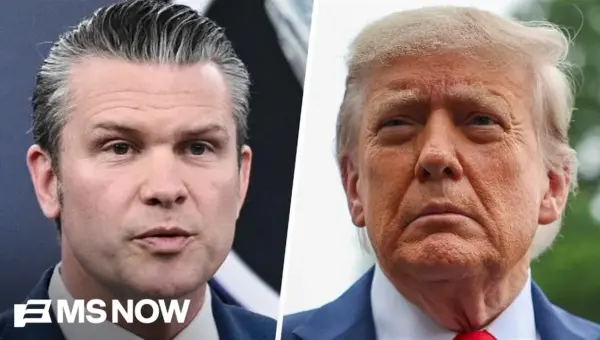
Dem Lawmaker Slams Trump’s Iran Policy, Navy Secretary Firing
Democratic Congressman Gregory Meeks sharply criticized President Trump's Iran policy, calling for diplomacy over military action. He also expressed deep concern over the recent firing of Navy Secretary John Phelan amidst ongoing operations. Meeks argued that the administration lacks a clear strategy and sufficient congressional oversight.
Trump Orders Navy to Shoot Smugglers in Hormuz Strait
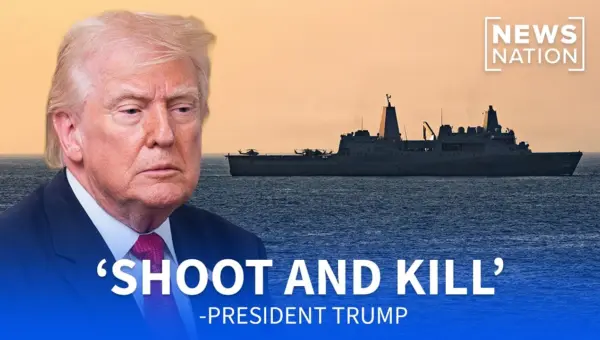
President Trump has ordered the U.S. Navy to shoot and kill any small boats laying mines in the Strait of Hormuz. This action escalates tensions with Iran, which has also seized vessels in the region. The move aims to protect vital global oil shipping lanes.