Markets Reeling as Biden’s Mideast Strategy Faces Scrutiny
Global financial markets experienced sharp volatility as investor confidence wavered amid perceived shifts in the Biden administration's Middle East strategy. The stock market saw significant fluctuations, with analysts advising caution for individual investors seeking to trade on geopolitical headlines.


Markets Volatile Amid Shifting Biden Administration Stance
New York, NY – March 9, 2024 – Global financial markets experienced a turbulent trading session on Friday, with investor confidence wavering in response to perceived shifts in the Biden administration’s approach to the ongoing conflict in the Middle East. The stock market saw significant fluctuations throughout the day, ultimately closing with a slight uptick before futures began to slide again as the close approached. This volatility underscores a growing unease among traders and investors attempting to navigate the complex geopolitical landscape and its direct impact on economic stability.
Uncertainty Drives Trader Behavior
The day’s trading was characterized by significant swings, prompting one market analyst to describe it as “bonkers.” Initially, major indices experienced substantial declines. However, a mid-day rally saw the market recover some of those losses, only to see futures retreat again in after-hours trading.
This erratic behavior is largely attributed to the perceived ambiguity surrounding the White House’s timeline and strategy concerning the escalating tensions. While some speculate this ambiguity could be a deliberate tactic to keep adversaries guessing, it appears to be fostering significant uncertainty among market participants.
“You know, it was a bonkers day. That’s a technical term. Yeah, right.
It was down a lot. Then it was up and then now trying to find its footing here.”
Advice for the Average Investor
In light of the prevailing uncertainty, financial experts are advising individual investors, particularly those with a long-term, buy-and-hold strategy, to exercise caution. The prevailing sentiment is that trading based on daily headlines driven by geopolitical developments is a precarious endeavor. The rapid and unpredictable nature of market movements in response to such news makes it difficult to make informed investment decisions, potentially leading to significant losses for those attempting to time the market.
The core issue highlighted is the difficulty in discerning a clear and consistent policy direction from the administration regarding the critical issues in the Middle East. This lack of clarity translates directly into market apprehension, as investors struggle to price in the potential economic ramifications of prolonged or escalating conflict. The interplay between geopolitical events and financial markets has rarely been more apparent, with every statement and action being scrutinized for its potential impact on global trade, energy prices, and overall economic growth.
Broader Economic Implications
The volatility observed in the stock market is a reflection of broader economic concerns. The ongoing conflict in the Middle East has significant implications for global energy supplies, shipping routes, and international trade.
Any disruption or escalation in the region can lead to increased oil prices, higher shipping costs, and a general slowdown in economic activity. Investors are keenly aware of these potential ripple effects, which can impact corporate earnings, consumer spending, and inflation rates.
The president’s “wishy-washy” stance, as described by some observers, adds another layer of complexity. While strategic ambiguity can sometimes be a tool of diplomacy, in financial markets, it often breeds uncertainty and risk aversion.
Traders and algorithmic trading systems react swiftly to perceived shifts in policy, leading to the kind of sharp, unpredictable movements witnessed on Friday. The challenge for the administration is to project strength and clarity without exacerbating the situation, a delicate balancing act with significant economic consequences.
Looking Ahead
The coming days and weeks will be crucial in determining the market’s trajectory. Investors will be closely watching for any further clarification from the Biden administration regarding its strategy in the Middle East. Any concrete policy announcements or clear indications of a de-escalation in the conflict could provide much-needed stability to the markets.
Conversely, continued ambiguity or further escalation of regional tensions could lead to prolonged market volatility and increased economic headwinds. The ability of policymakers to manage both the geopolitical and economic fallout will be paramount in restoring investor confidence.
Source: LIVE: NBC News NOW – March 9 (YouTube)

Related Articles


Ukraine Strikes Cripple Russian Oil; US Goes Global
Ukraine's drone attacks are crippling Russian oil exports and production, forcing significant output reductions. Simultaneously, the U.S. Navy is expanding its reach globally, seizing Iranian oil tankers far from the Persian Gulf. This dual pressure signals a potential breakdown of global trade in energy, agriculture, and manufacturing.


Russia’s Economy Crumbles Under Sanctions, Dissent Grows
New intelligence reports indicate Russia's economy is collapsing under sanctions, with falling oil revenues and rampant inflation. Dissent is growing, with prominent figures and even pro-Kremlin bloggers openly criticizing the government and President Putin.
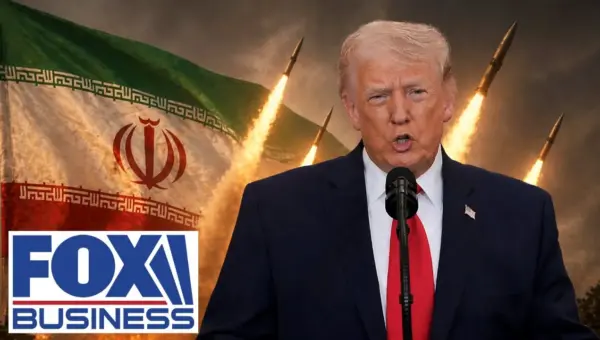
Trump Warns Iran: Bombing Could Start ‘Tomorrow’
President Trump has signaled a tough stance on Iran, warning that he expects to be "bombing tomorrow" if a satisfactory deal isn't reached, with the current cease-fire set to expire. Despite the escalating rhetoric, financial markets have remained measured, seemingly pricing in a future resolution and a potential "peace dividend."