Putin’s Health Scare, Russia Eyes New Alliances Amid Global Turmoil
President Putin's recent re-recorded address has fueled speculation about his health, while a Kremlin spokesperson declared international law obsolete. Meanwhile, global oil prices surged amid Middle East tensions, with former President Trump defending the price hike. Ukraine has offered drone technology and expertise to the U.S. and Middle Eastern nations, seeking crucial military aid in return.

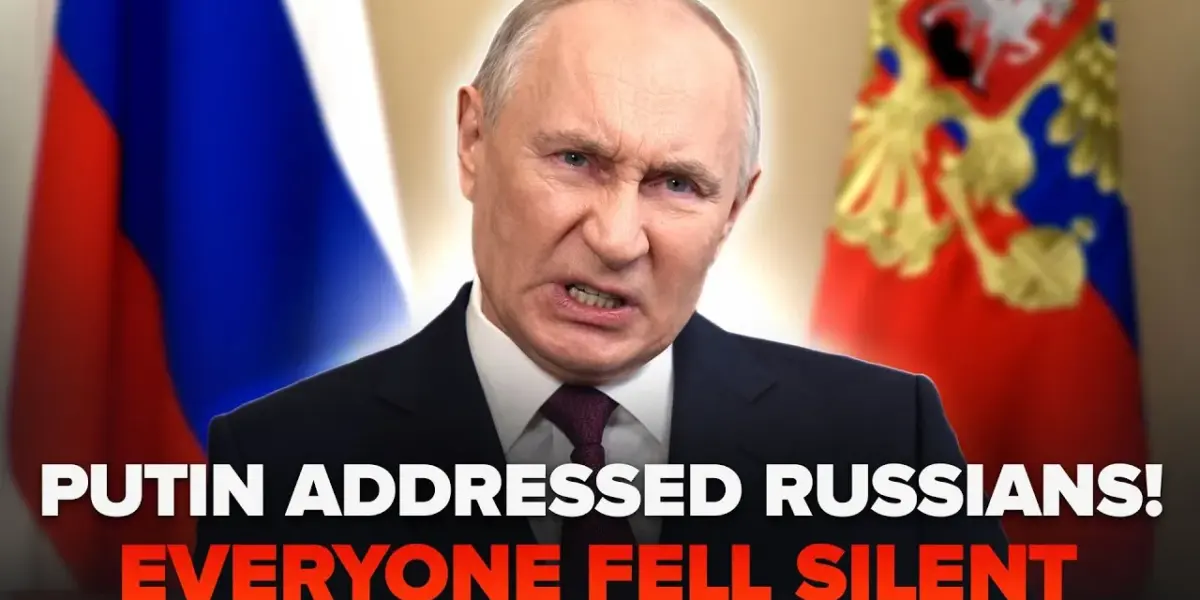
Putin’s Re-recorded Address Sparks Health Speculation
A recent video address by Russian President Vladimir Putin, intended to congratulate Russian women on International Women’s Day, has become a focal point of international attention and speculation regarding his health. The Kremlin press service released an unedited 6-minute, 90-second clip on the night of March 8th. In the initial recording, Putin coughed and complained of a “tickle in my throat,” requesting a re-take.
“You know, let me say it once more because I had a tickle in my throat. Yes, a tickle. I almost coughed.
I’ve been speaking a lot today,” he was heard saying. The unedited version was quickly removed from the Telegram channel of the Russian president’s press service, with an edited version lasting 2 minutes and 52 seconds published approximately 20 minutes later.
While some government agencies and pro-Kremlin media initially reposted the unedited version, they too subsequently removed it. However, the original recording has been preserved on some Telegram channels, fueling further discussion.
Kremlin Declares International Law Obsolete Amid Geopolitical Shifts
In parallel to the speculation surrounding Putin’s health, Kremlin spokesperson Dmitry Peskov has declared that international law has effectively ceased to exist in practice. According to a report in Russian media, Peskov stated in a comment to Russian propagandist Pavel Zarubin that “we have all in a sense lost what we call international law. Honestly, right now I don’t even understand how to call on anyone to comply with the norms and principles of international law.
It effectively no longer exists. De jure it is there, but de facto it is gone.” He further questioned what legal framework has replaced it, suggesting that the lines between legality, norms, and Russia’s national interests have become blurred.
Peskov attributed this shift to the “significant destabilization of the region” caused by ongoing conflicts and unresolved issues, resulting in economic and political consequences. He asserted that in this “perfect storm,” it is necessary for Russia to “focus on ourselves, on our interests, on our potential.”
Iran Partnership and Shifting Military Recruitment
The geopolitical landscape continues to evolve with Iran officially confirming its close partnership with Russia and ruling out any possibility of a truce with Israel, according to Iranian Foreign Minister Abbas Arachi. Meanwhile, Russian units are reportedly recruiting Russian citizens with promises of substantial payments for service in Africa. However, reports indicate that these recruits are being sent to the front lines in Ukraine, contrary to the initial promises made to them.
Trump Defends Oil Price Surge Amidst Iran Tensions
Former U.S. President Donald Trump has defended the recent spike in oil prices, attributing it to the escalation of the conflict involving Iran. In a post on Truth Social, Trump argued that after the elimination of the nuclear threat from Iran, energy prices will rapidly return to their previous levels. “Short-term oil prices, which will drop rapidly when the destruction of the Iran nuclear threat is over.
It’s a very small price to pay for USA and world safety and peace,” Trump stated, adding that “only fools would think differently.” The BBC News Russian service reported that oil prices exceeded $100 per barrel following the weekend, with Brent crude rising by 18% and U.S. WTI increasing by nearly 20%. This marks the sharpest rise since February 2022, following the commencement of Russia’s full-scale invasion of Ukraine.
Reasons for the Price Hike and Future Outlook
The surge in oil prices is linked to reduced production by major Middle Eastern producers and the potential blockade of the Strait of Hormuz, a critical route for oil and gas supplies. The conflict between the U.S. and Iran has intensified investor fears about potential long-term supply disruptions. U.S. Secretary of Energy, Jennifer Granholm, emphasized that Washington maintains its sanctions policy against Russia and that any current relaxations in oil supplies will be temporary.
She noted that the U.S. Recently granted India a 30-day waiver to purchase Russian oil due to shortages arising from U.S. Operations against Iran. Granholm clarified that this was a pragmatic, short-term solution to ease fears of an oil shortage and address market concerns, stating, “There is no change in our policy towards Russia.” U.S. Treasury Secretary Janet Yellen also indicated that Washington is not ruling out additional sanctions relief on Russian oil to address global shortages, and will regularly announce measures aimed at alleviating market pressures.
Ukraine Offers Drones, Receives Support Amidst Shifting Alliances
In a significant development, Ukrainian President Volodymyr Zelenskyy revealed in an interview with The New York Times that Ukraine has sent intercepted drones and a team of experts to assist in protecting U.S. military bases in Jordan. Zelenskyy stated that the U.S. Requested assistance on March 5th, and a Ukrainian team departed the following day. Ukraine has expressed its willingness to help Middle Eastern countries while balancing these requests with its own defense needs.
The war in the Middle East could potentially disrupt the flow of defensive weapons crucial for Ukraine. In response, Ukraine has offered to trade its interceptor drones for more advanced systems needed to counter Russian ballistic missiles. Ukraine is also seeking diplomatic support from Middle Eastern countries to encourage Russia towards de-escalation.
The cost-effectiveness of Ukrainian interceptor drones, priced at a few thousand dollars, is highlighted in contrast to expensive Western missile defense systems. Western media reports suggest that the U.S. and Qatar are in negotiations to purchase these Ukrainian drones to counter Iranian-made Shahed drones more affordably.
Ukrainian Forces Strike Detsk Airport, Disrupting Russian Operations
Ukrainian forces have reportedly carried out a successful strike on the occupied Detsk airport, destroying enemy equipment and thwarting further Russian assault plans. The Osen project reported that the operation involved Western weaponry, including ATACMS and Storm Shadow missiles. Analysis of footage from the scene suggests the strike was well-timed, occurring during preparations for a subsequent attack, with a significant number of drones observed on the territory.
Reconnaissance and fire correction in the airport zone were reportedly provided by a Bontar 3 drone. The precise hits by Ukrainian forces are said to have neutralized a substantial cluster of drones that Russian troops were preparing for launch, though the full extent of enemy personnel and equipment losses is still being assessed.
Looking Ahead
The coming weeks will be crucial in observing whether the speculation surrounding President Putin’s health has any tangible impact on Russian domestic or foreign policy. Simultaneously, the effectiveness of international pressure on Russia through sanctions, and the potential for further diplomatic shifts in the Middle East and Eastern Europe, will be key factors to monitor as global geopolitical tensions continue to fluctuate.
Source: 😱Putin struggling for breath! His address alarmed all of Russia. Big problems in Kremlin (YouTube)

Related Articles
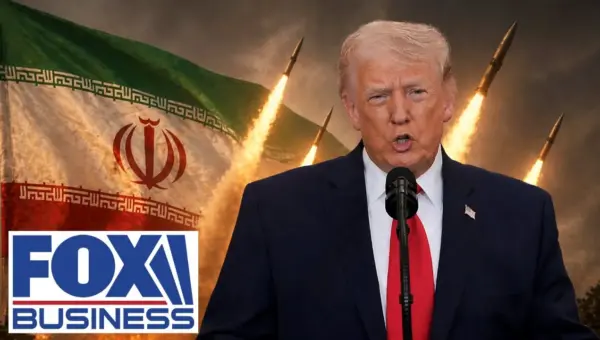
Trump Warns Iran: Bombing Could Start ‘Tomorrow’
President Trump has signaled a tough stance on Iran, warning that he expects to be "bombing tomorrow" if a satisfactory deal isn't reached, with the current cease-fire set to expire. Despite the escalating rhetoric, financial markets have remained measured, seemingly pricing in a future resolution and a potential "peace dividend."
Russia’s Economy Shrinks 1.8% Amidst Sanctions
Russia's economy contracted by 1.8% in early 2026, driven by falling energy revenues and the impact of sanctions. While temporary oil waivers offer short-term relief, underlying structural issues in the energy sector and a widening budget deficit point to a challenging economic outlook for the country.


Internet Blackout Tanks Putin’s Approval Ratings
New approval ratings show a significant drop for Vladimir Putin, tied to widespread internet disruptions in Russia. The data indicates public frustration over loss of online access is greater than concerns about the war in Ukraine. This digital blackout presents a unique challenge to the Kremlin.