Restaurant Visit Unmasks Killer in Brutal Condo Slaying
A chance encounter at a California restaurant and a crucial detail on a forgotten answering machine tape cracked open the case of Jane Thompson's brutal murder. Detectives pieced together the timeline and motive, ultimately unmasking a killer driven by embarrassment and fear.

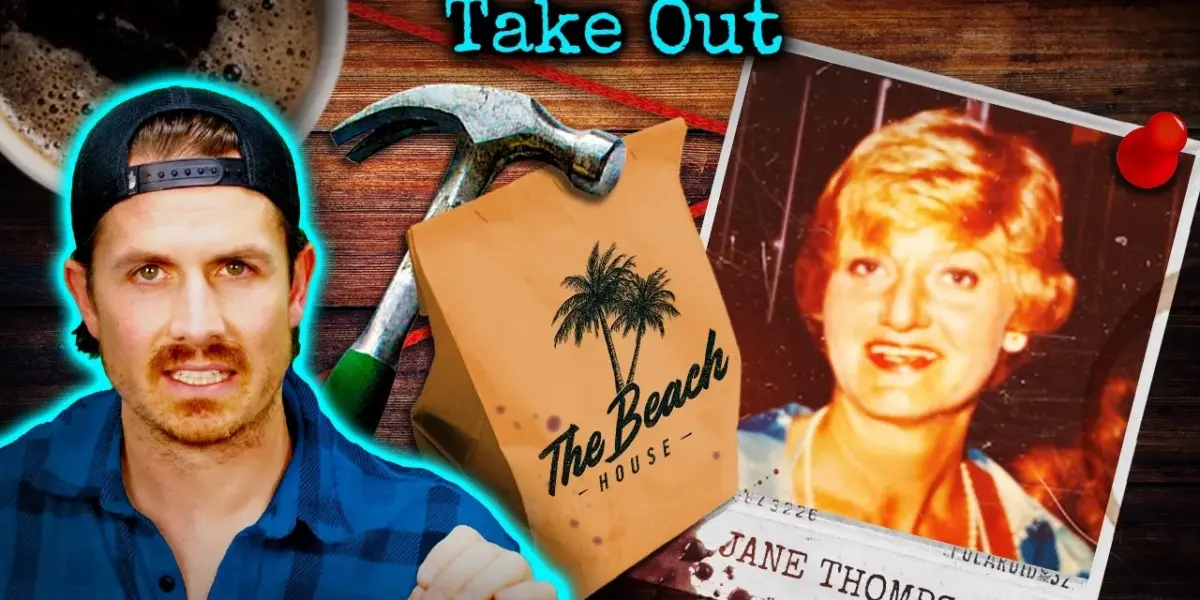
Restaurant Visit Unmasks Killer in Brutal Condo Slaying
On the evening of June 20th, 2004, a routine dinner rush at a California seafood restaurant took an unusual turn. The manager, while handling takeout orders, served a customer whose behavior was markedly erratic. The patron, visibly agitated, kept glancing over their shoulder and fidgeting.
After a hurried transaction, they practically sprinted from the establishment with their food. The manager, though unnerved, soon dismissed the incident, only to be contacted days later by police seeking details about the peculiar customer.
This encounter, seemingly minor at the time, would later become a crucial piece of the puzzle in the investigation of a brutal murder that sent shockwaves through a quiet Orange County community.
A Life Interrupted
The victim was 72-year-old Jane Thompson, a former Hollywood insider who had traded the fast-paced film industry for a peaceful retirement in Laguna Niguel. Seven years prior to her death, Jane had relocated from Los Angeles, seeking a more tranquil existence. Despite her appreciation for solitude, the transition had been challenging, particularly due to her long-standing romantic relationship with Marian Reese, who still lived in LA.
The two women, who had a decades-long history that began in the professional sphere, were deeply devoted to each other. Jane was preparing for a trip to visit Marian for the opera and an upcoming European cruise.
On Monday, June 21st, 2004, Jane was driving home from a weekend trip to Los Angeles. The familiar 50-mile commute offered a chance to decompress. As she passed a cluster of houses, she noticed her close friend and neighbor, Mary Larkin, gardening.
Jane slowed to wave and remind Mary about their planned wine night. Mary enthusiastically agreed to call. A few minutes later, Jane arrived at her condo complex, a tight-knit community where she felt safe and comfortable, often leaving her doors unlocked.
Upon arriving home, Jane saw her teenage neighbor, Sam Nelson, playing basketball. She waved, but Sam, clearly embarrassed, quickly retreated indoors. Earlier that week, the 15-year-old had broken into Jane’s home and stolen some jewelry.
Jane had confronted him before leaving for her LA trip, sternly warning him against future transgressions but declining to involve the police. She believed Sam had made a foolish mistake and, as a member of her community, deserved a second chance. Sam, though grateful at the time, was now visibly mortified by Jane’s acknowledgment.
A Grim Discovery
Jane spent the next few days engaging in her usual activities, volunteering and walking with friends. By Thursday evening, June 24th, she was home, preparing for her trip to LA the following night.
While making pasta and contemplating her opera attire, Jane eventually settled on the couch to watch television, intending to pack afterward. However, she soon fell asleep.
Three days later, on Sunday afternoon, June 27th, Mary Larkin, accompanied by their mutual friend Karen Hamara, arrived at Jane’s condo. Mary’s unease had been growing since Jane’s girlfriend, Marian, had called, distressed that Jane had failed to arrive in LA and was unreachable. Jane was not one to cancel plans without notice, and Mary feared a medical emergency or accident.
Upon reaching Jane’s residence, Mary noticed a pile of newspapers by the door, increasing her anxiety. Their knocks went unanswered. Venturing to the back, they discovered the sliding glass door leading into the living room wide open.
Yelling for Jane yielded no response. As Karen moved to enter, Mary instinctively stopped her, sensing danger. Instead, they retreated and called the police.
The Investigation Begins
Deputies arrived and were directed to the open back door. An officer peered inside, his body tensing immediately.
He informed his partner that someone was inside and appeared deceased, requesting backup. Detective Daniel Saledo was assigned to the case, arriving to find the condo secured with police tape.
Inside, Saledo observed extensive blood spatter on the walls and furniture. Jane Thompson lay face down between her couch and coffee table, a pool of blood around her head. The autopsy later confirmed the cause of death: multiple, brutal blows to the head, so severe that her skull was visibly fractured.
Saledo noted the lack of defensive wounds on Jane, suggesting a swift, rage-fueled attack, possibly by someone she knew, as there were no signs of forced entry. The condo showed no signs of ransacking; valuable electronics remained untouched, ruling out a simple robbery.
A crucial piece of evidence emerged from Jane’s answering machine: messages dating back to the morning of Friday, June 25th. This established a timeline, indicating Jane likely died sometime between Thursday evening, June 24th, and Friday morning.
Detective Saledo, working with the newly arrived Detective Brian Sutton, focused on individuals close to Jane. The violent nature of the attack suggested a personal motive.
They interviewed Mary and Karen, who confirmed Jane’s planned trip to LA and her girlfriend Marian’s concern. Both women provided alibis for the night of the 24th and the morning of the 25th, which would be verified.
Unraveling the Truth
The investigation led detectives to Los Angeles to interview Marian Reese. Saledo discovered Jane had a $100,000 life insurance policy naming Marian as the sole beneficiary, raising suspicion.
However, Marian provided a corroborated alibi for the time of the murder, having been with friends in LA. Her genuine shock and grief, coupled with her confirmed alibi, shifted suspicion away from her.
Returning to Laguna Niguel, detectives explored a new theory: a hate crime. Given the community’s generally conservative nature and the fact that many residents left doors unlocked, they considered the possibility that a neighbor, aware of Jane’s relationship with Marian, might have reacted with hostility. However, interviews with neighbors revealed that most were unaware of Jane’s relationship, and there was no indication of animosity towards her.
A mention of recent burglaries in the complex provided a potential, albeit tenuous, link. As detectives reviewed the evidence, Saledo had a breakthrough.
He realized the answering machine tapes, previously dismissed as unimportant, held the key. They returned to the evidence room and spent hours relistening, cross-referencing the messages with other gathered information.
The breakthrough came when they revisited the restaurant manager who had served the agitated customer. Armed with a collection of photographs, detectives asked the manager to identify anyone.
He immediately pointed to one photo. This identification, combined with forensic evidence and a subsequent confession, revealed the killer.
Investigators believe the perpetrator, dressed in dark clothing and wearing gloves, armed with a hammer, approached Jane’s condo multiple times on the night of June 24th. Each attempt was aborted as the killer saw Jane asleep on the couch. The motive, it turned out, was rooted in a prior burglary.
The killer was the same individual who had previously broken into Jane’s home, stealing jewelry. Jane had confronted him, leading to his mortification. The realization that Jane recognized him and that he had been identified by the restaurant manager prompted his confession, confirming the sequence of events and his guilt in Jane Thompson’s brutal murder.
Source: Cali beachfront restaurant held the key to her murder (YouTube)

Related Articles


Blood, Lies, and a Missing Man: The Zachariah Anderson Case
Rosalio Gutierrez Jr. vanished from his Kenosha apartment, leaving behind a scene of brutal violence. Suspicion quickly turned to his girlfriend's ex-boyfriend, Zachariah Anderson, whose history of obsession and stalking cast a dark shadow over the investigation. The case culminated in a trial marked by conflicting testimonies and a chilling discovery.


Couple’s Rest Stop Encounter Linked to D.C. Snipers
A couple's late-night stop at a Maryland rest area in 2002 nearly put them in the path of the notorious D.C. snipers. They unknowingly encountered John Allan Muhammad and Lee Boyd Malvo, who were using the rest stop as a hideout. The chilling details of their escape and the subsequent capture of the killers highlight the random nature of crime.


Chilling Trophies: 10 Serial Killers’ Gruesome Souvenirs
Serial killers often collect disturbing mementos, or 'trophies,' from their victims. This article details ten of the most gruesome examples, including underwear, shoes, human remains, and even heads, revealing the chilling depths of their depravity and the psychological impact on investigations.