Israel’s Two-State Solution Hopes Fade Amidst Conflict
The two-state solution for the Israeli-Palestinian conflict is reportedly no longer a serious consideration in Israeli politics, according to Josh Glancy of The Sunday Times. Recent events and political shifts have accelerated this trend, while economic concerns mount over potential energy price shocks.

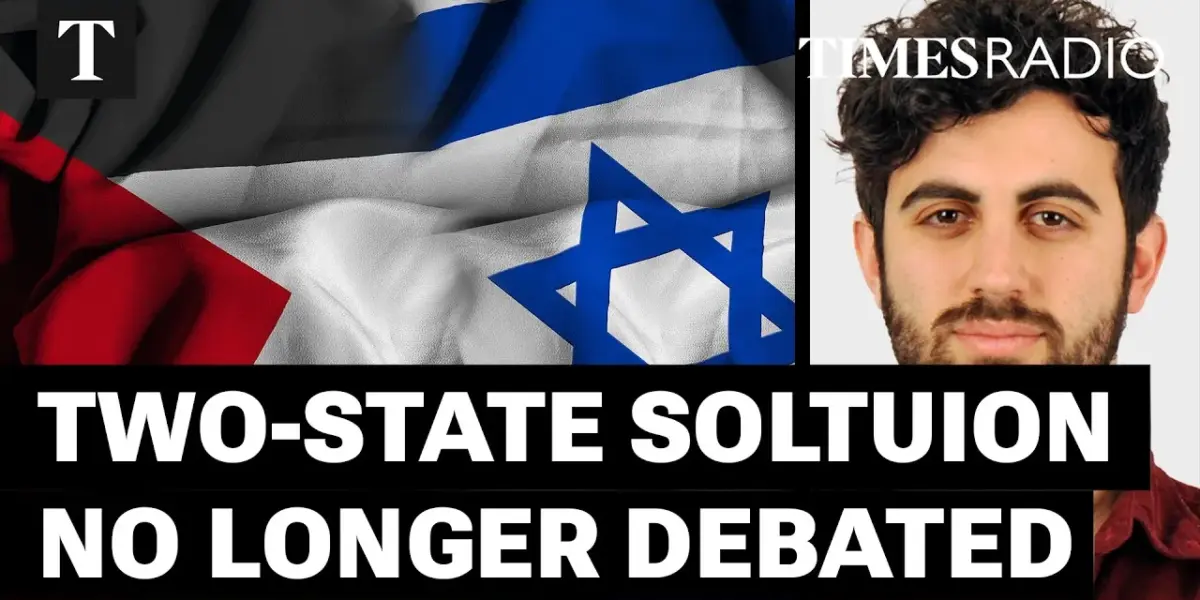
Middle East Peace Prospects Dim: Two-State Solution No Longer a Priority for Israel
The long-discussed two-state solution for the Israeli-Palestinian conflict appears to be fading from serious consideration within Israeli politics, a shift accelerated by recent events and a changing political landscape. While a favored talking point for international diplomats, particularly in Britain, the concept is reportedly receiving little genuine debate on the ground in Israel.
Shifting Political Tides in Israel
According to Josh Glancy, associate editor of The Sunday Times, the current situation paints a bleak picture for the prospect of an independent Palestinian state. He suggests that the trajectory towards this outcome has been developing for some time, with recent events merely accelerating the dynamic. Glancy notes that former President Donald Trump’s influence may have emboldened more extreme elements within Israeli society and politics, leading to increased activity in the West Bank.
“If you talk to people on the ground in the Middle East, the two-state solution is something it’s a it’s a go-to for British politicians, but it’s not actually that seriously debated in Israeli politics very often.”
– Josh Glancy
Glancy elaborates on the impact of the October 7th attacks, stating that they have significantly diminished support for Palestinian statehood within Israel. He explains that even liberal Israelis now perceive a lack of a peace partner, with a sentiment that many Palestinians are dedicated to Israel’s destruction. This pervasive feeling has made the idea of a two-state solution increasingly rare in public discourse.
The Impact of Recent Conflicts and Political Alliances
The ongoing conflict and its ramifications are central to the discussion. Glancy highlights the analysis presented in a column by historian Max Hastings, who posits that the current war may be the final blow to Palestinian statehood.
Hastings points to Israeli Prime Minister Benjamin Netanyahu’s strengthened political position, partly due to his alignment with US actions against Iran and the consolidation of Israeli unity. This has, in turn, seemingly weakened the prospects for a Palestinian state.
Glancy discusses the role of settler actions in the West Bank, noting that there are more such actions against Palestinians than vice versa. This imbalance is seen as contributing to the grim reality on the ground. The connection between Netanyahu and former President Trump is also cited as a factor that has immeasurably strengthened Netanyahu’s hand politically.
Economic Repercussions and Government Challenges
Beyond the geopolitical implications, the discussion also touches upon the economic consequences, particularly concerning energy prices. Chancellor Jeremy Hunt has been actively monitoring the situation, engaging with the Bank of England to mitigate potential risks. The government has sought to reassure the public that energy price caps remain in place until June, aiming to provide a degree of stability for households.
However, the broader economic impact is a significant concern. Economist Paul Johnson explains that higher oil prices, which have touched nearly $120 a barrel, will have a substantial negative effect on the economy.
He estimates this could reduce growth by at least half a percentage point this year, leading to public finance challenges and making citizens worse off. Johnson compares the current situation to the energy shock experienced at the beginning of the Ukraine war, noting that while prices haven’t spiked as dramatically yet, sustained high prices could have long-term consequences.
The prospect of government intervention to cushion the economic blow is also debated. Johnson expresses concern that previous aid measures were not well-targeted, with significant support going to individuals who did not necessarily need it. He suggests that future interventions might focus on low-income households, but acknowledges that increased national debt and higher interest rates make large-scale government spending more difficult.
Defense Spending and Diplomatic Headaches
The conversation also touches upon defense spending, with reports of the Defense Secretary seeking increased funding. While governments can allocate funds for defense quickly in the short term, a permanent increase in spending presents a more significant challenge, especially given the current economic climate and the Chancellor’s fiscal numbers.
Prime Minister Rishi Sunak’s diplomatic challenges are also a focal point. His efforts to maintain a strong relationship with the US, particularly concerning support for Ukraine, have been complicated by the falling out with former President Trump. This diplomatic friction, coupled with the potential for an oil shock impacting the cost of living, presents a formidable challenge for Sunak’s government, whose core focus has been on economic stability.
A Bleak Outlook and the Danger of Indefinite Occupation
Glancy concludes by reiterating the bleak outlook for Palestinian statehood. He draws a parallel to the Kurds, suggesting that Palestinians might face a similar fate of being a diaspora without a state. The moral and diplomatic cost to Israel, in terms of the kind of country it risks becoming, is also highlighted as immense.
He further addresses the concept of apartheid, acknowledging that while Israel itself, with its Arab citizens having voting rights and representation, may not fit the definition, the situation in the West Bank is dangerously close. The indefinite nature of the occupation, where Palestinians lack full political and legal status, poses a significant risk.
Glancy expresses concern that even supporters of Israel’s right to exist will struggle to defend a permanent state of affairs where a people are denied their rights, regardless of their conduct. The absence of a clear process or goal for resolving the situation in the West Bank is a primary fear.
Looking Ahead
The coming weeks and months will be critical in observing how these geopolitical and economic pressures evolve. The sustainability of current energy prices, the effectiveness of government responses to economic challenges, and any shifts in the political discourse surrounding the Israeli-Palestinian conflict will be closely watched. The international community’s role in fostering dialogue and seeking a viable long-term solution remains a crucial, albeit increasingly difficult, endeavor.
Source: Israel No Longer Considers A Two-State Solution | Josh Glancy (YouTube)

Related Articles


Germany-Israel Ties Tested Amid Policy Differences
Germany and Israel are experiencing strains in their relationship, marked by a lack of top-level cabinet talks since 2018 and differing views on the two-state solution and the Gaza conflict. Despite these policy gaps, Germany demonstrated significant political engagement with Israel following the October 7th attacks, sending numerous high-ranking officials.

Ukraine Strikes Cripple Russian Oil; US Goes Global
Ukraine's drone attacks are crippling Russian oil exports and production, forcing significant output reductions. Simultaneously, the U.S. Navy is expanding its reach globally, seizing Iranian oil tankers far from the Persian Gulf. This dual pressure signals a potential breakdown of global trade in energy, agriculture, and manufacturing.

Russia’s Economy Crumbles Under Sanctions, Dissent Grows
New intelligence reports indicate Russia's economy is collapsing under sanctions, with falling oil revenues and rampant inflation. Dissent is growing, with prominent figures and even pro-Kremlin bloggers openly criticizing the government and President Putin.