Live News Broadcasts That Turned Terrifying
Live news broadcasts have a unique power to connect, inform, and sometimes, irrevocably alter our understanding of the world. From the assassination of Lee Harvey Oswald to the harrowing events of 9/11, these moments transformed routine reporting into scenes of unimaginable horror, leaving audiences in total disbelief.

From Assassinations to Unthinkable Violence: News Broadcasts That Shocked the World
In the age of instant information, live television broadcasts have a unique power to connect us, to inform us, and sometimes, to irrevocably alter our understanding of the world. While news channels strive for accuracy and immediacy, there are moments when the unscripted reality of life intrudes with devastating force, transforming routine reporting into scenes of unimaginable horror. These are the harrowing instances where live news broadcasts were disrupted by sudden, unscripted, and often tragic events that left audiences in total disbelief.
The Assassination of Oswald: A Nation Watches in Horror
The assassination of President John F. Kennedy in November 1963 plunged the United States into a state of profound grief and shock. Just two days later, the nation’s trauma deepened when Lee Harvey Oswald, the man accused of the murder, was being transferred from Dallas police headquarters to the county jail.
Cameras from multiple networks were rolling, capturing every detail of this highly anticipated moment. Amidst the throng of reporters and onlookers, nightclub owner Jack Ruby lunged forward.
In a split second, a single shot rang out, striking Oswald in the abdomen and instantly etching another shocking moment into American history. The broadcast, intended to show the transfer of a suspect, instead captured the assassination of the accused assassin, a chilling echo of the nation’s recent tragedy.
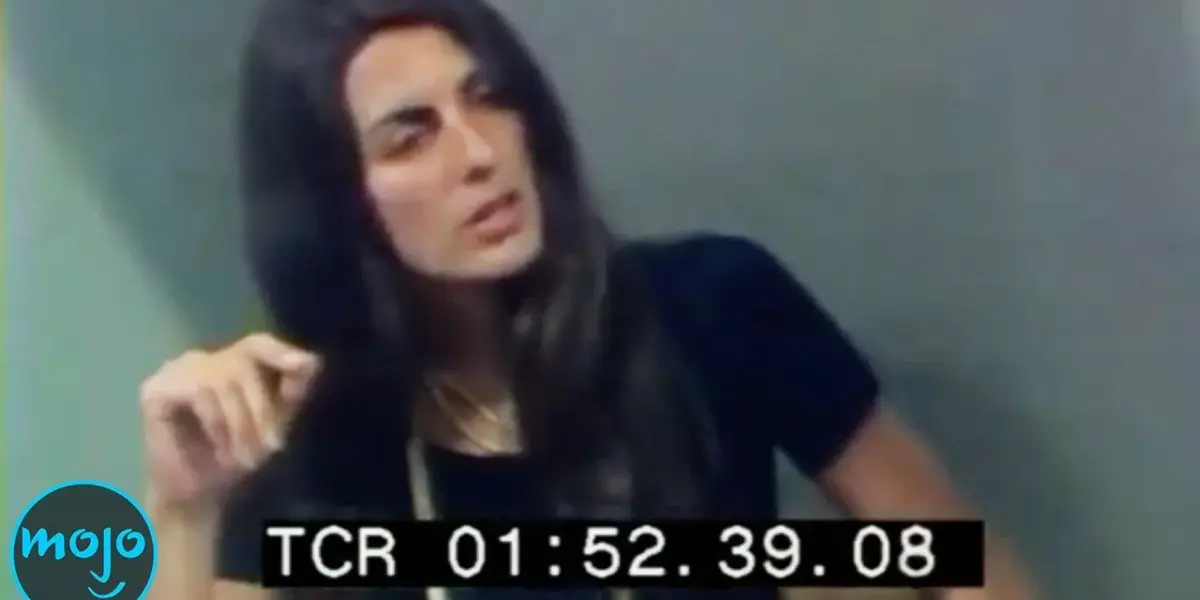
A Reporter’s Final Broadcast: Christine Chubik’s Tragic Act
On July 15, 1974, Christine Chubbik, a 29-year-old news reporter for WXLTV in Sarasota, Florida, began her program, ‘The Sun Coast Digest.’ After reporting on a shooting from the previous day, Chubbik looked directly into the camera and stated, “In keeping with Channel 40’s policy of bringing you the latest in blood and guts and in living color, you’re going to see another first.” She then pulled out a .38 caliber revolver from beneath her desk and shot herself in the head. The station quickly cut to a public service announcement, but the horrific act had already transpired live on air. Chubbik was pronounced dead 14 hours later, leaving behind a stunned audience and a disturbing testament to the unpredictable nature of live television.
Vigilante Justice: Gary Plouch Kills Jeffrey Ducet
The desperate search for a kidnapped and abused 12-year-old boy, Jodie Poche, culminated in a shocking act of vigilantism. Jeffrey Paul Ducet, the alleged abductor, was being extradited back to Louisiana on March 16, 1984. Local news crews were present at the Baton Rouge Metropolitan Airport to capture his arrival.
Gary Plouch, the father of another victim of Ducet’s abuse, had been searching for the karate instructor. Amidst the scrum of reporters and police officers, Ducet, handcuffed and shackled, was being escorted across the terminal.
Suddenly, Gary Plouch emerged from the crowd, approached Ducet, and shot him point-blank in the head. The entire chilling sequence was broadcast live by local ABC affiliate WBRZ-TV, a brutal act of retribution witnessed by millions.
The Challenger Disaster: A Fiery Explosion Live on Air
January 28, 1986, was meant to be a moment of triumph for NASA and a source of inspiration with New Hampshire educator Christa McAuliffe, the first teacher in space, aboard the Space Shuttle Challenger. The launch from Cape Canaveral was filled with excitement. For 73 seconds, the launch proceeded as planned.
Then, in a heart-wrenching instant, the shuttle exploded into a fiery cloud, disintegrating directly before the eyes of the world. The live CNN feed, which moments before had shown a soaring triumph, now depicted plumes of smoke and debris falling toward the ocean. Flight controllers and viewers alike watched in stunned silence as what was supposed to be a celebration turned into a national tragedy, broadcast in real-time.
Arlen Specter’s Infamous Press Conference: A Suicide on Live TV
On January 22, 1987, Pennsylvania State Treasurer Arlen Specter convened a press conference, ostensibly to address his conviction on bribery charges. Specter had maintained his innocence throughout the ordeal. As the cameras rolled, he began to deliver a lengthy, impassioned speech.
Rather than a resignation, Specter produced a Manila envelope and pulled out a .357 Magnum revolver. Despite shouts from reporters to put the gun down, he warned bystanders against intervening, stating, “This will hurt someone.” Specter then put the barrel of the gun into his mouth and pulled the trigger. The act was recorded by multiple news cameras, leaving Pennsylvania news stations to grapple with the ethical dilemma of how much of the grizzly incident they could show on television.
His last words, intended to be read aloud, implored: “Please tell my story on every radio and TV station and in every newspaper and magazine in the United States. Please make sure that the sacrifice of my life is not in vain.”
David Horowitz Taken Hostage: A Consumer Segment Turns Dangerous
August 19, 1987, saw KMBBC Los Angeles news reporter David Horowitz become the story during a live afternoon broadcast. A man named Gary Stolman, who had been permitted to watch the broadcast in the studio, held Horowitz at gunpoint. Stolman demanded to read a rambling, incoherent statement on air.
Horowitz, displaying remarkable composure, attempted to deescalate the situation, agreeing to read the statement while the station’s feed was cut and replaced with a police standby card. After about 30 harrowing minutes, Horowitz finished the statement and convinced Stolman to place the weapon on the desk, allowing police to move in. The incident highlighted the vulnerability of live broadcasts and the bravery of those caught in unexpected crises.
The Max Headroom Signal Hijacking: A Bizarre Dystopian Intrusion
November 22, 1987, delivered a bizarre incident that felt ripped from a dystopian sci-fi film. Viewers of WGN TV in Chicago were engrossed in a segment of the 9:00 news when suddenly the screen warped and distorted. What followed was a roughly 30-second intrusion by a masked figure, later dubbed the ‘Max Headroom hacker.’ The hacker mocked the real Max Headroom character and mimicked his distinctive stutter.
Minutes later, the same hacker struck again, interrupting a Doctor Who broadcast on PBS affiliate WTTW with a longer, more disturbing intrusion that involved a simulated spanking. The hackers have never been identified, leaving behind a chilling mystery and a unique example of media disruption.
The Rodney King Riots and the Attack on Reginald Denny
The city of Los Angeles erupted into chaos on April 29, 1992, following the acquittal of four LAPD officers in the Rodney King beating trial. From that chaos, a harrowing scene unfolded that laid bare the raw fury gripping the community. News helicopters hovered above, broadcasting live images of the unfolding riots.
A roving news helicopter captured a moment of unimaginable brutality: truck driver Reginald Denny was pulled from his vehicle by a mob of rioters at the intersection of Florence and Normandy Avenues. What followed was a vicious, sustained assault witnessed by millions in real-time, a stark depiction of the city’s unrest.
9/11 Attacks: A Nation Watches in Unprecedented Terror
The morning of September 11, 2001, began with confusion as news reports filtered in about a plane striking the North Tower of the World Trade Center. As news networks quickly went live, broadcasting images of smoke billowing from the skyscraper, reporters struggled to comprehend the scale of the event. As millions watched the live feeds, a second Boeing 767, United Airlines Flight 175, slashed into the frame, impacting the South Tower in a massive, blinding fireball.
On the NBC broadcast, anchor Matt Lauer was mid-sentence when the second plane struck. Cameras already focused on the North Tower captured the jet liner flying low and fast before slamming into the South Tower. The ensuing collapse of the towers, witnessed live by an estimated global audience of 300 million people, remains one of the most devastating and impactful live news events in history.
WDBJ7 Tragedy: Allison Parker and Adam Ward Gunned Down Live
On August 26, 2015, reporter Allison Parker and cameraman Adam Ward of WDBJ7 were gunned down during a live morning segment at Smith Mountain Lake in Virginia. Parker was conducting a routine interview when their broadcast was suddenly interrupted by a rapid succession of gunshots. The stunned local anchor, unsure of what had just happened, could only describe the sounds.
The perpetrator, Vester Flanagan, a former WDBJ reporter fired for volatile behavior, specifically targeted his former colleagues. After a high-speed pursuit, Flanagan ran his vehicle off the road and died from a self-inflicted gunshot wound. The incident sparked a fierce debate over the ethics of modern broadcasting, with some news outlets prioritizing the news value of showing the killer’s footage, while others pleaded to let the video fade into obscurity.
Source: 10 LIVE News Broadcasts That Took a TERRIFYING Turn (YouTube)

Related Articles

LA Police Chase Grips City, Ends in Dramatic Arrest
A high-speed police chase captivated Los Angeles Wednesday afternoon, spanning miles and involving multiple law enforcement agencies. The pursuit concluded after nearly an hour with a tense standoff and the eventual arrest of the suspect. Authorities are expected to release further details as the investigation proceeds.


Michael Movie Bombs on Rotten Tomatoes, Sydney Sweeney Cut!
The Michael Jackson biopic, 'Michael,' is facing a difficult launch with a low Rotten Tomatoes score and the surprising removal of a Sydney Sweeney cameo. The film's critical reception has sparked debate about how to approach the iconic artist's complex legacy.


TV’s Biggest Flops: The Worst Shows of the 21st Century
From awkward sitcoms to nonsensical dramas, this look back at the worst TV shows of the 21st century highlights series that spectacularly missed the mark. Discover the flops that defined early 2000s missteps, mid-2000s disappointments, and recent controversial concepts that failed to connect with audiences.