Freedom Summer’s Legacy: Lessons for Today’s Democracy
The 1964 Freedom Summer's legacy of organized activism and the fight for voting rights offers crucial lessons for today's democracy. From the firebombed bus of the Freedom Riders to the volunteers building "freedom infrastructure" in Mississippi, the movement underscored the power of collective action and moral conviction in challenging injustice and demanding governmental accountability.

Freedom Summer’s Legacy: Lessons for Today’s Democracy
The courageous actions of the 1964 Freedom Summer volunteers, who risked their lives to challenge segregation and secure voting rights, offer enduring lessons for contemporary struggles for justice and democracy. Their organized efforts, marked by both profound bravery and strategic planning, highlight the vital role of sustained citizen participation in upholding democratic ideals.
The Firebomb and the Test of Law
The narrative of the Civil Rights Movement is often punctuated by iconic images of violence, such as the burned-out Greyhound bus in Anniston, Alabama, on May 14, 1961. This bus, firebombed by a mob, carried Black and white volunteers, Freedom Riders, who understood the risks involved. Their protest, however, was not merely about challenging segregation; it was a deliberate test of the U.S. government’s commitment to enforcing its own laws.
Following the Supreme Court’s ruling in Boynton v. Virginia, which declared segregation in interstate bus terminals unconstitutional, little had changed in practice.
The Congress of Racial Equality (CORE) meticulously organized the Freedom Rides, training volunteers in non-violent resistance and coordinating with legal support. These were not spontaneous acts but a “structured experiment in democracy,” as the transcript highlights.
From Buses to Ballots: A Strategic Shift
The violent reception in Anniston, where the bus was firebombed and passengers were beaten as they fled, did not deter the movement. Instead, students from the Student Nonviolent Coordinating Committee (SNCC) stepped forward to continue the rides. They recognized a critical truth: allowing violence to halt their campaign would legitimize it as a tool against civil rights.
The expanded scope of the Freedom Rides ultimately compelled the federal government to intervene, enforcing the Constitution and establishing new federal regulations by September 1961 that mandated desegregation in interstate travel facilities. However, organizers knew that desegregation of transportation was only one piece of the puzzle. True progress required political power, leading the movement to pivot towards the fundamental right to vote.
Freedom Summer: Building Infrastructure for Change
In the years following the Freedom Rides, activists focused on voter registration across Mississippi, Alabama, and Georgia. Black Americans faced systemic barriers, including convoluted literacy tests and arbitrary rejections by registrars, all while risking their jobs, homes, and safety.
Freedom Summer in 1964 saw hundreds of volunteers, many of them college students from the North, travel to Mississippi to construct “freedom infrastructure.” This included establishing “Freedom Schools” to educate participants on civics and constitutional rights, utilizing churches as coordination centers, arranging bail funds with lawyers, and providing direct assistance to citizens navigating voter registration paperwork. The initiative transformed the fight for civil rights from individual acts of protest into a collective, organized effort to make rights usable.
The Unforgettable Tragedy and a National Reckoning
The summer of 1964 was tragically marked by the disappearance and murder of three civil rights workers: James Chaney, Andrew Goodman, and Michael Schwerner. These young men, investigating the burning of a Black church near Philadelphia, Mississippi, were arrested by local law enforcement and subsequently murdered by Ku Klux Klan members, with evidence suggesting complicity from law enforcement.
Chaney was a local Mississippian, while Goodman and Schwerner, both Jewish volunteers from New York, were not directly subjected to the daily injustices of segregation but were driven by moral conviction. Their murders forced a national confrontation with the reality that the struggle for voting rights was not a regional issue but a “national test, a test of conscience.” The tragedy galvanized many Americans who had previously remained distant, illustrating that neutrality in the face of injustice is a choice with profound implications.
Sustained Agitation and the Voting Rights Act
Despite the profound loss, the work of Freedom Summer continued. Organizers persisted in registering voters, and community meetings persisted in church basements and living rooms. This “freedom infrastructure” proved resilient.
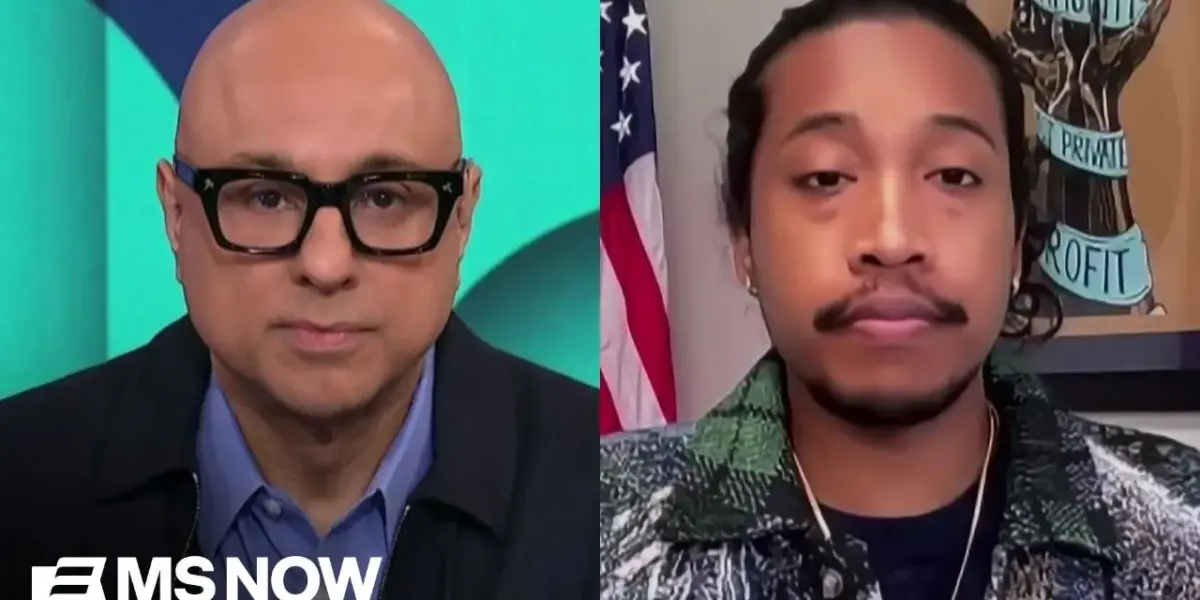
By the time of the Selma to Montgomery marches in 1965, the nation was witnessing not isolated protests but the cumulative impact of years of organized citizenship demanding legal protection. The Voting Rights Act of 1965, a landmark piece of legislation, emerged from this sustained effort to make participation possible. As State Representative Justin Jones notes, “Real democracy is only 60 years young in this country.
And it was bought with days in jail cells and nights of bomb threats… That was the cost of democracy.”
Lessons for Today’s Activism
The legacy of Freedom Summer and the broader Civil Rights Movement offers critical insights for contemporary activism. The volunteers were often motivated by “moral proximity” – an understanding that discrimination anywhere threatens justice everywhere – rather than solely personal grievance. This highlights the universal responsibility to confront injustice.
The movement demonstrated the power of collective effort, transforming citizenship from an individual right into a shared responsibility. As Representative Jones emphasizes, “democracy rarely turns on dramatic moments. It turns on whether ordinary people decide to help one another participate, to make rights usable, not merely admirable.” The movement’s success was rooted in “sustained, consistent, persistent agitation” and a willingness to “get in good trouble,” as John Lewis advocated.
The Call to Action in the Present Day
At a time when voting rights are again under threat and the infrastructure of civil rights gains is being dismantled, the lessons of Freedom Summer are particularly urgent. Representative Jones draws a parallel between the past and present, noting that the elders of the Civil Rights Movement are passing away as foundational protections are eroded.
He calls for a new generation to “pick up that torch” and confront contemporary challenges, which he likens to facing “new generations of Bull Connors and George Wallace’s.” The current fight requires proactive engagement, sustained mobilization, and a willingness to disrupt systems that perpetuate inequality. “We must do things out of the ordinary and push forward and force them to see these issues,” Jones states, warning that inaction could jeopardize future democratic processes.
Looking Ahead: Vigilance and Participation
The history of the Freedom Rides and Freedom Summer is proof of the power of organized, persistent action in the face of entrenched injustice. The volunteers of the past did not wait for perfect conditions; they worked within and against imperfect systems, transforming abstract rights into tangible realities through collective effort.
As Representative Jones articulates, the question for each generation is not whether history will call upon them, but whether they will recognize the moment and answer that call. The ongoing struggle for voting rights and democratic integrity demands continued vigilance, sustained activism, and a commitment to making democracy work for all Americans, echoing the enduring spirit of those who fought for freedom decades ago.
Source: The legacy & lessons of the 1964 Freedom Summer. And what we can learn from it (YouTube)

Related Articles


Protesters Confront Governor Hochul Over Climate Policy
Activists gathered at the NY State Capitol to protest Governor Hochul's climate policies, fearing rollbacks to the CLCPA and higher energy costs. They demand a shift to renewables and accuse the governor of favoring corporate interests over New Yorkers.

Gerrymandering Battle Heats Up: Virginia Vote Could Shift Power
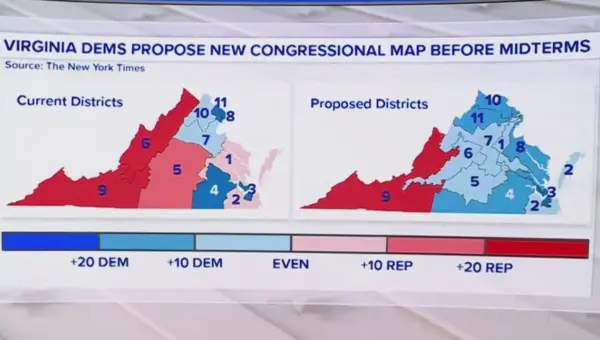
Virginia Democrats are pushing for a vote on a new congressional map that could shift political power. This redistricting effort is part of a larger national strategy by both parties to gain an advantage. The practice, however, raises concerns about increased partisanship and its impact on democracy.

Progressive Firebrand Ana Maria Rodriguez Takes Oath in Congress
Newly sworn-in Congresswoman Ana Maria Rodriguez is quickly focusing on affordability and democratic integrity. Despite a rapid entry into Congress, she faces an immediate re-election bid and plans to connect economic concerns directly with the health of democracy.