Gen Z Men Show Surprising Traditional Views on Marriage
A new global survey reveals that nearly one-third of Gen Z men believe wives should obey their husbands, a finding that has sparked widespread concern. The study highlights a surprising conservative trend among young men, contrasting sharply with their female peers and older generations.


Gen Z Men Express Traditional Views in Global Survey
A recent international survey has revealed a concerning trend among Generation Z men, with a significant portion expressing views that challenge modern notions of gender equality. The study, conducted across 29 countries and involving over 23,000 individuals aged 18 to 75, found that nearly one-third of Gen Z men believe wives should obey their husbands. This finding has ignited widespread debate and concern online, particularly on International Women’s Day.
Survey Highlights Conservative Leanings
The survey, a collaboration between King’s Global Institute for Women’s Leadership and market research firm Ipsos, aimed to understand evolving perceptions of gender roles and equality. Professor Hi Jung Chung, Director of the King’s Global Institute for Women’s Leadership and a co-author of the study, highlighted the unexpected results.
“Surprisingly, of all the different groups in terms of age, generation and gender, the Gen Z men are quite conservative, almost stands out in comparison to… even also the older generation of men. It is concerning, but it also makes me very sad.”
The survey asked participants globally about their views on various aspects of gender roles. One of the most provocative questions was whether a wife should always obey her husband.
A striking 31% of Gen Z men agreed, a figure that sharply contrasts with only 13% of older male respondents (Baby Boomers) who held the same view. Women across all age groups were significantly less likely to agree with this statement.
Broader Traditional Attitudes Among Gen Z Men
The traditional leanings of Gen Z men extend beyond marital obedience. When asked if a husband should have the final say on important household decisions, one-third of Gen Z men agreed, a figure double that of male Baby Boomers (17%). 21% of Gen Z men believe a “real woman” should never initiate sex, indicating a conservative perspective on sexual dynamics within relationships.
Professor Chung suggested that current rhetoric, social media influencers, and certain political leaders may be capitalizing on perceived grievances among young men, encouraging a return to traditional masculinity. She noted that these narratives often promote ideas of inherent male dominance, which, according to the survey data, do not align with the broader population’s views.
Impact on Young Women and Future of Equality
The implications of these traditional attitudes are deeply felt by young women. Professor Chung shared her observations from teaching students, many of whom are young women aged 18-21.
“I think this is the last few years have really been a time where… they are really afraid. They’re just like, what is happening to our male peers? I mean, like we would like to love them and we would love to be partnering up with them, but then they seem to be going, you know, kind of being led astray by these social media influencers with their views of what women should be like, but also what men should be like, which isn’t what women want.”
She emphasized that the data shows a significant divergence between these influencers’ claims and the actual attitudes of young women regarding gender roles. Professor Chung urged young men to resist restrictive gender stereotypes and embrace a more equitable vision of partnership.
Gen Z Men’s Perceptions of Equality’s Progress
The survey also probed Gen Z men’s perspectives on the progress of gender equality. Nearly 60% of Gen Z men surveyed believe that men are expected to do too much to support gender equality. This sentiment is particularly striking given the persistent global disparities that women face.
Globally, women and girls possess only 64% of the legal rights afforded to men. In many regions, women encounter obstacles in legal systems, including being dismissed, disbelieved, or facing prohibitive costs for legal support. Even within the European Union, women often need to work over 15 months to earn the equivalent of what men earn in one year, highlighting the ongoing economic disparities.
A Call for Collective Action
On International Women’s Day, Professor Chung issued a message to Gen Z men, stressing that the fight for gender equality is a shared one.
“I hear your grievances, but you’re looking at the wrong people to blame. It’s not women. It’s not migrants.
You need to be able to fight together with young women for a better society… And it’s not just, you know, we’re giving it to women. No, no, we’re getting to both like men and women and other genders. And you, this is a moment that young people need to come together and fight collectively rather than each other.”
She underscored that meaningful progress toward gender equality cannot be achieved without men actively participating and challenging traditional gender roles. True equality requires a collective effort from all genders to renegotiate societal expectations and advocate for systemic changes, including better work-life balance, pay, and working conditions for everyone.
Looking Ahead
The survey results present a complex picture of evolving gender dynamics. As these attitudes are further analyzed, the focus will remain on how to bridge the gap between traditional perceptions and the aspirations for a truly equitable society. The coming years will be crucial in observing whether these conservative views among some Gen Z men gain traction or if a counter-movement advocating for progressive gender equality will prevail, particularly as younger generations continue to shape societal norms.
Source: One third of Gen Z men say wives should ‘obey’ husbands | DW News (YouTube)

Related Articles

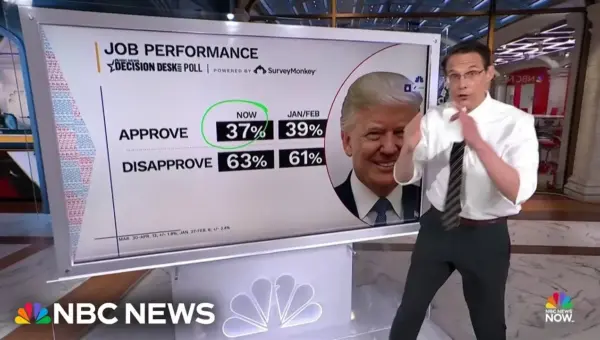
Trump Approval Dips to New Low Amid War and Rising Costs
President Trump's approval rating has dropped to a new low of 37%, with the ongoing war in Iran and rising inflation cited as key reasons. Young voters, particularly Generation Z, are showing significant disapproval, with 76% expressing negative views of his job performance. Student interviews reveal widespread frustration with economic conditions and foreign policy decisions.


Lowe’s Bets on Kids, Gen Z for Future Sales Growth
Lowe's is revamping its kids club and working with influencers to attract younger shoppers amid a slowdown in homebuying. The company hopes to build long-term loyalty with children and Gen Z as the median age for first-time homebuyers hits a record high of 40.


Gen Z Poll Reveals Stark Divide on Israel-Palestine Conflict
A new NBC News poll reveals a significant generational split on the Israel-Palestine conflict, with three-quarters of Gen Z sympathizing more with Palestinians. Overall, adults are evenly divided, but partisan and age differences are pronounced. The poll also highlights ongoing public concerns about inflation and the handling of the war in Iran.