Optics Over All: Why Trump Fired Kristi Noem Now
Kristi Noem's removal from her position is reportedly driven by a strategic focus on 'optics' rather than operational success, according to political analysts. The controversy surrounding a $70 million private jet and her swift labeling of individuals as 'domestic terrorists' appear to be key factors contributing to the decision.

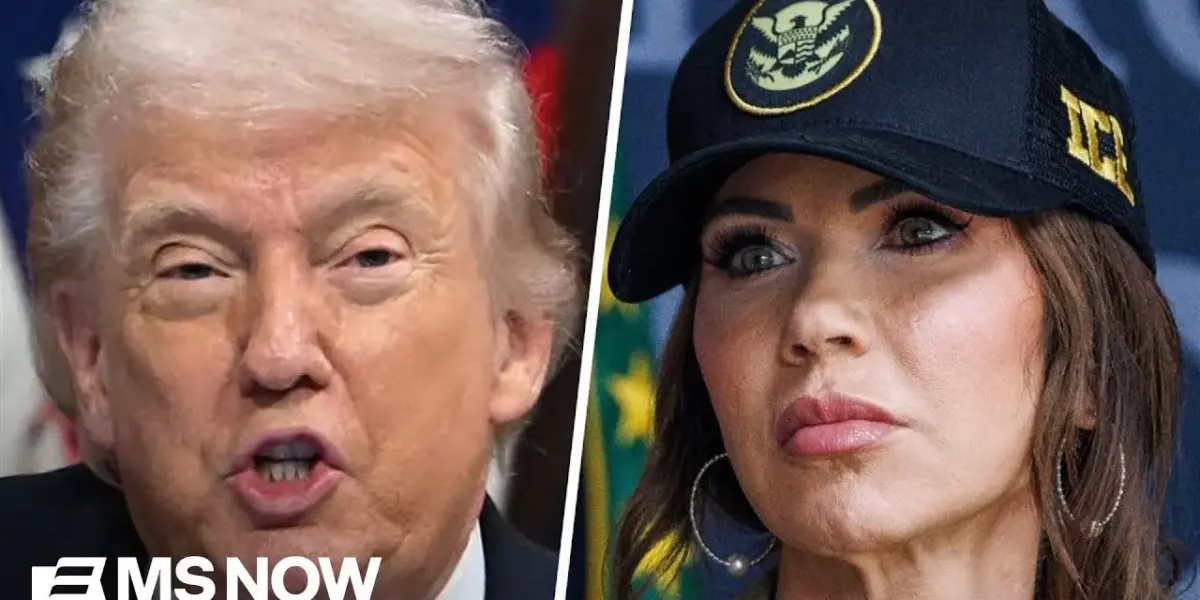
Trump’s Strategic Dismissal of Noem Hinges on ‘Optics,’ Analysts Say
In a move that has sent ripples through political circles, former President Donald Trump has reportedly decided to remove Kristi Noem from her position, a decision widely attributed by observers to a calculated focus on ‘optics’ rather than the immediate success or failure of ongoing federal operations. The timing of Noem’s departure, particularly as she was seen engaging in public appearances and discussing policy initiatives, suggests a strategic maneuver by the Trump campaign to recalibrate its public image amidst evolving political landscapes.
The ‘Writing on the Wall’ for Noem
Sources close to the matter indicate that the decision was not a sudden whim but rather a culmination of growing concerns. Professor James Sample of Hofstra University elaborated on this, stating, “I think the writing was on the wall here.” He noted that prior to any public announcement, President Trump had been in communication with numerous senators and other key figures. The Speaker of the House, Mike Johnson, was also reportedly aware of the impending shift during a recent House Republican elected leadership retreat, suggesting that Noem herself was likely not blindsided by the possibility of her removal.
“It’s not like Kristi Noem had her head buried in the sand and didn’t understand that this could possibly be coming,” Sample observed. While it remains unclear if Noem knew the exact timing of her departure, her recent public statements, including discussions about tax credits as if her role as DHS Secretary was no longer imminent, hint at an awareness of her precarious position.
Complications Arise with DHS Confirmation
Adding a layer of complexity to Noem’s exit is the pending confirmation of Mark Wayne Mullen to lead the Department of Homeland Security (DHS). The confirmation hearing, set to be chaired by Senator Rand Paul, presents a potential hurdle.
Mullen has previously been critical of Senator Paul, referring to him as a “freaking snake” and expressing sympathy for the individual who attacked the senator in 2017. This dynamic has raised questions about the confirmation process itself.
Despite the interpersonal tensions, experts suggest that Mullen’s confirmation is likely. “Rand Paul cannot.
I don’t want to say cannot and it would be very unusual for Rand Paul to deny Mark Wayne Mullen a hearing at DHS,” James Sample commented. He added that while harsh words are exchanged frequently in Washington, it is expected that a hearing will be held and Mullen will ultimately be confirmed.
Congressional Republicans’ Stance on Noem
The recent congressional hearings involving Kristi Noem appear to have significantly impacted the political calculus. Unlike typical confirmation hearings where Republicans have historically shown strong loyalty to Trump, Noem’s appearances reportedly did not garner the expected support. “We have seen very little melting from the G.O.P.
In oversight contexts, in confirmation contexts, in congressional contexts,” noted an analyst. “The rarity, the rarest of rarities has been Republicans standing up to Donald Trump.”
However, in Noem’s case, a shift was discernible. “The last couple of days, standing up to Kristi Noem was something that you saw a number of Republicans who very, very rarely are out of lockstep with Donald Trump’s duty,” the analyst observed. The sentiment among some Republicans seemed to be one of frustration and weariness with Noem’s approach.
“They reviled her. They hated her. And you could see it.
You can see it in the hearing. There was a difference with the way that they were dealing with her.”
The ‘Jet Gate’ and Public Perception
A significant factor contributing to the negative optics surrounding Noem appears to be the controversy over a $70 million private jet she sought to acquire. Images of the lavish aircraft, complete with amenities like bedrooms, circulated widely, raising questions about its necessity and the optics of such an expenditure, especially in the context of federal operations and deportations.
“The answer is optics. I mean, 737s with bedrooms in the back. Let’s put those…
The jet that she was trying to buy in the back. It’s a $70 million jet, I believe. Yeah.
Optic, the optics, the jet looks great. The optics are not good.”
The practicalities of using such a jet for deportations were also called into question. Reports indicated that the jet lacked sufficient seating for deportees, featuring instead comfortable seating for administration officials and a small number of additional seats. This stark contrast with the reality of how deportations are typically handled, often in less luxurious and sometimes inhumane conditions, fueled public criticism.
The ‘Domestic Terrorist’ Label and Accountability
Further exacerbating the situation was Noem’s swift and public labeling of individuals involved in certain incidents as “domestic terrorists” without waiting for official investigations or reviewing evidence. This approach drew criticism for its perceived lack of due process and its potential to inflame tensions. Tom Homan, a figure within law enforcement, initially adopted a more cautious stance, stating, “I’m not going to comment on it.
I’m going to wait until an investigation happens. It would be irresponsible for me to comment before an investigation.”
Homan’s initial measured response stood in contrast to the more immediate condemnations, highlighting a perceived deviation from standard protocols. While he later aligned with the broader consensus, his initial position underscored the unusual nature of the situation. The use of such strong rhetoric, particularly in relation to immigration enforcement, has reportedly led to public questioning of the extent of authority granted to such agencies.
A Turning Point in Public Opinion?
The confluence of these factors – the controversial jet acquisition, the strong rhetoric, and the perceived disconnect between Noem’s actions and established procedures – may represent a critical turning point. Analysts suggest that the public is beginning to see through the administration’s narrative, particularly concerning immigration and deportations. The use of extreme measures, such as labeling individuals as domestic terrorists in relation to immigration enforcement, has prompted a broader societal discussion about the scope of governmental authority.
“Immigration was an issue that they should be winning. And now the public has been beginning to think whether deportations are right at all,” an observer noted. “The turning point here was people started to see that she was using a cannon to kill a mouse, like immigration laws are so forgiving.
They’re in the shadows. They have such extraordinary authority. And the way that she was bringing this out and playing it in public view, now NOW PEOPLE ARE STARTING TO QUESTION WHETHER ANY AGENCY SHOULD REALLY HAVE THE AUTHORITIES THAT THEY HAVE.”
Looking Ahead: The Impact of Noem’s Dismissal
Kristi Noem’s removal, driven by a perceived need to improve public perception, highlights the paramount importance of ‘optics’ in contemporary politics. As the Trump campaign navigates these shifts, all eyes will be on how this decision influences future appointments, policy discussions, and the broader narrative surrounding immigration enforcement. The lingering questions about accountability and the public’s evolving stance on governmental authority will likely shape political discourse in the months to come.
Source: Why did Trump decide to fire Noem now? 'The answer is optics', James Sample says (YouTube)

Related Articles
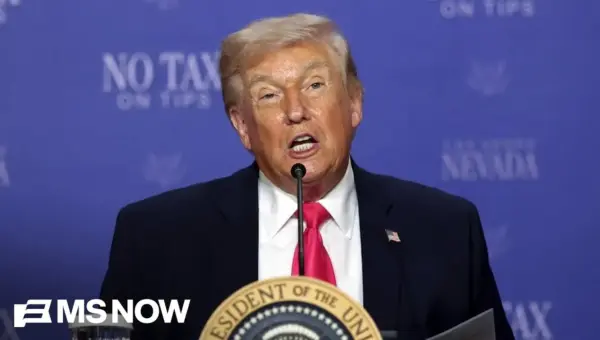
Ex-GOP Spokesman Asks: When Will Republicans Dump Trump?
A former Republican spokesman questions when the party will reach its limit with Donald Trump, suggesting voters will leave when their daily lives are directly impacted. He points to economic struggles and a disconnect between Trump's "America First" message and his actions as key factors. The article explores how voter apathy, driven by financial concerns, could affect election outcomes.
Strait of Hormuz Reopens Amid Shifting Power Dynamics
The Strait of Hormuz has reportedly reopened, with President Trump claiming credit amid complex negotiations with Iran. Meanwhile, explosive allegations surface regarding FBI Director Cash Patel's conduct, and Defense Secretary Pete Hegseth faces ridicule for quoting Pulp Fiction at a prayer service. These events raise significant questions about leadership and stability within the administration.
Trump’s Threats: Iran Deal Deadline Looms
As a critical ceasefire deadline looms, President Trump has issued stark warnings to Iran about potential military action if a nuclear deal isn't reached. The U.S. maintains a naval blockade, while diplomatic efforts continue amidst fragile regional stability. The outcome in the coming days will significantly impact Middle Eastern security.