Apple’s $600 MacBook Stuns, Reimagines Value
Apple has launched a groundbreaking $600 MacBook, alongside refreshed MacBook Pros, MacBook Airs, and a stunning new Studio Display XDR. The new lineup redefines value in the tech market, leveraging Apple's powerful M5 silicon for enhanced performance and efficiency across devices.

Apple’s $600 MacBook Stuns, Reimagines Value
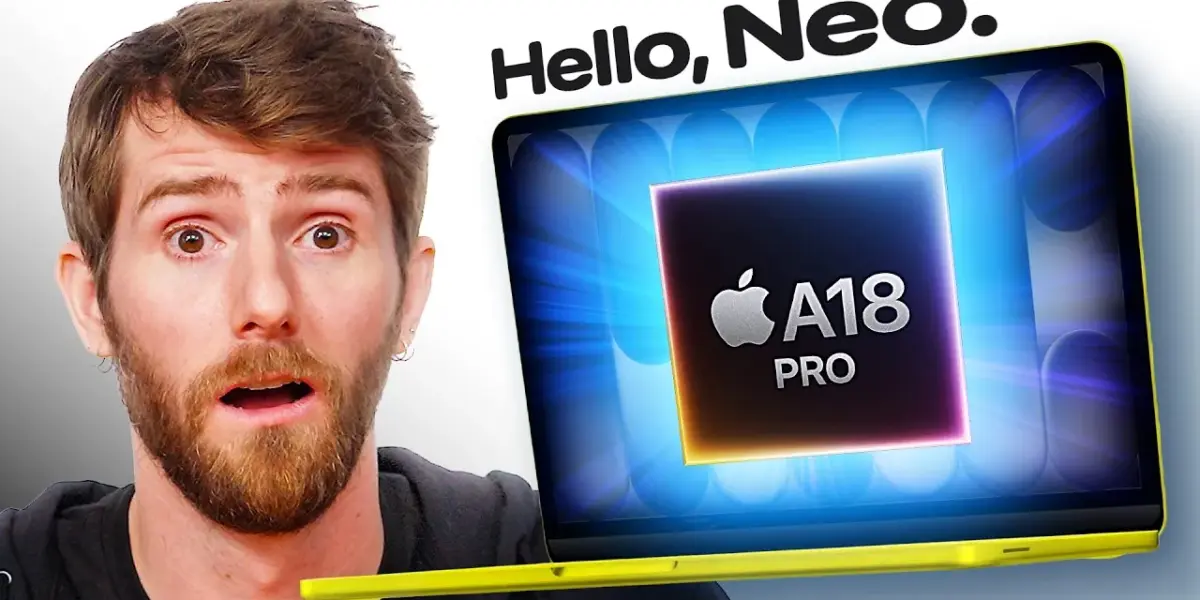
Apple has dropped a bombshell on the laptop market with the release of a $600 MacBook, a device so compelling it makes recommending almost anything else a challenge for consumers. This unexpected move, powered by Apple’s advanced silicon, redefines the entry-level laptop segment and signals a significant shift in Apple’s product strategy. Alongside this groundbreaking device, Apple has also unveiled a significantly improved and more affordable Pro Display XDR successor and refreshed MacBook Pro and Air models, all powered by the latest M5 series chips.
The $600 MacBook Neo: An Unexpected Value Proposition
The immediate criticism leveled against the new MacBook Neo is its use of an iPhone-derived mobile processor. However, Apple isn’t positioning this machine as a powerhouse for demanding applications like Adobe Premiere.
Instead, its marketing focuses on everyday tasks such as web browsing, messaging, and leveraging the powerful Neural Processing Unit (NPU) for AI-driven photo enhancements. For these use cases, the MacBook Neo is described as a “monstrously adequate” machine, delivering performance that exceeds expectations for its price point.
Concerns about the 256GB of storage and 8GB of non-upgradable unified memory have been raised, with some labeling it “e-waste from the moment it rolls off the production line.” However, the argument is made that these limitations might actually be beneficial, directing less demanding users towards hardware that consumes fewer precious resources like NAND and memory. The technical constraints of packaging DRAM with the die may have necessitated the 8GB RAM configuration. Apple’s commitment to long-term software support ensures that even these base models will remain viable for years to come, a track record that has historically extended to even their less popular devices.
Performance and Portability
Apple claims an impressive 11 hours of mixed-use battery life and up to 16 hours of video playback. The fanless design, enabled by the efficient A-series silicon, contributes to its quiet operation and allows for a smaller, lighter chassis.
The 36Wh battery powers the 1.23kg laptop, and it conveniently charges via a 20W adapter included in the box. This efficiency means users can easily extend battery life further with compact, third-party battery banks.
Design and Display
Despite its aggressive price point, the MacBook Neo features an aluminum chassis, a significant departure from expected plastic construction. It boasts a Liquid Retina display with anti-glare properties, reaching a respectable 500 nits of brightness, suitable for most indoor and office environments.
Apple has equipped it with its familiar Magic Keyboard and a decent-sized multi-touch trackpad. Onboard features include a 1080p webcam, dual speakers with spatial audio support, and a noise-canceling microphone array for clear video calls.
Connectivity and Compromises
The connectivity options are a point of compromise, with only a 3.5mm headphone jack alongside a single USB-C port. Users needing to connect USB-A devices or external displays will require dongles, reminiscent of earlier MacBook models. However, the increasing prevalence of USB-C across peripherals mitigates this issue for many.
Touch ID is notably absent on the base 256GB model, requiring an upgrade to the 512GB configuration for an additional $100. The keyboard also lacks backlighting, a surprising omission on an otherwise modern device.
Educational and Business Value
With an education discount, the MacBook Neo can be purchased for as little as $500. Combined with Apple’s strong trade-in programs and support services, it presents a compelling alternative to Chromebooks for educational institutions. The value proposition extends to businesses, making it an attractive option for large-scale deployments.
Refreshed MacBook Lineup and M5 Silicon
Apple’s latest M5 Pro and M5 Max chips represent a significant leap forward in performance and efficiency. These chips feature a new neural processor, enhanced unified memory throughput, and improved GPU performance.
Both configurations now boast 18 CPU cores, a notable increase over the previous generation. Apple claims these are the fastest cores available, ensuring exceptional performance for even the most demanding tasks.
Performance and Efficiency Gains
While previous Apple Silicon generations already offered excellent battery life compared to Intel-based MacBooks, the M5 series further improves this. The new N1 networking chip supports Wi-Fi 7 and Bluetooth 6, enhancing connectivity speeds and reliability, which can be crucial for tasks like video editing over a network-attached storage (NAS). The evolution of Apple Silicon also brings support for HDMI 2.1 and Thunderbolt 5 on higher-end models, offering substantial bandwidth improvements, though base M5 chips remain limited to Thunderbolt 4.
Pricing and Availability
Apple has largely managed to maintain pricing stability for its M5-powered MacBooks, a significant achievement given the current global RAM shortages. While some entry-level configurations have been removed, the overall pricing strategy is seen as favorable. The M5 MacBook Air sees a $100 price increase but comes with double the starting storage, a faster SSD, and the new Wi-Fi 7 and Bluetooth 6 connectivity, alongside performance improvements.
The New Studio Display XDR: A Pro Display Killer?
Apple’s new Studio Display XDR is poised to redefine professional displays. While slightly smaller and with a reduced resolution compared to its predecessor, its higher pixel density (over 210 pixels per inch) ensures exceptional sharpness. Priced approximately $1,700 less than the previous Pro Display XDR, it offers remarkable value.
The display features a mini-LED panel with 120Hz adaptive sync, variable refresh rate, and over 2300 local dimming zones. It achieves 1000 nits of SDR brightness and a peak 2000 nits for HDR content.
Connectivity and Features
Connectivity has been significantly upgraded, with two Thunderbolt 5 ports (one with 140W charging) and two 10Gbps USB-C downstream ports. The display also supports 16 reference modes, making it suitable for colorists and professionals working with standards like Adobe RGB. It retains the 12MP Center Stage camera and six surround speakers with enhanced bass, along with the three-mic array found on the Studio Display.
The non-XDR model, priced at $1600, also receives upgrades to its Thunderbolt and USB-C ports, along with the Center Stage camera with Desk View. While it misses out on 120Hz, its 5K resolution and improved connectivity make it a strong contender.
iPhone 17e and iPad Air Updates
The iPhone 17e continues Apple’s strategy of offering a more affordable iPhone, priced at $599 with double the storage of its predecessor. Key upgrades include MagSafe wireless charging, Ceramic Shield 2 glass, and the A19 chip with the C1X modem. This move, especially doubling storage at the same price, is seen as a significant value play by Apple.
The iPad Air also receives a notable upgrade, now featuring the M4 chip, C1X modem, and N1 wireless chips, along with 12GB of RAM. This substantial improvement at the same price point makes it a compelling option for users upgrading from older iPads, offering enhanced performance and longer software support. Apple’s emphasis on on-device AI processing through its improved neural engines across all new devices is also a key development.
Conclusion: Apple’s Value Renaissance
Apple’s latest product announcements signal a significant shift towards value, particularly with the $600 MacBook Neo. The company has managed to deliver impressive technology and features at more accessible price points, challenging the notion that premium devices must come with premium price tags.
The combination of advanced silicon, improved displays, and strategic pricing positions Apple favorably in a market grappling with affordability concerns. As the tech landscape evolves, Apple appears to be leading the charge in delivering powerful, efficient, and increasingly accessible computing solutions.
Source: I Can Only Recommend Macbooks Now… (YouTube)

Related Articles


Apple’s Secret Leaks Exposed by YouTuber
Tech giant Apple has taken the rare step of suing popular YouTuber Jon Prosser for allegedly leaking confidential product designs and trade secrets. Prosser's leaks, which accurately previewed an iOS redesign, have put him in direct conflict with the famously secretive company.


Apple at 50: Hardware Shines, Software Stumbles
Apple is celebrating 50 years, with experts praising its hardware prowess but questioning its software direction. While custom chips and sleek designs define its hardware success, issues with usability and design choices in software raise concerns. The company's integrated ecosystem remains a financial powerhouse, but innovation may be hampered by a conservative approach.


Apple’s Hardware Dominance Reaches New Heights
Apple's hardware division is currently experiencing unparalleled success, largely driven by its in-house chip design. This focus on custom silicon has boosted performance across its product lines, especially Macs. The company is innovating across networking and display technologies, setting a high bar for competitors.