Iran Defends Itself Amidst U.S. Aggression, Denies Nuclear Bomb Claims
Iran's Deputy Foreign Minister, Majid Takht Ravanchi, stated that Iran is defending itself against an "imposed war of aggression" by the U.S. and Israel, refuting claims of nuclear bomb ambitions and direct communication with Washington amidst the conflict. He highlighted civilian casualties and the targeting of non-military assets by aggressors.

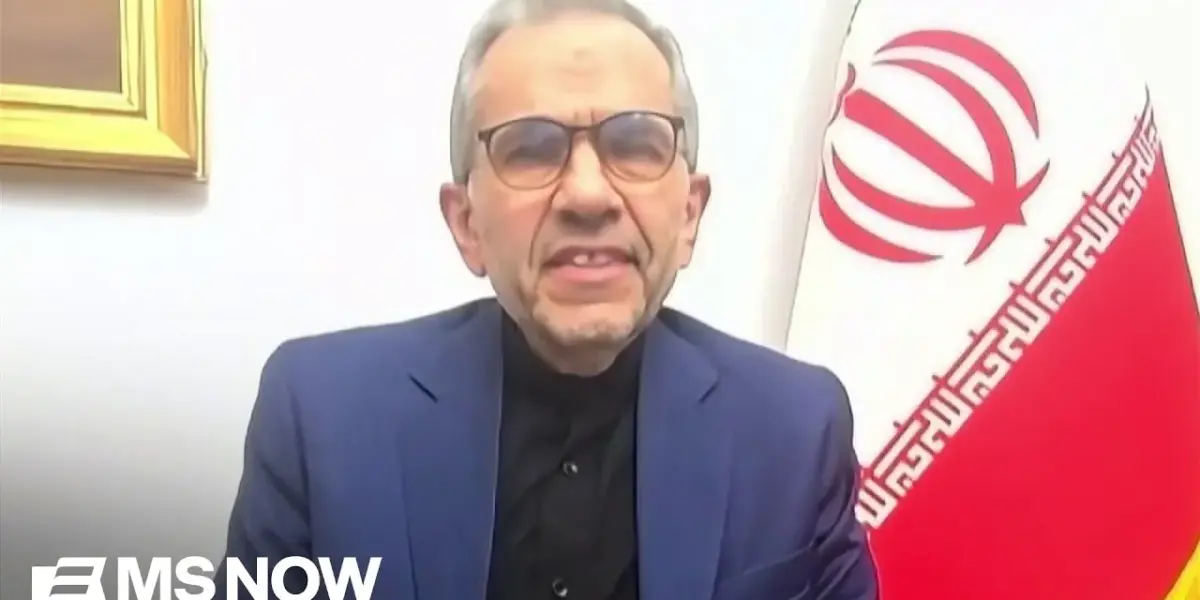
Iran Vows Self-Defense Amidst Imposed War, Cites Civilian Casualties
TEHRAN – Iran is actively defending itself against what it describes as an imposed war of aggression by the United States and Israel, according to Majid Takht Ravanchi, Iran’s Deputy Foreign Minister. Speaking amidst escalating conflict, Ravanchi stated that Iran has “every right to defend ourselves” and is working diligently to protect its citizens from what he termed “indiscriminate attacks against civilian targets.” He highlighted the tragic loss of approximately 170 schoolgirls due to such attacks, highlighting the civilian toll of the ongoing hostilities.
“This war of aggression is not our choice. It is the war of choice for the U.S. government and the Israeli regime,” Ravanchi asserted.
He indicated that the aggressors underestimated Iran’s resolve, expecting a swift conclusion to the conflict. “They thought that they could do it in a matter of a few days, but they are badly mistaken,” he added.
No Direct Communication with U.S. Amidst Hostilities
Responding to queries about communication channels, the Deputy Foreign Minister confirmed that there have been no direct exchanges of messages between Iran and the U.S. government since the bombing commenced. “No, we haven’t heard anything and we have not conveyed any message to Americans, because we are now defending ourselves.
We are in a defensive mode,” Ravanchi explained. The focus, he stressed, is solely on self-preservation and defense.
Iran Refutes U.S. Claims on Nuclear Negotiations and Capabilities
Ravanchi strongly refuted claims made by U.S. Envoy Steve Whitcoff regarding Iran’s nuclear program and the collapse of prior negotiations. Whitcoff had alleged that Iranian negotiators bragged about possessing 460 kilograms of 60% enriched uranium, sufficient for 11 nuclear bombs, and had evaded oversight protocols. Ravanchi characterized this as a misrepresentation of facts.
“When the question of plus 400 kilograms of 60% material was raised in the meeting, we were not bragging. We were just stating a fact.
And in fact, the amount of nuclear bombs corresponding to those 400-something kilograms is an estimate by European specialists,” Ravanchi stated. He clarified that Iran was merely presenting the results of its scientific achievements and was prepared to address the material if reciprocal benefits were offered.
The Deputy Foreign Minister further elaborated on the breakdown of negotiations, asserting that Iran was not the party that reneged on its commitments. He recalled a productive meeting in Geneva where all parties, including the U.S., Iran, and mediators, agreed on progress and a plan for a technical team to visit Vienna. “So what happened from Thursday night, when we adjourned the meeting till Saturday morning, when we faced with an act of aggression,” he questioned, challenging the U.S. Envoy to explain the sudden shift from satisfaction with the talks to resorting to violence.
Addressing the specific question of whether Iran possesses enough enriched uranium for 11 nuclear bombs, Ravanchi acknowledged the possession of the specified amount of 60% enriched material, a fact he stated is publicly available through the International Atomic Energy Agency (IAEA). However, he reiterated that this quantity, estimated by European experts to be potentially capable of producing around 10.2 bombs, did not signify an intention to pursue nuclear weapons. “We were telling the American delegation that this is the assessment by the European experts, that this amount of enriched 60% enriched uranium can deliver around 10.2 nuclear bombs, but they did not say that we are going to use them,” he explained.
Legitimate Targets and Regional Relations
Regarding attacks on neighboring Gulf states, Ravanchi maintained that Iran had previously communicated with its regional partners, advocating for diplomacy. However, he warned that if the U.S. Initiated military action against Iran, their assets and bases in the region would become legitimate targets under international law. When pressed about reports of attacks on civilian infrastructure like hotels and airports, he clarified that the primary targets were American assets and bases, and any movement of these by the Americans was not Iran’s concern.
Ravanchi also addressed an incident involving NATO forces and Turkey, denying any intention to strike Turkish territory. He emphasized Iran’s desire for the best possible relations with all its neighbors, including Turkey, and stated that the incident was under investigation. “We want, you know, peace and stability established all around our neighborhood,” he affirmed.
Leadership Transition and Internet Restrictions
On the matter of leadership in Iran, Ravanchi confirmed that a new Supreme Leader had not yet been chosen following the demise of the previous leader. An interim three-person body has been established to oversee affairs until a new leader is elected. He described the process as democratic, with the interim body holding a mandate from the people to elect the new Supreme Leader, emphasizing its transparency.
When questioned about lifting the internet blockade amidst ongoing protests and the war, Ravanchi cited national security concerns. “No, we are at war. I’m sure that you understand that at war, we have to be taken, we have to take precautionary measures in order to protect health,” he stated.
He acknowledged the importance of communication but prioritized saving lives and protecting the populace from what he described as the enemy’s aggression. “The enemy is is conducting an act of aggression, healing as many people as they can.
And we are the ones to have who are responsible to protect our people. So whatever necessary, you have to do and we are not shy of saying that we are protecting our people, because at a time of war, this is the most important thing that every government has to TO DO.”
Source: Iranian Deputy Foreign Minister on U.S.-Iran war, who is in charge and what's next (YouTube)

Related Articles


US Navy Blockade Hits Iran’s Oil Exports
The U.S. Navy has initiated a naval blockade of Iranian ports, targeting maritime traffic to cut off oil export revenue. This action follows failed peace talks and aims to exert economic pressure on Iran. The blockade highlights the strategic importance of the Strait of Hormuz and Iran's reliance on oil sales.


US Navy Tightens Grip on Iran in Strait of Hormuz
The U.S. Navy has imposed a naval blockade on Iran, cutting off access to its ports in the Strait of Hormuz. This action follows the collapse of nuclear talks and signals a major escalation in U.S.-Iran tensions. Iran has threatened retaliation against regional partners, raising fears of a wider conflict.

Trump’s Troop Gambit: A Risky Mideast Play?
Reports of thousands of U.S. troops heading to the Middle East clash with President Trump's claims of an impending end to the war. This analysis explores the potential risks and high price of using ground forces as leverage, questioning if the President is prepared for the potential human and political costs.