Minnesota DA Defies Trump, Probes ICE Over Fatal Encounters
Minnesota's Hennepin County DA has launched an investigation into ICE officials over fatal encounters, defying the Trump administration's stance of non-investigation. This move asserts state-level accountability and signals a potential legal and political clash.

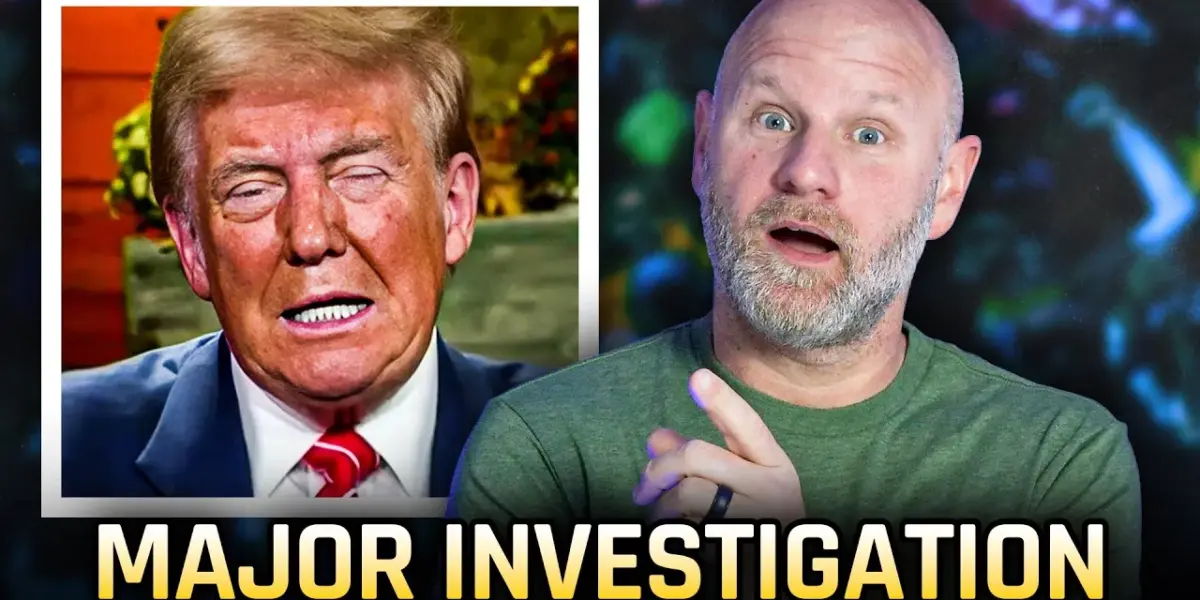
Minnesota DA Defies Trump, Probes ICE Over Fatal Encounters
In a stark departure from the federal government’s stance, Minnesota’s Hennepin County District Attorney, Mary Moriarty, has officially launched an investigation into ICE officials, including former acting director Thomas Homan and 16 other agents, concerning the deaths of Alex Prey and Renee Goad. These individuals died in highly publicized incidents involving ICE agents in Minneapolis, deaths that the Trump administration had indicated it would not investigate, labeling the deceased as ‘domestic terrorists.’ This move by DA Moriarty represents a significant assertion of state-level oversight in cases where federal authorities have opted for inaction, potentially setting the stage for a contentious legal and political battle.
Federal Inaction, State Action
The Trump administration’s approach to these tragic events was characterized by a clear directive against internal investigations. The prevailing narrative from the administration was that the ICE agents involved acted appropriately, with the deceased being painted as armed and dangerous individuals.
This stance effectively closed the door on any federal accountability, leaving the families of Alex Prey and Renee Goad without the prospect of justice from the federal level. The transcript notes the administration’s willingness to ‘slander them to hell and back,’ implying a deliberate effort to shape public perception and preempt any scrutiny.
However, DA Mary Moriarty has signaled a different path. Her office’s investigation aims to determine if ‘unlawful conduct’ occurred during the encounters that led to the deaths.
This decision is a critical assertion of local prosecutorial power, challenging the federal government’s narrative and its reluctance to engage in accountability measures. The investigation is focused on the actions of specific ICE agents and their leadership at the time, indicating a targeted approach to uncovering potential wrongdoing.
The Road Ahead: Investigations, Charges, and Political Fallout
While the launch of an investigation is a significant step, the path to potential criminal charges is complex and often lengthy. Investigations require thorough evidence gathering, witness interviews, and legal analysis. The transcript acknowledges that ‘investigations can take time’ but suggests that the availability of video evidence from multiple angles might expedite the process in this particular case.
The prospect of criminal charges is not guaranteed. As the transcript points out, ‘If information arises that shows that, hey, these ICE officers actually didn’t break the law, then so be it.’ However, the author expresses skepticism, stating, ‘There isn’t a single part of me that thinks that’s going to be the outcome.’ This highlights the tension between the procedural necessity of investigation and the expectation of accountability based on the perceived gravity of the events.
Beyond the legal proceedings, the situation is poised for significant political ramifications. The Trump administration is expected to defend its ICE officials vigorously.
The transcript anticipates that the administration will frame the DA’s actions as politically motivated, potentially labeling DA Moriarty as a ‘left-wing lunatic trying to go after our beautiful ICE agents.’ This suggests a strategy of public relations warfare, aiming to undermine the investigation by attacking the prosecutor and casting the ICE agents as victims of a partisan agenda. The author cautions against accepting this narrative, urging the public to ‘let the investigation play out’ and emphasizing that this is how ‘justice is supposed to work in the United States.’
The Role of State vs. Federal Authority and Pardons
A crucial element of this unfolding situation is the distinction between state and federal jurisdiction. The investigation launched by DA Moriarty is at the state level. This is significant because, as the transcript notes, ‘Trump cannot pardon them for [state charges], even if he attempts to pardon them at the federal level.’ While a president can issue pardons for federal crimes, this power does not extend to state offenses.
This means that even if federal charges were to arise and be pardoned, state-level accountability could still be pursued. This legal firewall provides a degree of protection against executive interference, though the political pressure and attempts to discredit the state investigation are still anticipated.
The transcript also touches upon the broader implications for law enforcement and accountability. It frames DA Moriarty’s decision as an act of courage, contrasting it with the ‘cowardice’ of the Trump administration.
The underlying principle is that in a ‘healthy society, in a healthy democratic system,’ accusations of wrongdoing against law enforcement officials should trigger investigations, not preemptive exonerations or dismissals. The expectation is that the system should allow for due process, where evidence determines outcomes, rather than political expediency.
Historical Context and Future Outlook
The events in Minneapolis echo broader national debates surrounding law enforcement conduct, accountability, and the role of federal agencies like ICE. Incidents involving excessive force or questionable deaths during immigration enforcement operations have been a recurring concern, often amplified by differing political perspectives on immigration policy and border security. The Trump administration’s emphasis on aggressive enforcement and its often-confrontational rhetoric towards critics of its policies created an environment where federal agencies felt emboldened and less subject to external scrutiny.
DA Moriarty’s investigation can be seen as part of a larger trend of local and state officials seeking to assert their authority and uphold accountability standards when they perceive federal inaction or overreach. This pushback is not unprecedented, particularly in areas where federal actions intersect with local concerns and values. The outcome of this investigation could have ripple effects, potentially encouraging or discouraging similar state-level actions in other jurisdictions facing comparable situations.
The future outlook remains uncertain. The investigation will undoubtedly be closely watched, not just for its legal conclusions but also for its political reverberations. The potential for a protracted legal battle, coupled with intense public and media scrutiny, is high.
Regardless of the final outcome, DA Moriarty’s decision has already succeeded in bringing renewed attention to the deaths of Alex Prey and Renee Goad and in challenging the narrative of impunity that the Trump administration sought to establish. It highlights the enduring principle that accountability, even in the face of political opposition, remains a cornerstone of a functioning justice system.
Why This Matters
This situation is a critical test of the American justice system’s ability to hold law enforcement accountable, regardless of political affiliation or federal backing. It highlights the vital role of local prosecutors in ensuring that all individuals, including those within powerful federal agencies, are subject to the law.
The investigation’s progression and eventual outcome will speak volumes about the resilience of checks and balances, the independence of the judiciary, and the public’s right to expect impartial investigations into serious allegations of misconduct. It highlights the ongoing tension between federal authority and state autonomy in matters of justice and public safety.
Source: Minnesota Officially Launches Investigation Into Trump's ICE Officials (YouTube)

Related Articles
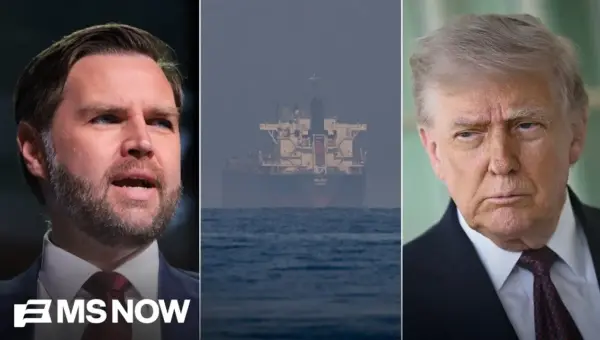
Trump Administration Blocks Iran Ports Amid Nuclear Talks
The U.S. has tightened its naval blockade around Iran's ports, potentially violating a cease-fire as peace talks are being organized for next week. Concerns are mounting over the experience of the American negotiating team, led by Jared Kushner and Steve Witkoff, amid disagreements on a proposed 20-year nuclear moratorium. The situation remains tense as thousands of U.S. troops arrive in the region.
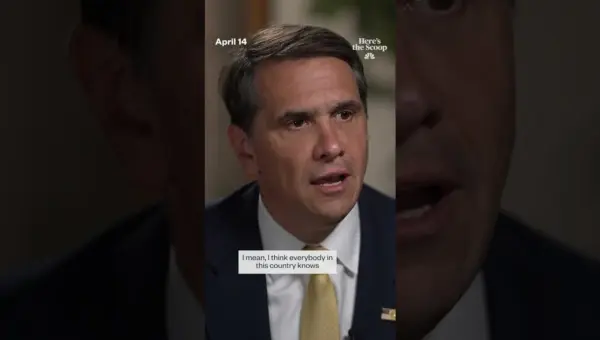
Trump Erodes DOJ Independence, Says Former Attorney
Former Trump attorney Todd Blanche stated that the separation between the White House and the Department of Justice has been erased. He explained that the president's ultimate authority over the DOJ aligns with the 'unitary executive theory.' This marks a significant departure from post-Watergate efforts to ensure the department's independence.

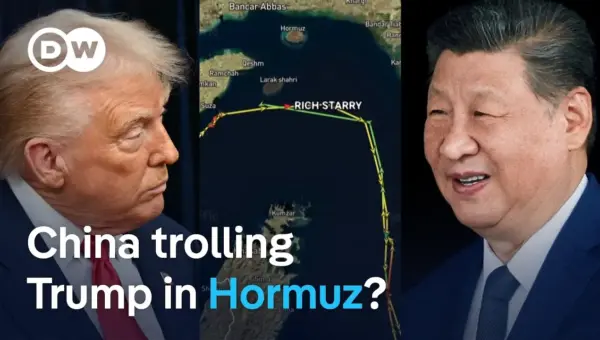
China Tests US Resolve in Hormuz Strait Standoff
Amidst rising tensions in the Strait of Hormuz, China is reportedly testing the U.S. administration's resolve through actions involving Chinese-owned vessels. This strategic probing, experts suggest, aims to gauge American commitment and potentially gain leverage ahead of upcoming U.S.-China summits. The situation highlights China's complex geopolitical maneuvering and its long-standing relationship with Iran.