Master LinkedIn Ads to Land High-Value B2B Clients
Discover how to stop wasting money on low-converting B2B leads and master LinkedIn advertising. Learn to attract high-intent buyers by focusing on cost per deal, understanding the buyer journey, and leveraging LinkedIn's powerful, data-rich ad platform.

Unlock B2B Success with Strategic LinkedIn Advertising
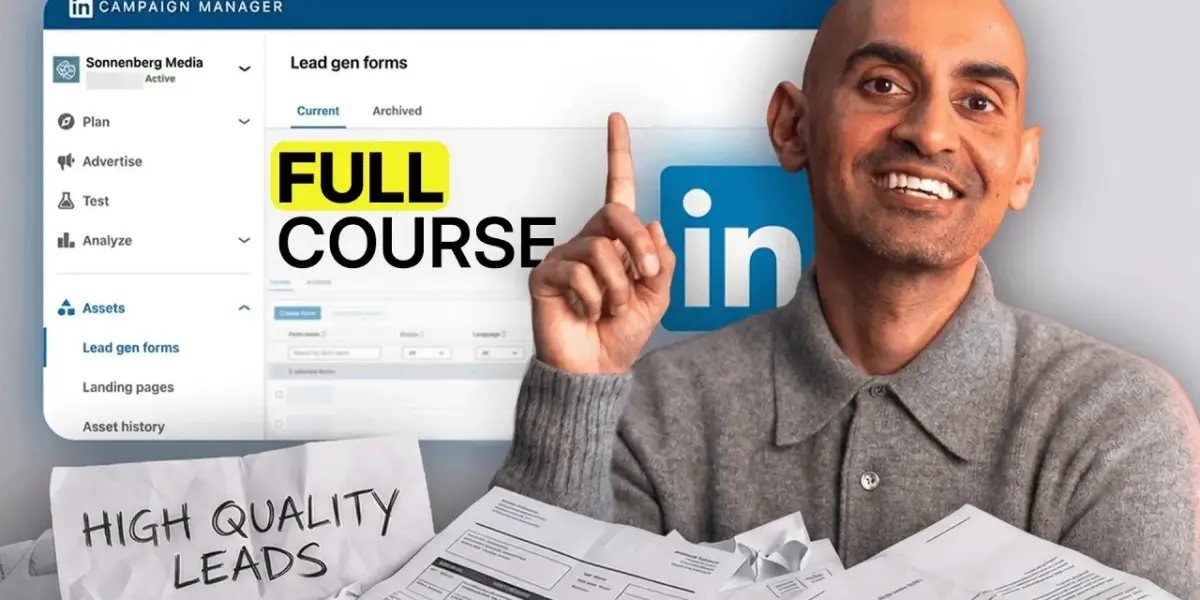
Many businesses struggle to acquire high-value B2B clients, often wasting marketing budgets on leads that never convert. This guide will show you how to leverage LinkedIn advertising effectively, moving beyond the illusion of cheap leads to secure deals with decision-makers. You’ll learn why focusing on cost per deal is more critical than cost per lead, how to position your brand within the crucial B2B buyer journey, and how to utilize LinkedIn’s evolving ad platform to its full potential.
Understanding the Cost Per Lead Illusion
The common obsession with low cost per lead can be misleading. A cheap lead is only valuable if it converts into a paying customer. Consider this:
- The Math Most Marketers Get Wrong: Imagine spending $1,000 on Facebook ads and acquiring 200 leads at $5 each. Your dashboard looks impressive. However, if only two of those leads close, your actual cost per deal is $500, not $5.
- LinkedIn’s Value Proposition: Now, picture spending the same $1,000 on LinkedIn and getting only five leads at $200 each. If three of those leads are VPs or higher and two close deals worth $50,000-$100,000 each, your cost per deal remains $500, but the revenue generated is significantly higher.
- The Hidden Cost of Bad Leads: Every unqualified lead consumes valuable sales team time—30 minutes per lead for discovery calls, follow-ups, and proposal preparation. These are resources spent on prospects who will never buy.
- Intent vs. Interruption: LinkedIn leads are often more informed and further along in their research. They ask “Why choose you?” rather than “What do you sell?” This represents a shift from interruption marketing to intent marketing.
Expert Tip: Stop celebrating low cost per leads. Focus on tracking your cost per closed deal. If you can’t link ad spend directly to revenue, you’re operating without crucial insights.
Positioning Your Brand in the B2B Buyer Journey
B2B buyers go through a defined journey. Understanding where your brand fits is key to capturing their attention:
- Month 1-2: Problem Awareness: Buyers identify a need and begin searching online (Google, YouTube, blogs).
- Month 3-4: Solution Research: They explore potential solutions, engage in LinkedIn groups, read case studies, and seek network recommendations.
- Month 5-6: Vendor Comparison: Buyers evaluate specific vendors, scrutinizing their LinkedIn presence and employee content. By the time they fill out a form on your website, the decision is often nearly made.
The Opportunity on LinkedIn: While LinkedIn has 1.2 billion users, only about 1% post regularly. This leaves significant white space for brands to establish presence. Competitors may be absent, while your target buyers are actively scrolling.
Actionable Strategy:
- Show Up Consistently: Prioritize organic posting. Share valuable insights, answer common questions, and be visible during the research phase. Aim to post at least twice a week.
- Build Trust: Consistent, valuable content builds recognition and trust, which is crucial when buying decisions are made months later.
- Integrate into the Consideration Set: LinkedIn is a primary platform for B2B decision-makers to validate choices. If you’re not present, you won’t be considered.
Warning: Simply running ads without an organic presence is less effective. Trust is built through consistent value, and trust closes deals.
Leveraging LinkedIn’s Evolved Ad Platform
LinkedIn’s advertising platform has undergone significant improvements, making it more akin to Meta’s sophisticated, AI-driven system:
- Past Limitations: Historically, LinkedIn ads were manual, clunky, and had poor targeting, leading many marketers to abandon the platform after initial negative experiences.
- Modern Enhancements: In 2024 and 2025, LinkedIn has overhauled its platform with algorithmic optimization (similar to Meta’s Advantage+), AI creative tools, and improved CRM integration.
- The Data Advantage: Unlike Meta, which targets based on behaviors, LinkedIn leverages rich first-party B2B data. It knows a user’s job title, company revenue, and purchasing authority.
- Higher CPMs, Better Value: While LinkedIn’s Cost Per Mille (CPM) is higher, you’re not just buying impressions; you’re buying access to decision-makers with purchasing power.
Strategic Shift: Treat LinkedIn ads with the same sophistication as your Meta campaigns. Embrace algorithmic optimization and test creative aggressively. Let the platform’s AI work to find conversion signals.
Creative as Your New Targeting Method
The old approach of hyper-specific targeting is becoming outdated. In today’s LinkedIn landscape, creative plays a more significant role in reaching the right audience:
- The Pitfall of Over-Segmentation: Targeting a narrow audience (e.g., CEOs at specific companies in certain cities) severely limits the algorithm’s ability to find potential buyers, effectively “handcuffing” its potential.
- Broaden Your Reach: Allow the algorithm to identify patterns by broadening your targeting parameters. When users engage with your ad (watch, click, convert), the algorithm learns about them and starts serving your ad to similar individuals (lookalikes).
- Creative Dictates Discovery: Your ad creative is now a primary signal for the algorithm. High-quality, relevant creative helps the algorithm find your ideal buyer, while poor creative leads to inefficient targeting.
- Effective Creative Strategies:
- Thought Leadership: Boost organic posts from your CEO or leadership team. This combination often performs very well.
- Video Content: Video is increasingly effective on LinkedIn.
- Single Image Ads: These can still achieve high click-through rates.
- Message Ads: When crafted correctly, these can achieve open rates of 50% or more.
- The Organic-First Approach: Start by posting organic content to understand what resonates with your audience. Then, use ad spend to amplify posts that are already demonstrating success.
- Educate, Don’t Just Promote: Lead with educational content (e.g., “What to consider before buying X”) rather than direct sales pitches (“Buy X now”). Buyers on LinkedIn are evaluating, not shopping.
Expert Note: The most effective strategy often involves boosting high-performing organic content, particularly thought leadership pieces from key executives.
Budget Realities and the Long-Term Value of LinkedIn
While LinkedIn ads can be significantly more expensive per lead than other platforms, their value proposition for B2B is undeniable:
- Cost Per Lead Variance: Expect LinkedIn leads to range from $100-$250, potentially higher, compared to $5-$10 on platforms like Meta. Enterprise clients may pay close to $1,000 per lead and find it worthwhile.
- Marketing Qualified vs. Sales Qualified Leads:
- Meta: Tends to generate a higher volume of Marketing Qualified Leads (MQLs)—those who fill out a form. This can inflate dashboard metrics but often results in sales teams chasing unqualified prospects.
- LinkedIn: More effectively generates Sales Qualified Leads (SQLs)—individuals with intent, budget, and authority to buy. This focus saves sales resources and increases closing rates.
- Long Sales Cycles: B2B sales cycles often span months. Judging LinkedIn performance on a weekly basis is inappropriate. Measure results across quarters to account for the full buyer journey.
- The Value of Quality over Quantity: Five highly qualified buyers are more valuable than 200 unqualified form fills. LinkedIn excels at delivering these fewer, better leads.
- Ideal Use Cases: LinkedIn is most effective for businesses with average deal sizes of $10,000 or more and longer sales cycles. It may not be ideal for very short sales cycles or low-value deals.
Mindset Shift: Recognize that LinkedIn is not just another ad platform; it’s where your potential clients are actively making critical decisions. Adapting your strategy to focus on quality, long-term engagement, and demonstrating value is key to acquiring high-value B2B clients.
Source: You're Wasting Money Trying to Get B2B Clients (YouTube)

Related Articles

Adapt Your Paid Search Strategy to AI Answers
AI-generated answers are changing paid search. Learn how to adapt your strategy by focusing on high-intent keywords, optimizing for visibility beyond clicks, and targeting specific audiences. This guide helps you stay effective in the new search landscape.


How to Attract High-Paying Clients with Niche Content
Learn how to attract high-paying clients by creating content that solves complex, niche problems for large businesses. Move beyond popular keywords to target valuable enterprise-level opportunities.


Turn LinkedIn Ads Into High-Quality Leads Affordably
Discover why LinkedIn leads cost more but are worth the investment. Learn to differentiate Marketing Qualified Leads (MQLs) from Sales Qualified Leads (SQLs) and leverage LinkedIn's precision targeting to drive higher quality prospects and boost your sales team's efficiency.