Trump’s War Rhetoric Sparks Alarm Amid Shifting Global Alliances
Former President Donald Trump's late-night social media posts have ignited a debate on U.S. military readiness and foreign policy. His claims about inexhaustible munitions and justifications for conflict contrast sharply with official assessments and allied hesitations, raising concerns about strategic clarity and the sustainability of American global engagement.

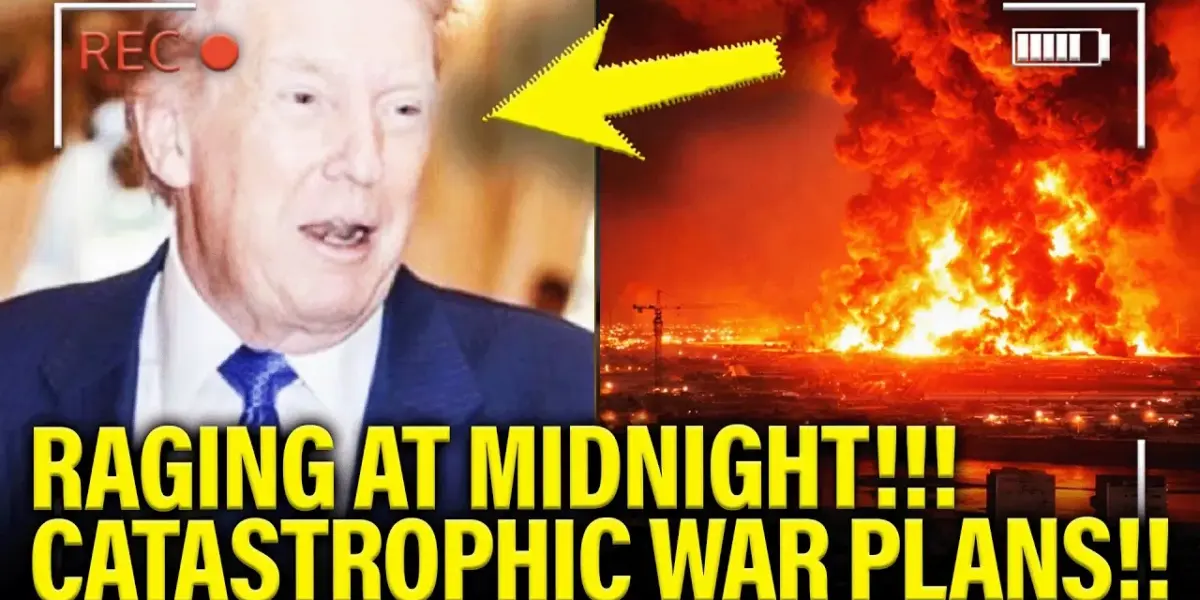
Trump’s Midnight Musings Highlight Military Readiness Concerns
In a series of late-night social media posts, former President Donald Trump has ignited a firestorm of commentary regarding the United States’ military capabilities and its role in international conflicts. The former president’s pronouncements, characterized by the transcript’s author as a “psychotic meltdown,” touch upon several critical issues: the state of American munition stockpiles, the rationale for military engagement, and the perceived failures of the current administration. These statements arrive at a particularly sensitive geopolitical juncture, raising questions about leadership, strategic decision-making, and the very nature of American foreign policy.
Munitions Stockpiles and the Specter of Endless War
Trump’s assertion that the U.S. Possesses “virtually unlimited supply” of munitions, capable of sustaining conflict “forever and very successfully,” directly contradicts reports and statements from U.S. Officials suggesting otherwise. The transcript highlights concerns about dwindling stockpiles, particularly in the context of supporting allies like Ukraine and responding to escalating tensions in the Middle East.
The author points to the repositioning of military assets from South Korea and Asia to the Middle East as evidence of strain on U.S. Resources. Trump’s claims appear to serve a dual purpose: strengthening a narrative of American strength while simultaneously justifying a strategy of perpetual engagement.
This narrative of inexhaustible resources stands in stark contrast to the realities articulated by figures such as Senator Marco Rubio. Rubio, in a press conference, acknowledged the significant challenge posed by Iran’s prolific missile production, stating that Iran produces “over 100 of these missiles a month,” while the U.S. Can only produce “six or seven interceptors a month.” This disparity underscores a potential vulnerability in U.S. Defense capabilities and raises serious questions about the sustainability of prolonged conflicts, especially those involving high-volume missile barrages.
Geopolitical Alliances and the Iran Conflict
The transcript digs into the complex web of alliances and rivalries surrounding the recent escalation in the Middle East. A central argument presented is that the United States was, in essence, drawn into conflict with Iran due to actions taken by Israel.
Senator Rubio’s statements are cited, suggesting that the U.S. Acted preemptively because an Israeli strike on Iran would have triggered an Iranian retaliation against U.S. Interests. This perspective, echoed by House Speaker Mike Johnson, frames U.S. Involvement as a defensive measure to protect American personnel and assets in the region.
However, this justification is met with skepticism. Democratic Senator Mark Warner, Vice Chair of the Senate Intelligence Committee, explicitly stated, “There was no imminent threat to the United States of America by the Iranians.
There was a threat to Israel. If we equate a threat to Israel is the equivalent of an imminent threat to the United States, then we are in uncharted territory.” This highlights a significant divergence in assessing threats and a potential redefinition of what constitutes an immediate danger to U.S. National security.
The transcript points to a fracturing of international consensus. While the U.S. And Israel appear to be acting in concert, key allies like France and the United Kingdom have signaled reluctance to commit their forces. French President Emmanuel Macron has indicated France would not send its aircraft carrier, and UK Prime Minister Keir Starmer has stated that the UK military will not be committed to “unlawful war,” emphasizing the need for legal justification before deploying troops.
Historical Parallels and Leadership Critiques
Trump’s online activity also included commentary on Richard Nixon and the “deep state,” suggesting a belief that Nixon’s downfall was due to his inability to counter internal opposition, while Trump believes he can proactively dismantle it. This historical analogy, coupled with his repeated claims about the 2020 election being “rigged, stolen, and the laughingstock all over the world,” paints a picture of a leader preoccupied with past grievances and existential threats to his own power, rather than focused on current diplomatic and military challenges.
The author of the transcript expresses concern over Trump’s leadership style, describing him as exhibiting “zero leadership qualities” and a tendency to “blame others.” This is exemplified by his criticism of President Biden for providing aid to Ukraine, a stance that the author argues ignores Ukraine’s key role in possessing the expertise to counter Iranian threats. The author posits that Trump’s actions, including his rhetoric and policy leanings, align with the strategic interests of an Iran-Russia-China axis, effectively undermining U.S. Interests.
The Shifting Narrative of War and Peace
The narrative surrounding the conflict is further complicated by statements from Israeli Prime Minister Benjamin Netanyahu. In an appearance on Fox News, Netanyahu framed the conflict as a fight between “good guys” and “bad guys” and, in conversation with Sean Hannity, dismissed the idea that he had “dragged” Trump into the conflict, instead portraying them as partners in securing peace. Netanyahu suggested that their collaboration, which previously led to the Abraham Accords, would now lead to “many many more peace treaties” and that the current actions were a “gateway to peace,” not an “endless war.”
This optimistic outlook is juxtaposed with the harsh realities on the ground, including reports of U.S. Soldiers killed in attacks and concerns about the adequacy of warning systems and protective measures for troops. The transcript points to the deaths of six soldiers from a makeshift area in Kuwait, highlighting a lack of preparedness and ignored warnings about vulnerability to drone attacks.
The conflicting statements from various political figures and the stark contrast between Trump’s pronouncements and the reported realities of military readiness create a deeply unsettling picture of American foreign policy. The discourse suggests a potential disconnect between political rhetoric and operational effectiveness, raising critical questions about the long-term implications for U.S. Security and global stability.
Why This Matters
The analysis presented in this transcript is crucial because it probes the integrity of information disseminated by political leaders during times of international crisis. The author’s central concern revolves around the potential for leaders to misrepresent the state of military readiness, the justifications for engaging in conflict, and the true nature of geopolitical alliances. The stark contrast between official statements, on-the-record comments from senators, and the former president’s social media pronouncements highlights a significant challenge in discerning objective truth from political messaging.
The discussion raises profound questions about the sustainability of U.S. Military commitments. If munition stockpiles are indeed strained, as suggested by some reports and the repositioning of assets, then the ability to sustain prolonged engagements or respond effectively to multiple concurrent threats is called into question. The assertion that the U.S. Can fight “forever” may be a rhetorical flourish, but it masks a complex logistical and industrial reality that underpins military power.
The potential for U.S. Foreign policy to be dictated by the perceived needs or actions of allies, rather than solely by direct threats to American interests, is another critical takeaway. The framing of U.S. Intervention as a response to potential Israeli actions, and the subsequent Iranian retaliation, suggests a dynamic where American forces may be drawn into conflicts based on the strategic calculations of partners. This raises concerns about national sovereignty and the independent pursuit of American interests.
Finally, the critique of Trump’s leadership and his fixation on past grievances, including election integrity, suggests a worrying trend of political discourse prioritizing internal political battles over coherent and consistent foreign policy. The author’s implication that Trump’s actions inadvertently serve adversarial geopolitical interests highlights the potential for domestic political divisions to have significant international repercussions.
Implications, Trends, and Future Outlook
The ongoing debate surrounding U.S. Military readiness and foreign policy engagement points to several critical trends. Firstly, there is a growing public and political scrutiny of the cost and effectiveness of American military interventions. The reluctance of traditional allies like France and the UK to commit forces suggests a broader reassessment of global security responsibilities and a potential shift away from a purely U.S.-led security architecture.
Secondly, the proliferation of advanced weaponry, particularly by states like Iran, is creating new strategic challenges. The disparity between missile production and interceptor capabilities, as highlighted by Senator Rubio, indicates a need for significant investment in next-generation defense systems and a reevaluation of current deterrence strategies. This trend may lead to increased reliance on preemptive actions or a more cautious approach to direct confrontation.
The future outlook suggests a continued tension between the desire to project American power and the practical limitations of resources and international consensus. The political discourse, particularly surrounding figures like Donald Trump, indicates a potential for a more transactional and nationalist approach to foreign policy, which could lead to further realignments of global alliances. The effectiveness of this approach in promoting long-term stability and security remains a subject of intense debate.
Historical Context and Background
The transcript touches upon historical parallels, notably referencing Richard Nixon’s struggles with the “deep state.” This alludes to a recurring theme in American politics concerning the perceived influence of unelected bureaucratic or intelligence agencies on policy. Trump’s framing of his own political battles through this lens suggests a narrative of fighting against entrenched opposition, a tactic employed by various political figures throughout history.
The discussion also implicitly references the post-9/11 era, characterized by extensive U.S. Military involvement in the Middle East, often justified by the need to counter threats from rogue states and terrorist organizations. The current situation, with escalating tensions involving Iran, echoes some of the same strategic dilemmas and debates about the limits of military intervention and the efficacy of diplomatic solutions that have defined U.S. Foreign policy for decades. The Abraham Accords, mentioned by Netanyahu as a precursor to broader peace, represent a significant diplomatic achievement that shifted regional dynamics, yet the current conflict suggests that these gains are fragile and susceptible to broader geopolitical pressures.
The author’s critique of Trump’s approach, contrasting it with the need for leadership that addresses complex global challenges, reflects a broader debate about the qualities required for effective statesmanship in an increasingly interconnected and volatile world. The reliance on figures from the real estate and business world for critical foreign policy and negotiation roles, as exemplified by Steve Witkoff’s involvement, highlights a trend of leveraging unconventional expertise, the long-term efficacy of which is still being assessed.
Source: Trump has MIDNIGHT MELTDOWN as WAR BACKFIRES!! (YouTube)

Related Articles
Trump’s DOJ Failures Spark Outrage: Steele Slams “Retribution Agenda”
Conservative commentator David Steele criticized Donald Trump's "retribution agenda" at the DOJ, citing legal team failures. He argued that Trump's expectations of courtroom success ignore fundamental legal principles. Steele suggested Trump himself acts as head of the DOJ, undermining its independence.

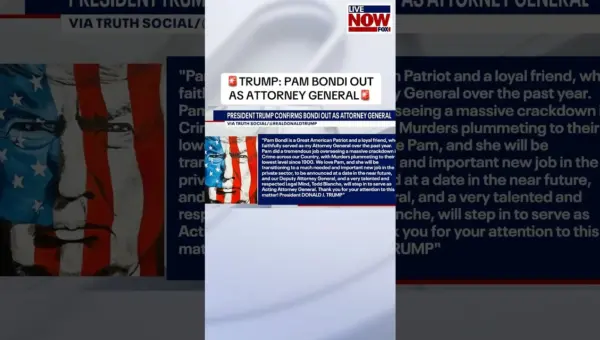
Trump Replaces AG Pam Bondi, Names New Acting Attorney General
Former President Donald Trump announced Thursday that Pam Bondi is no longer serving as his Attorney General, stating she is moving to a new private sector role. Trump praised Bondi's service on Truth Social, crediting her with overseeing a significant drop in crime. Todd Blanch has been appointed as the acting Attorney General.
Trump Surprises Leavitt With White House Press Secretary Offer
Former White House Press Secretary Kayleigh McEnany revealed the surprisingly casual way she learned she would be appointed to the role. Then-President-elect Donald Trump offered her the position during a routine phone call about a week after the 2016 election. The offer was made in a matter-of-fact tone, devoid of any formal ceremony or grand pronouncements.