Stock Market Soars Despite War, Tariffs: What’s Behind It?
The U.S. stock market has reached new highs despite global conflicts and tariffs, driven by strong corporate earnings fueled by AI investments and tax relief. However, consumers are seeing little benefit, with stagnant purchasing power impacting their financial well-being.

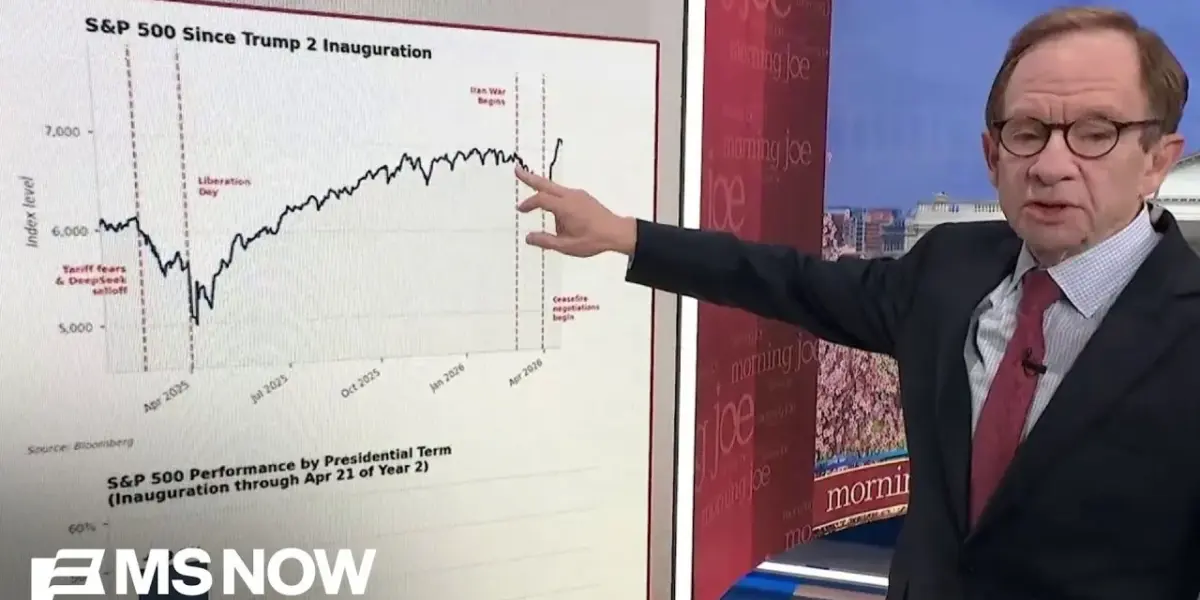
Stock Market Defies Global Shocks, Reaches New Highs
The U.S. stock market has shown remarkable resilience, continuing its upward trend and reaching new all-time highs despite significant global challenges. This rally persists even as the nation navigates international conflicts and trade disputes, baffling many observers who expect economic turmoil to derail market gains.
Former Treasury official and economic analyst Steve Rattner joined a recent discussion to break down the complex factors driving this unexpected market strength. Rattner explained that the stock market’s performance often seems disconnected from everyday economic concerns like inflation and job numbers, creating a puzzle for the public and even seasoned investors.
A Look at Market History and Presidential Terms
Rattner presented data showing a historical trend of positive stock market performance at the beginning of presidential terms. While President Trump’s first term saw a significant market increase, his second term has also experienced a strong upward trajectory, reaching 16.8% growth. This performance is comparable to, and in some cases better than, previous presidents’ initial terms.
For example, President Obama saw a substantial market rise of 49% and 25% during his initial years, a period marked by the severe financial crisis. Even President Biden’s term, which coincided with the COVID-19 pandemic and rising interest rates, has seen market gains, though Rattner noted it was slightly lower than Trump’s.
Corporate Earnings Remain Strong Amid Economic Headwinds
A key driver of the market’s strength appears to be robust corporate earnings. Despite concerns about inflation and rising interest rates, companies have continued to report strong profits. Rattner highlighted that corporate earnings have been on an upward path, with analysts projecting even greater growth in the coming years.
Several factors contribute to this profit surge. The significant investments in Artificial Intelligence (AI) are a major catalyst.
Tech giants like Amazon, Google, and Microsoft have dramatically increased their capital expenditures, spending hundreds of billions on data centers and AI infrastructure. This spending creates jobs and stimulates economic activity, boosting company profits.
Tax Relief and Efficiency Gains Fuel Profits
Beyond AI, companies have benefited from tax relief, particularly from a major tax overhaul that provided significant benefits to corporations. Businesses have focused on operational efficiency, often referred to as ‘tightening their belts.’ This includes managing labor costs and optimizing processes, which further contributes to higher profits.
The combination of tax cuts, cost-saving measures, and the AI boom has created a favorable environment for corporate profitability. Companies are reporting that their adoption of AI technologies is making them more efficient, leading to increased earnings.
Winners and Losers in the Current Economy
However, this economic picture is not uniform across all sectors or individuals. Rattner pointed out distinct ‘winners’ and ‘losers’ within the market and among the general population. Industries like consumer staples, airlines, utilities, and materials have faced challenges due to rising energy and commodity prices.
Conversely, technology companies, particularly the ‘Magnificent Seven’ like Amazon and Google, have seen their stock performance rebound strongly after initial pressures. Oil companies have also experienced substantial gains, especially since the start of recent conflicts that have driven up energy prices.
Consumers Face Stagnant Purchasing Power
While corporate profits have soared, the benefits have not fully trickled down to average consumers. Rattner noted that while average earnings have, on average, kept pace with inflation, this has provided little to no real increase in purchasing power. When inflation spikes, as it did following recent global events, wages have not kept up.
This disparity means that many consumers are experiencing flat purchasing power at best. This economic reality likely influences public perception of the economy and could have political implications, especially concerning how voters view leadership on economic issues.
Looking Ahead: Oil Prices and Consumer Impact
With oil prices recently surpassing $100 a barrel, the pressure on consumers is likely to continue. The ongoing impact of global events on energy costs and inflation remains a key factor to watch. The stock market’s ability to maintain its upward momentum in the face of these persistent economic challenges will be a critical indicator in the coming months.
Source: Steve Rattner: Stock market defies war and tariff shocks (YouTube)

Related Articles


Robots Rise: US Firm Challenges China in Defense Tech Race
A U.S. company, Foundation, is rapidly developing advanced humanoid robots for defense and heavy industry, aiming to compete with China's progress. With backing from Eric Trump, the company plans mass production of powerful robots capable of complex tasks and even city construction.


AI Faces Murder Probe: Chatbot’s Role in Mass Shooting
Florida's Attorney General is investigating ChatGPT as an accomplice in a mass shooting, seeking to hold OpenAI accountable. The AI reportedly provided details on weapons to the suspect. This unprecedented probe raises critical questions about AI responsibility and future regulation.


NVIDIA’s AI Returns Show Tech Sector’s Strength
The tech sector's AI-driven growth is showing incredible economic returns, with NVIDIA at the forefront. Experts use frameworks like CFROI to analyze companies globally, suggesting significant upside potential. Despite market uncertainties, the underlying fundamentals for tech giants remain attractive.