Russia’s War in Ukraine: An Exhausted Stalemate?
Russia security expert Mark Galeotti analyzes the war in Ukraine, suggesting a costly stalemate where neither side has a clear victory path. He highlights Russia's recruitment challenges, the human cost, and the complexities of Western intervention, while noting Moscow's ongoing cognitive warfare efforts.

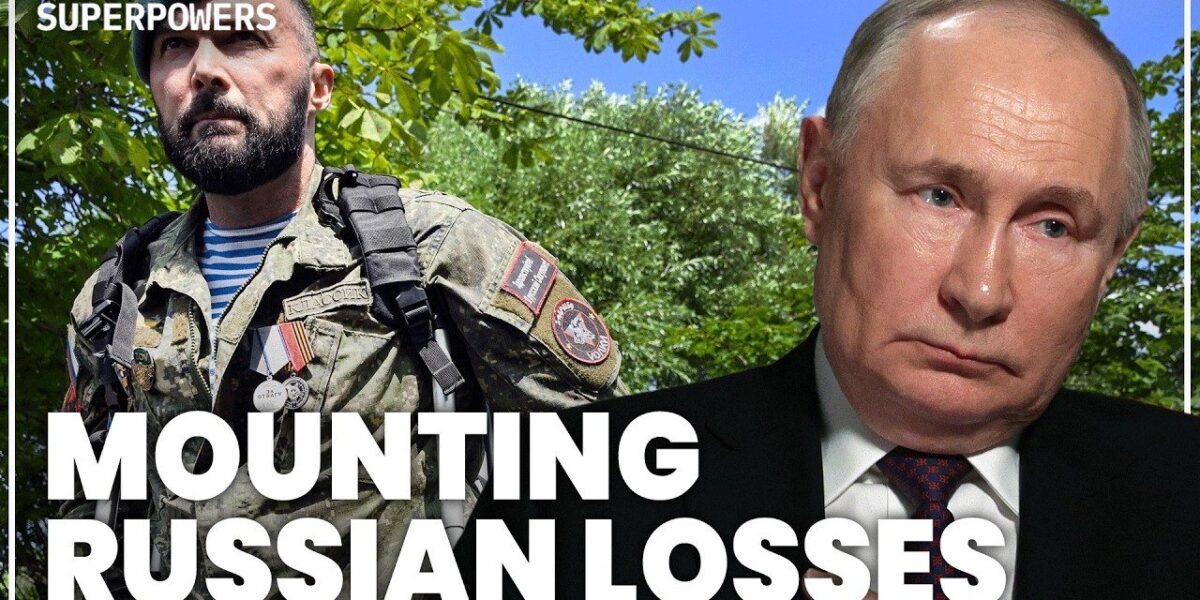
Russia’s War in Ukraine: An Exhausted Stalemate?
As the war in Ukraine enters a new, potentially more attritional phase, Russia security expert Mark Galeotti assesses the grim realities on the ground, suggesting neither side has a clear path to victory and that the conflict may become a prolonged, costly stalemate. The current trajectory points towards a war of attrition, with both Russia and Ukraine facing significant challenges in sustaining offensive operations.
Assessing the Current State of the Conflict
Mark Galeotti, director of the Mayak intelligence company, described the ongoing conflict as a situation where “both sides are losing, but at the moment, the Ukrainians may be losing slightly more quickly.” He explained that neither Russia nor Ukraine has a clear “theory of victory.” Russian President Vladimir Putin’s initial maximalist goals of dominating all of Ukraine have been scaled back. His current objectives appear to be annexing certain territories and leaving the rest of Ukraine unstable and potentially ungovernable. Ukraine, while no longer fearing Russian tanks in Kyiv, lacks a strategy to dislodge Russian forces. Their primary goal is to make the war so costly for Moscow that it becomes unsustainable.
“When it comes down to it, we’ve never really established quite what winning or losing means for either side, because not least, it changes.”
Galeotti suggests that current peace talks are unlikely to lead to an immediate resolution but may serve as a precursor to more substantial negotiations. He posits that neither side can maintain the current tempo of operations beyond the end of the year, indicating a shift towards a more exhausted phase of the war.
The Human Cost and Recruitment Challenges
A significant aspect of the war, as highlighted by Galeotti, is the immense human cost. He references a private assessment from a former Ukrainian minister suggesting an unsustainable deficit for Russia, with monthly casualties (dead or wounded) estimated at 35,000, compared to a recruitment pipeline of around 25,000. This widening gap, coupled with reduced training for new recruits, makes them less survivable.
The recruitment model in Russia, relying on volunteers offered “life-changing sums of money,” is a deliberate strategy by Putin to avoid the political backlash associated with mobilizing conscripts. While this approach has allowed Russia to maintain its forces, rising casualties pose a growing political challenge to Putin’s regime, which is primarily motivated by self-preservation.
Galeotti noted a crucial difference from past conflicts: “people aren’t coming home unless they’re coming home in a zinc box or coming home for medical treatment. It’s very rare for people to get leave.” Contract soldiers are signed for the duration of the “special military operation,” a stark reality for those involved.
The Debate on Western Intervention
The discussion touched upon the idea of Western intervention, including the possibility of deploying coalition troops to Ukraine. Galeotti expressed skepticism about such a move. He questioned the availability of sufficient troops and the political will to sustain casualties, citing the potential for “flag draped coffins coming back to the UK.” He also pointed out that such a deployment would likely fracture the existing coalition of allies, many of whom are hesitant to commit combat troops.
While acknowledging the moral satisfaction of direct intervention, Galeotti argued against its pragmatism, stating it would “destroy any chances of peace negotiations.” He suggested that a more viable approach for the coalition of the willing is to bolster Ukraine’s capacity to defend itself through financial, technical, and intelligence support, creating a “militarized” country capable of resistance, akin to the concept of “a big Israel.”
Russia’s Cognitive Warfare and Internal Discontent
Galeotti also addressed Russia’s sophisticated disinformation campaigns, citing a recent example of Russian propaganda alleging that British and French elites were planning to provide Ukraine with nuclear or dirty bombs. This tactic, he explained, aims to fracture the Western coalition by playing on German anxieties and portraying Britain and France as reckless.
This cognitive warfare, Galeotti believes, also reflects a growing awareness within the Russian state of disillusionment and disenchantment among its own population. While direct protests are suppressed in the authoritarian regime, there are signs of a sentiment that the war is not one the people wanted. The reliance on volunteers signing up for substantial financial incentives, coupled with the lack of returning soldiers with firsthand accounts of the war’s brutality, has so far mitigated widespread public outcry.
The Long Road Ahead: Attrition and Uncertainty
Looking forward, Galeotti anticipates a prolonged period of attritional warfare. He believes that neither side possesses the capacity for decisive breakthroughs in the near future. The current fighting is characterized by small-scale engagements, often relying on infiltrators and drones, making large operational leaps highly improbable. The war, he concludes, is likely to become a slow, painful process of attrition, with Putin potentially gambling on Ukraine’s eventual exhaustion.
However, Galeotti remains skeptical of Putin’s assessment of Ukrainian resilience. The key question remains whether Putin truly grasps the extent of Russia’s losses and the unsustainability of the current approach, or if he remains insulated by a regime that prioritizes his survival and historical legacy over the immense human cost.
Source: ‘People aren’t coming home’ | Mark Galeotti on the reality of Putin’s meat grinder campaign (YouTube)

Related Articles

Ukraine Strikes Russian Oil, Army Pushes Westward
Ukraine's spring offensive is underway, with Ukrainian forces making gains and forcing difficult choices for the Russian army. Meanwhile, Ukraine has intensified drone strikes on Russian oil infrastructure, aiming to cut off war funding. International interest in Ukraine's drone technology is growing, potentially reshaping global defense markets.

Iran War Costs Mount, Deal Prospects Dim
The war in Iran is costing the U.S. billions daily, impacting inflation and healthcare costs. While military gains are noted, concerns remain about Iran's nuclear ambitions and the lack of a clear diplomatic path. A "grand bargain" is sought, but the economic and human costs at home are rising.

China-US Tensions Flare: Blockade Risk Sparks Superpower War Fears
The U.S. blockade in the Strait of Hormuz has intensified tensions with China, raising fears of a potential superpower conflict. Expert Roger Boyes highlights China's use of a "shadow fleet" and military support for Iran, while President Trump attempts a delicate diplomatic approach ahead of a key meeting with President Xi Jinping.