US Navy Seizes Iranian Oil Tanker Amid Escalating Tensions
U.S. forces have seized a sanctioned Iranian oil tanker, intensifying a standoff with Iran. The operation follows Iran's seizure of two ships, which it called retaliation for a U.S. blockade. Analysts suggest Iran is using strategic ambiguity while facing internal divisions, complicating potential negotiations.

US Navy Seizes Iranian Oil Tanker Amid Escalating Tensions
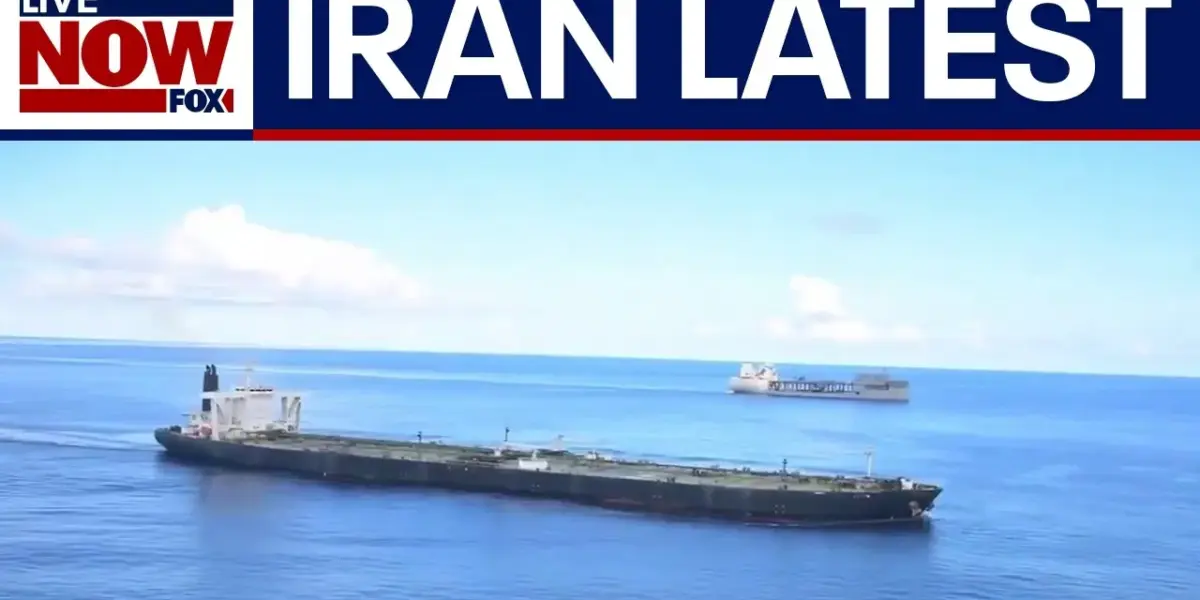
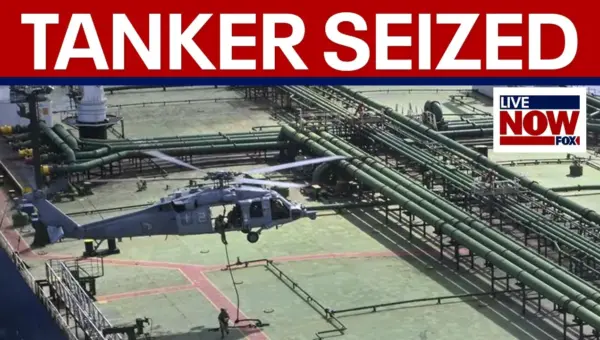
In a significant development in the ongoing tensions between the United States and Iran, U.S. forces conducted a maritime operation to seize a sanctioned oil tanker believed to be transporting oil from Iran. The Department of Defense stated that the operation, a maritime interdiction and vessel boarding, aimed to deny illicit actors the freedom to operate in international waters. This action comes amidst a complex and volatile geopolitical situation in the Middle East, with Iran recently firing on and seizing two ships, which it described as retaliation for a U.S. naval blockade of its ports.
Iran’s Retaliation and Strategic Ambiguity
Iran’s actions, including firing on three outbound ships and seizing two, were framed as a direct response to the U.S. naval blockade and a previous seizure of an Iranian vessel. These events unfolded shortly after President Trump had indicated a willingness to extend a ceasefire with Iran.
Experts suggest that Iran’s leaders may be employing strategic ambiguity, choosing not to officially respond to ceasefire extensions because they believe they hold the upper hand. This approach, according to analysts, forces President Trump into a difficult position, potentially placing the political cost of escalation on him.
Legality and Effectiveness of Sanctions
The U.S. seizure of the oil tanker is legally grounded in international law, particularly concerning violations of sanctions. According to experts, such vessels can be seized if they are found to be in violation of various sanctions, depending on their destination.
Many of these tankers are reportedly heading to China, which is considered illegal under United Nations Security Council resolutions and U.S. sanctions. The broader strategy involves blocking Iran’s exports and imports, not just oil but also non-oil products like petrochemicals and steel.
While the naval blockade and sanctions are not perfectly effective and allow Iran some means to evade restrictions, they have significantly impacted the Iranian economy. The country is reportedly losing millions, if not billions, of dollars daily due to its inability to export goods.
The United States has maintained that humanitarian goods are permitted to flow, creating a slight restriction on completely choking off Iranian trade. However, the persistent and rigorous enforcement of these economic policies is considered key to their ultimate effectiveness.
Stalled Negotiations and Internal Divisions
The prospect of renewed talks between the U.S. and Iran appears increasingly unlikely due to internal divisions within the Iranian regime. Unlike in the past, there is no single supreme authority capable of harmonizing the different factions, including the military, political leadership, and diplomatic corps. This infighting, while not new, is now occurring without the decisive leadership of a supreme leader, leading to disagreements on how to approach the United States.
Despite these internal rifts, key figures such as the head of the parliament, the foreign minister, the head of the Revolutionary Guard Corps, and the head of the national security council appear united on one critical issue: refusing to relinquish Iran’s capability to enrich uranium. This stance is seen as a non-negotiable point and a major sticking point for any potential agreement, even if a unified authority were present.
Intertwined Regional Conflicts
Developments in Lebanon, including deadly strikes that have raised regional tensions, are seen as fully intertwined with the broader Iran-U.S. conflict. Iran’s strategy reportedly includes incorporating any ceasefire with the U.S. and Israel to also address Israeli attacks against Lebanon.
This approach, analysts suggest, aims to solidify Iran’s influence in the Middle East. International law does not recognize Tehran’s relationship with its proxies, such as Hezbollah, which are used for financing and malign activities that undermine regional stability and sovereignty.
Hezbollah, acting as an operator on behalf of Iran, can be used to escalate conflicts and create challenges for the U.S. and Israel, providing Iran with plausible deniability. This was evident after the October 7th attacks, where Iran did not directly engage but used Hezbollah and other proxies to wage war. This tactic allows Iran to pursue its objectives without direct military confrontation, staying within a gray area of plausible deniability.
U.S. Senate Rejects Effort to Halt War
In Washington D.C., the U.S. Senate voted against a Democratic attempt to halt military action in Iran, rejecting the resolution by a vote of 46 to 51. This decision highlights that Republican support for President Trump’s military efforts in the region remains largely intact. This marks the fifth time this year the Senate has voted against limiting the president’s war powers in a conflict that Democrats argue is illegal and unjustified.
The support for military action, surprisingly, is strong among President Trump’s base, particularly among veterans who have served in the Middle East. Many of these individuals have been impacted by weapons originating from Iran, especially during deployments in Iraq and Afghanistan.
The persistent issue of Iranian funding, training, and terror financing has made neutralizing Iran’s threat a priority for those seeking long-lasting peace and security in the Persian Gulf region. Despite the politicization of national security issues, there is significant backing for the current approach.
Focus on Iranian Opposition
As discussions continue, attention is also being given to Iran’s opposition, with the exiled crown prince being highlighted as a viable and legitimate entity. Millions of Iranians have reportedly supported the crown prince’s return, indicating a desire for a different future.
For President Trump, if further escalation is considered, a key component would be to exploit internal divisions within Iran and empower the Iranian people. Recognizing and engaging with the legitimate opposition, such as the crown prince, is seen by some as crucial for influencing the internal dynamics of the Iranian regime and potentially leading to its collapse.
This approach aligns with the view that empowering the Iranian people could enable them to control their own destiny. The president has previously considered targeting Iran’s energy infrastructure, a move that could create internal collapse due to existing challenges with power grids. This strategic thinking suggests a potential focus on weakening the regime’s internal security infrastructure in the event of further escalation.
Looking Ahead
The coming days will be critical in observing how Iran responds to the seizure of its oil tanker and whether the U.S. maintains its enforcement of sanctions. The ongoing internal dynamics within Iran and the potential for further regional instability, particularly concerning Lebanon, will also be closely watched. The effectiveness of U.S. policy in influencing Iran’s behavior will depend on sustained pressure and a clear strategic objective beyond military capabilities, potentially involving support for internal opposition movements.
Source: US military seizes oil tanker associated with Iran (YouTube)

Related Articles


US Claims Victory, But Iran’s Navy Still Disrupts Shipping
Despite US claims of destroying Iran's conventional navy, recent ship seizures and ongoing disruptions in the Strait of Hormuz raise doubts. The situation highlights Iran's continued ability to threaten maritime traffic, challenging narratives of decisive victory and underscoring persistent regional instability.
US Seizes Iranian Oil Tanker Amid Mideast Tensions
U.S. military forces seized an oil tanker, the M/T Majestic X, in the Indian Ocean for allegedly transporting oil from Iran. This operation occurs amidst rising tensions and recent ship attacks in the Strait of Hormuz, highlighting the U.S. commitment to enforcing maritime sanctions.


Reza Pahlavi Attacked With Red Liquid in Berlin
Reza Pahlavi, son of Iran's former Shah, had red liquid thrown at him in Berlin during a visit. The incident occurred amidst protests for and against him. Pahlavi, a prominent opponent of the Iranian regime, was in the city for meetings with German politicians.