Congressman Removed From SOTU Over ‘Apes’ Protest Sign
Representative Al Green was removed from President Trump's State of the Union address after protesting with a sign depicting the Obamas with primate imagery. Green stated the sign was to denounce "deplorable" and "unacceptable" portrayals.

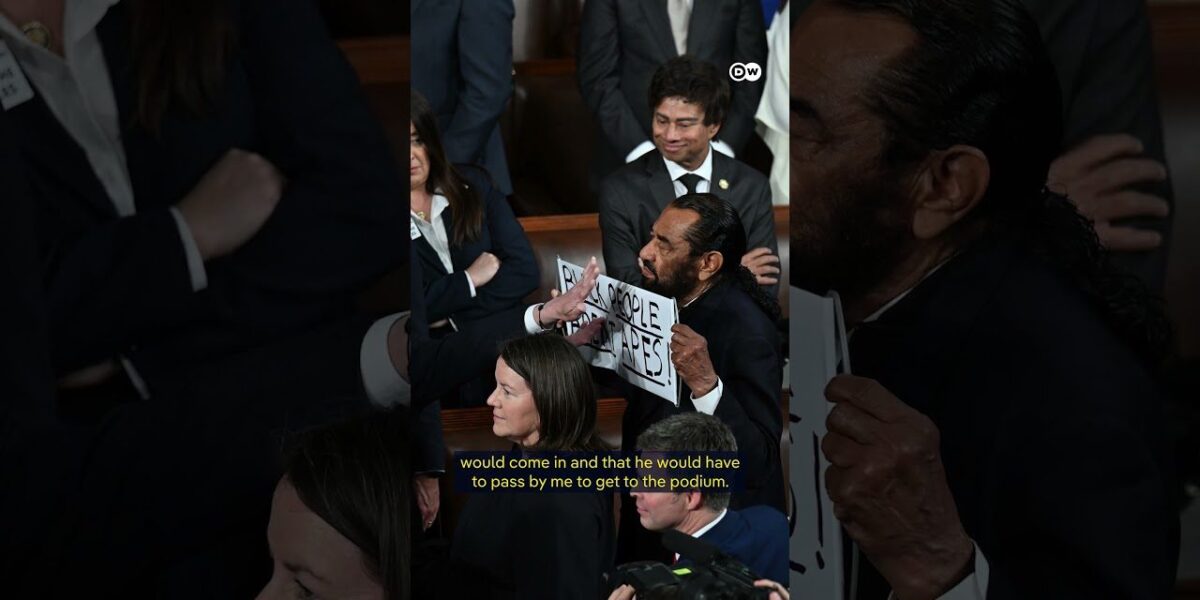
Congressman Al Green Removed From State of the Union Address
Washington D.C. – U.S. Representative Al Green was removed from the House chamber during President Donald Trump’s State of the Union address on Tuesday evening. The removal occurred after Green displayed a protest sign that depicted former President Barack Obama and former First Lady Michelle Obama with imagery referencing primates, a move he stated was a protest against what he deemed “deplorable” and “unacceptable” portrayals.
The Protest and Its Motivation
Representative Green, a Democrat from Texas, positioned himself in the path of President Trump’s walk to the podium with the intention of confronting the President with his message. “I attended the State of the Union address knowing that the president would come in and that he would have to pass by me to get to the podium,” Green explained. “And I wanted him to know that portraying the President Obama and first lady Obama as members of the primate family is not only unacceptable, it is something that is deplorable and something that we will not tolerate. At least I will not.”
Security Intervention and Removal
According to reports and Green’s own account, security personnel intervened to remove the congressman and his sign from the House floor. While the exact protocol and reasons for removal were not immediately detailed, the incident brought a momentary disruption to the proceedings of the highly anticipated address. The imagery used in Green’s protest sign has been a point of contention and criticism in political discourse, with many denouncing it as racist and offensive.
Broader Context and Political Climate
The incident involving Representative Green occurs against a backdrop of heightened political polarization in the United States. The State of the Union address itself is a significant event, often used by presidents to outline their agenda and by members of Congress to voice their dissent or support. Protests, both overt and subtle, are not uncommon during such events, reflecting the deep divisions within the nation’s political landscape. The use of imagery referencing primates in relation to Black individuals has a long and painful history rooted in racist ideologies, making Representative Green’s protest a statement against what he perceives as a continuation of such harmful rhetoric.
Reactions and Implications
While the transcript provided does not include reactions from other members of Congress or the White House, Representative Green’s actions are likely to draw a range of responses. Supporters may view his protest as a necessary and bold stand against racism and unacceptable political imagery. Critics, however, might condemn the disruption of the State of the Union and the nature of the protest itself. The incident underscores the ongoing debates surrounding free speech, political protest, and the use of offensive imagery in public discourse, particularly concerning racial sensitivities.
Looking Ahead
The removal of Representative Al Green from the State of the Union address serves as a stark reminder of the intense political and racial tensions that persist in the United States. As the nation moves forward, the discourse surrounding acceptable forms of political expression, the legacy of racist imagery, and the ongoing efforts to foster a more inclusive political environment will undoubtedly continue to be critical topics of discussion. The incident may prompt further dialogue on decorum in Congress and the impact of symbolic protests in shaping public perception.
Source: Rep. Al Green removed from Trump's State of the Union address over 'apes' protest sign | DW News (YouTube)

Related Articles


China-US Tensions Flare: Blockade Risk Sparks Superpower War Fears
The U.S. blockade in the Strait of Hormuz has intensified tensions with China, raising fears of a potential superpower conflict. Expert Roger Boyes highlights China's use of a "shadow fleet" and military support for Iran, while President Trump attempts a delicate diplomatic approach ahead of a key meeting with President Xi Jinping.
Trump Sees Iran Conflict Near End, Analysts Urge Caution
President Trump believes the conflict in Iran is "very close to over," but former advisor Keith Kellogg urges a cautious approach. The potential de-escalation could impact global markets, particularly oil prices. Investors should monitor the specifics of any resolution and its long-term implications for regional stability.
Doctor Rips Oz, Trump for ‘Lack of Seriousness’ on Health
A doctor has sharply criticized Donald Trump and Dr. Mehmet Oz for spreading health misinformation, calling their approach a "lack of seriousness." The doctor highlighted false claims about diet soda and cancer, and the dangers of appointing unqualified individuals to health agencies. He stressed the critical need for science-based leadership to ensure public well-being.