US Warships Enforce Iran Oil Blockade Near Strait of Hormuz
U.S. warships are enforcing an oil blockade on Iran near the Strait of Hormuz, warning vessels against non-compliance with potential force. Iran has threatened to disrupt shipping in the Red Sea if the blockade continues. Meanwhile, Israel remains committed to its military operations against Hezbollah in Lebanon, aiming to dismantle the organization.

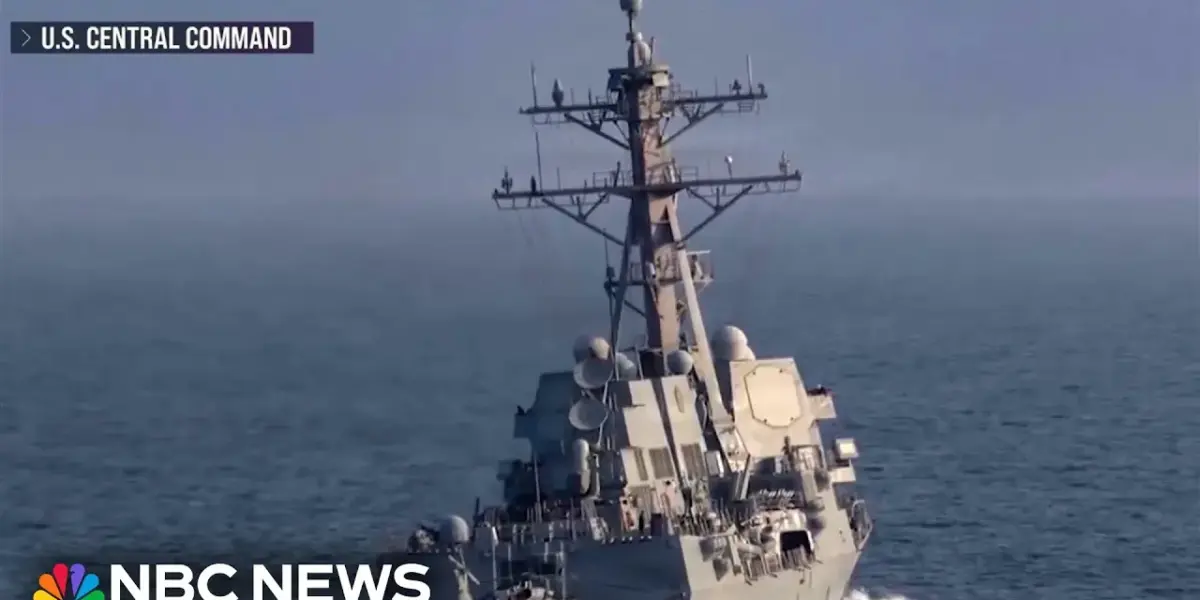
US Navy Patrols Strait of Hormuz, Warns Ships
American warships are actively patrolling the vital Strait of Hormuz, broadcasting stern warnings to vessels attempting to dock in or depart from Iran. These patrols are part of a U.S. naval blockade aimed at preventing Iran from exporting its oil. The U.S. Navy has made it clear that any non-compliance will be met with force, stating, “If you do not comply, we will use force.” This operation highlights the escalating tensions in the region and the U.S. commitment to enforcing its economic pressure on Iran.
The U.S. Navy’s readiness is at a high level, with a senior official declaring, “The whole of the United States Navy is ready to force compliance.” This statement highlights the seriousness with which the U.S. views the enforcement of the oil export restrictions. The goal is to significantly impact Iran’s economy by cutting off a primary source of revenue, effectively attempting to “strangle” the country’s financial capabilities.
Iran Responds to Blockade Threats
Iran’s Revolutionary Guard has responded forcefully to the U.S. naval blockade. They have issued a direct threat, stating that if the blockade continues, Iran will retaliate by disrupting traffic in another crucial shipping lane, the Red Sea. This potential escalation signals Iran’s willingness to engage in asymmetric warfare and create broader economic instability if its oil exports are significantly hampered.
The threat to the Red Sea is particularly significant because it is a major global artery for trade, connecting Europe and Asia. Disruptions there could have far-reaching consequences for international commerce and energy markets, demonstrating Iran’s ability to project influence beyond its immediate borders.
Diplomatic Efforts and Potential Negotiations
Amidst the military posturing, President Trump has expressed optimism that the situation with Iran could be resolved soon. He indicated that negotiations with Iran might restart by the end of the week, potentially taking place in Pakistan. “I think it’s close to over,” the President stated, suggesting a possible de-escalation through diplomatic channels.
The involvement of Pakistan as a potential venue for talks is noteworthy. This suggests a reliance on regional diplomacy to mediate the conflict. The U.S. has historically used third-party nations to facilitate communication with Iran, especially during periods of high tension and direct diplomatic breakdown.
Israel’s Stance on Lebanon Conflict
Separately, Israel has reiterated its position regarding its ongoing operations in Lebanon. Today, Israeli officials insisted that any peace deal reached would not extend to Lebanon, where thousands of Israeli troops are engaged in conflict with Hezbollah. Israel has been fighting in Lebanon since October 7, 2023, and is committed to continuing its operations as long as necessary.
A senior Israeli official, speaking near the Lebanese border, emphasized the commitment to the ongoing military engagement. When asked about the duration of Israeli forces’ presence, the official stated, “I think we have been fighting since October 7, 2023. We are committed to continuing doing so as much as needed.” This indicates a long-term strategic objective for Israel in the region.
Israel’s Objective in Lebanon
When questioned about whether Israel’s actions in Lebanon mirror those in Gaza, the official provided a direct answer. “Israel is going to dismantle Hezbollah,” the official declared. This statement clearly outlines Israel’s primary military objective: the complete neutralization of Hezbollah as a military and political force.
This objective suggests that Israel views Hezbollah as a significant threat requiring a decisive and potentially prolonged military campaign. The commitment to dismantling the organization implies a strategy beyond simply creating a buffer zone, aiming instead for a fundamental alteration of the security balance in its northern border region.
Source: First images of U.S. blockade of Iran (YouTube)

Related Articles


US Navy Warns Ships: Iran Port Blockade Now Active
The U.S. Navy has fully implemented a blockade of Iranian ports, broadcasting warnings to vessels against docking or departing. This move aims to cripple Iran's oil exports. Iran has threatened to disrupt traffic in the Red Sea if the blockade continues, while Israel's military operations in Lebanon follow a similar strategy to its actions in Gaza.


US Blocks Iran Ports, Sparks Tensions; Trump Feuds with Pope
The U.S. Navy has implemented a partial blockade of Iranian ports, increasing tensions, while President Trump continues his feuds with Pope Francis and Federal Reserve Chair Jerome Powell. Meanwhile, Live Nation has been found guilty of illegally monopolizing the ticketing market, a verdict that could impact concert-goer prices.


Robots Clear Sea Mines, Protecting Vital Shipping Lanes
A company is using advanced underwater robots to clear dangerous sea mines, ensuring safe passage through vital shipping lanes like the Strait of Hormuz. This technology offers a safer, faster alternative to traditional mine-clearing methods. Their work also supports ocean health by expanding into seagrass restoration projects.