Robots Clear Sea Mines, Protecting Vital Shipping Lanes
A company is using advanced underwater robots to clear dangerous sea mines, ensuring safe passage through vital shipping lanes like the Strait of Hormuz. This technology offers a safer, faster alternative to traditional mine-clearing methods. Their work also supports ocean health by expanding into seagrass restoration projects.


Robots Clear Sea Mines, Protecting Vital Shipping Lanes
A new company is using advanced underwater robots to tackle dangerous sea mines. Their work helps keep important shipping routes safe for everyone. This technology offers a modern solution to an old and deadly problem.
The company started with a different goal: helping people plant seagrass underwater on a large scale. This important work helps restore ocean health. But while solving this problem, they saw how their underwater robots could do much more.
They haven’t stopped planting seagrass. In fact, a new project is planned for San Francisco later this year.
This shows they are still committed to their original mission. However, like most growing businesses, they are expanding their services.
Solving Big Underwater Challenges
The company’s main goal is to solve the most critical problems found underwater. They care deeply about nature and ocean environments. But they are also just as passionate about maritime security and ensuring oceans function healthily.
Think of the Strait of Hormuz, a very busy waterway. Ships carrying oil and goods pass through it every day.
But it’s also a place where sea mines can be a serious threat. These hidden dangers can stop ships and cause huge problems for global trade.
Older methods for finding and clearing mines are slow and risky. They often involve divers or large, specialized ships.
These methods can take a long time and put people in danger. The new robots offer a faster and safer way to handle this threat.
How the Robots Work
These underwater robots are like advanced submarines. They can travel underwater without a person controlling them directly.
They use special sensors to scan the seabed for hidden objects. These sensors can detect the shape and material of mines.
Once a potential mine is found, the robot can identify it. Then, it can either mark the mine for a special team to destroy.
Or, in some cases, the robot might be able to disable the mine itself. This means fewer people have to get close to the dangerous explosives.
The technology is similar to how a self-driving car uses sensors to see the road. The robots use sonar and cameras to understand their surroundings. They are programmed to recognize specific threats, like mines, and report them.
Why This Matters
The safe passage of ships is vital for the world’s economy. Many countries rely on these waterways for trade. Disruptions can lead to higher prices for everyday goods and energy.
By using robots to clear mines, shipping companies can operate with more confidence. This helps prevent costly delays and accidents. It also reduces the risk to naval personnel who would normally perform these dangerous tasks.
This technology also helps protect marine life. Old-fashioned mine-clearing methods can disturb the ocean floor and harm ecosystems. The robots are designed to be less disruptive, helping to preserve the underwater environment.
Historical Context and Future Outlook
Sea mines have been used for over a century. They were first widely used in the late 19th and early 20th centuries. During World War I and World War II, they caused significant damage to ships.
Even today, old mines from past conflicts still pose a threat. They can remain active on the seabed for decades.
This means the problem of mine clearance is ongoing. New conflicts also introduce new threats and require constant vigilance.
The use of robots marks a significant step forward. It shows how technology can be applied to solve long-standing military and security challenges. As robots become more advanced, we can expect them to take on even more complex tasks underwater.
Implications and Trends
This development points to a growing trend of using autonomous systems in dangerous environments. We are seeing robots used in search and rescue, deep-sea exploration, and even in construction.
The ability to operate remotely and safely is key. This is especially true for tasks that are too risky for humans. The underwater domain, being so inaccessible, is a prime area for this kind of technological advancement.
We can expect to see more companies developing similar technologies. This competition will likely drive innovation, leading to even more capable and affordable underwater robots in the future. This will benefit both security and environmental efforts.
The company’s work in the Strait of Hormuz is a real-world test of this emerging technology. Their success could enable wider adoption of robotic solutions for maritime security worldwide.
The next phase of their San Francisco seagrass project is scheduled to begin later this year.
Source: Real-life minesweeping in Strait of Hormuz (YouTube)

Related Articles


Trump’s War Claims Spark Stupidity or Insanity Debate
Donald Trump's recent claim that 'nobody has ever ended one war' has sparked debate about his mental state and political awareness. Experts and critics point to his past statements and actions, including his handling of the Strait of Hormuz conflict, raising concerns about his fitness for office. The upcoming elections are seen as a critical juncture for assessing his political standing.

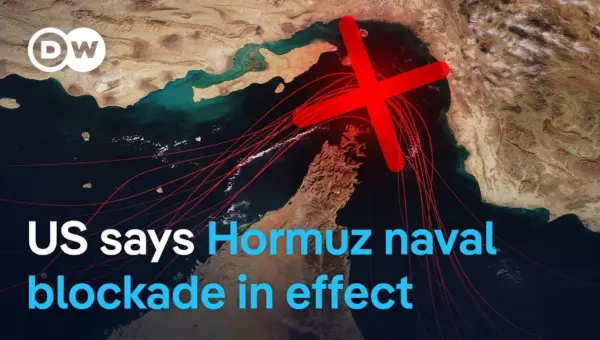
US Navy Blocks Iran’s Sea Trade, Escalating Regional Tensions
The U.S. military has announced a naval blockade on Iran, halting all sea-based trade and asserting control over maritime traffic. This action follows Iran's earlier disruption of the vital Strait of Hormuz. Experts weigh in on the legality, effectiveness, and potential for escalation, with concerns raised about China's role and the strain on U.S. naval resources.

Trump Claims China Will Stop Arming Iran
President Trump claims China has agreed to stop sending weapons to Iran, a move he links to keeping the Strait of Hormuz open. He also expressed optimism about lower oil prices and a potential end to the conflict involving Iran. The president also discussed his plans for the Federal Reserve and US leadership in AI.