Hypersonic Scramjet Engine Flies at Blistering Mach 7 Speed
Australia's Dart AE vehicle, powered by a 3D-printed, hydrogen-fueled scramjet, has successfully flown at speeds exceeding Mach 7. This achievement marks a significant advancement in hypersonic air-breathing propulsion, building on decades of research and testing.

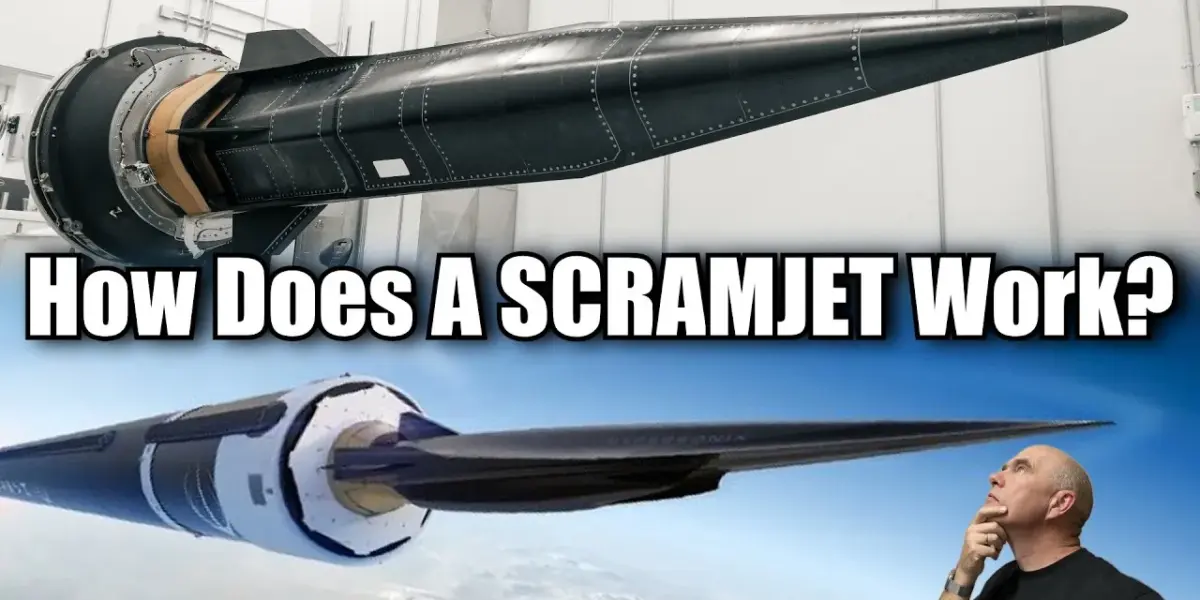
Australia’s Dart AE Hypersonic Vehicle Achieves Remarkable Speeds
In a significant leap for aerospace technology, an Australian-built aircraft, the Dart AE, has successfully demonstrated hypersonic flight, reaching speeds exceeding Mach 7. The groundbreaking test, conducted from Wallops Island, Virginia, utilized Rocket Lab’s Hypersonic Air-breathing Testbed (HAST) platform. This mission, codenamed “That’s not a knife,” represents a crucial step in the development of advanced air-breathing engines capable of propelling vehicles at unprecedented velocities.
The Power of Scramjets: Supersonic Combustion Ramjets Explained
The core of this achievement lies in the scramjet engine – a Supersonic Combustion Ramjet. Unlike conventional jet engines, scramjets operate on a fundamentally different principle to achieve extreme speeds. Traditional jet engines, such as turbojets and turbofans, rely on rotating compressors to pressurize incoming air before fuel is injected and ignited.
While highly versatile and efficient for subsonic and supersonic flight, these engines face thermal limitations as speeds increase. The kinetic energy of incoming air is converted into heat as it’s slowed down, and this, combined with combustion temperatures, can exceed the material limits of turbine components.
Ramjets represent an advancement, eliminating the need for mechanical compressors. Instead, they use the forward motion of the vehicle to compress incoming air through carefully designed intakes, creating “ram pressure.” However, ramjets typically max out around Mach 5.
At these speeds, a phenomenon called a “normal shock” forms, abruptly slowing the supersonic airflow to subsonic speeds. This process is inefficient, converting a significant portion of the air’s kinetic energy into heat rather than pressure, and can lead to combustion instability at higher temperatures.
Scramjets overcome this limitation by maintaining supersonic airflow throughout the entire engine, including the combustion chamber. This “supersonic combustion” is the key innovation.
By avoiding the drastic slowdown associated with a normal shock, scramjets can operate efficiently at speeds ranging from Mach 4-5 up to Mach 10 or even Mach 12. This allows for significantly higher velocities than ramjets, pushing the boundaries of air-breathing propulsion.
Dart AE: A 3D-Printed Marvel Fueled by Hydrogen
The Dart AE, largely constructed using 3D printing, is proof of modern manufacturing techniques in aerospace. Its hydrogen-fueled scramjet engine is designed to operate at speeds beyond Mach 7.
The collaboration with the US Defense Innovation Unit, under the project name Cavori Vex, highlights the strategic importance of this technology. While specific details of the flight’s outcome remain under wraps, the successful launch and demonstration of the scramjet’s potential are significant.
A History of Hypersonic Pursuit
The concept of scramjets has been explored for decades, with theoretical work dating back to the 1960s. Early research focused on ground-based testing in shock tunnels.
The first flight tests began in the 1990s, notably with a Russian hydrogen-fueled engine flown on a rocket, primarily to demonstrate sustained combustion rather than thrust generation. Later, collaborative efforts between Russia, the US, and France saw tests on SA-5 missiles reaching Mach 6.5 for extended periods.
Australia has also been a significant player in scramjet research, with the University of Queensland demonstrating thrust generation with their HyShot II project in 2002. Early scramjet development often favored hydrogen fuel due to its excellent cooling properties and ease of ignition, though later research shifted towards hydrocarbon fuels like jet fuel as the technology matured.
Key milestones in scramjet flight testing include:
- NASA’s X-43A (2004 & 2007): Launched from a B-52 bomber, the X-43A, a hydrogen-fueled vehicle, achieved Mach 6.8 and later Mach 9.6, setting a Guinness World Record for the fastest air-breathing jet engine at the time. These flights demonstrated acceleration and sustained operation in the hypersonic regime before controlled ocean ditching.
- US Air Force’s X-51A Waverider (2010 & 2013): This program tested a scramjet powered by JP-7 fuel, the same used by the SR-71 Blackbird. The X-51A achieved sustained flights of up to 210 seconds, covering hundreds of miles at hypersonic speeds, demonstrating the potential for long-duration hypersonic flight.
- High-Speed Flight Demonstrator (HyFire) (2012): A joint Australian-US effort, HyFire demonstrated successful transitions between different speed regimes and engine modes, reaching Mach 8.
The Engineering Challenges of Supersonic Combustion
Designing and operating a scramjet is an immense engineering challenge. The entire airframe, particularly the intake, must be meticulously shaped to generate oblique shock waves that compress the air efficiently without excessive heating or slowing it to subsonic speeds. Maintaining a stable flame in air moving at supersonic speeds is particularly difficult; fast-moving air tends to extinguish flames, much like blowing out a candle.
The combustion process must occur within milliseconds as the air rushes through the engine. This requires rapid mixing of fuel and air, often facilitated by intricate injector designs and internal structures that create recirculation zones or vortices to trap the flame and ensure complete combustion. Balancing the need for efficient mixing with the energy losses caused by turbulence is a constant challenge.
The performance of scramjets is measured in specific impulse, with early designs offering significantly higher impulse than rocket engines at lower speeds. However, as speeds increase, efficiency can decrease, and around Mach 10-12, conventional rocket engines with onboard oxidizers can become more effective.
The Future of Hypersonic Flight
The successful flight of the Dart AE is more than just a technological feat; it paves the way for a new era of high-speed transportation and defense capabilities. Scramjet technology holds the promise of dramatically reducing travel times across vast distances, potentially enabling rapid global transit. In military applications, it could lead to advanced missiles and reconnaissance aircraft capable of evading current defense systems.
The ultimate dream in aerospace is a single-stage-to-orbit (SSTO) vehicle that can take off using air-breathing engines, transition through ramjet and scramjet modes, and then engage rocket engines for final orbital insertion. Technologies like the Dart AE are crucial stepping stones on the path to realizing this ambitious vision, pushing the boundaries of what is possible in flight and space exploration.
Source: Scramjets – The Fastest Jet Engines (YouTube)

Related Articles


Rocket Lab Expands Reach, Eyes Mars with New Tech
Rocket Lab is powering NASA's Artemis II mission with solar technology and expanding its reach with space laser communications. The company is also developing its Neutron rocket and has ambitions for Mars exploration.


Honeywell CEO Details Aerospace Spin-off, AI Push
Honeywell's CEO Vimal Kapur detailed the company's ongoing role in space missions, including Artemis II, and announced the upcoming spin-off of its aerospace division. He also discussed the deployment of "Physical AI" to boost industrial efficiency and address labor shortages. The company is strategically separating into three focused entities to maximize growth potential.


Navy’s New Hawkeye: A $499 Stock Soars 4%
Northrop Grumman's stock surged 4% to $499 following an exclusive look at its new E2D Hawkeye aircraft for the U.S. Navy. This advanced surveillance plane is vital for tracking threats and is currently deployed in the Middle East. The company's investments in production capacity and technology position it for future defense contracts.