UK Defence Spending Under Scrutiny Amidst Iran Tensions
Former Foreign Secretary William Hague has voiced concerns over the clarity and achievability of US war aims in Iran, warning of potential chaos. The debate also highlighted significant gaps in the UK's military preparedness and underscored calls for increased defence spending amidst rising global tensions.

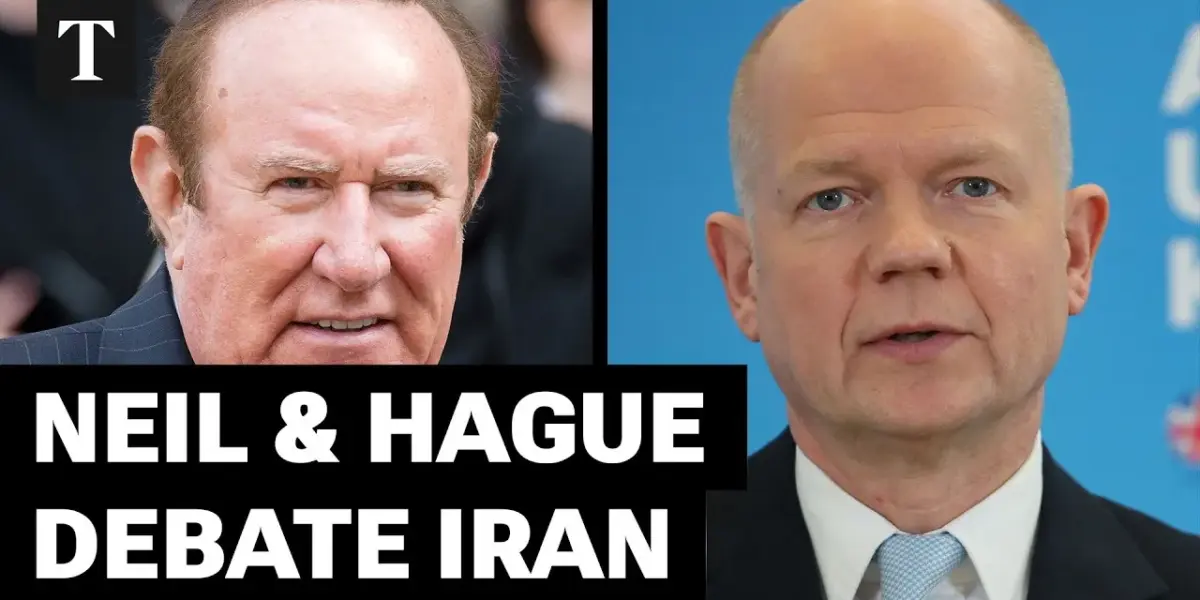
UK Defence Spending Under Scrutiny Amidst Iran Tensions
Former Foreign Secretary William Hague has acknowledged a significant decline in UK defence spending over recent decades, a trend he attributes to successive governments. The admission comes amid heightened global tensions, particularly concerning the conflict in Iran, which has spotlighted the perceived inadequacies of Britain’s military preparedness and its complex relationship with allies like the United States.
Debate Over War Aims and UK’s Role
During a recent interview, Hague engaged in a robust debate regarding the clarity and achievability of US war aims in Iran. He expressed concerns that statements from the US administration have varied, creating confusion about whether the objective is regime change, a halt to Iran’s nuclear program, or the degradation of its ballistic missile capabilities. Hague argued that while military objectives might be achievable, the pursuit of regime change is particularly hazardous and risks creating a chaotic situation, drawing parallels to past interventions in Iraq, Syria, and Libya.
“The military objectives I think um will be achieved and are being achieved by the United States and Israel.” Hague stated, “But nevertheless, to accomplish all of those things, particularly the regime change is extremely difficult. That is the hazardous bit. That is the bit that risked the chaotic situation in Iran.”
Andrew Neil challenged Hague on this point, presenting a list of four war aims outlined by President Donald Trump and reiterated by his cabinet: to prevent Iran from building a nuclear arsenal, degrade its missile stockpiles, achieve regime change, and cease its funding and arming of proxy groups. Neil argued that these aims, while potentially unachievable, were clearly stated.
Hague conceded that the aims might be unclear to some, citing varying statements from US officials. However, his primary criticism remained focused on the potential lack of achievability and the significant risk of unintended consequences, such as widespread chaos within Iran. He acknowledged that while a transition to a pro-Western democratic opposition would be desirable, it is a highly improbable outcome.
Handling of British Bases and Military Gaps
The discussion also delved into the UK government’s decision-making regarding the use of British bases for US operations in Iran. Hague criticized the government’s handling of the situation, suggesting that a single, clearly defined decision should have been made in advance, rather than a two-part approach that led to a swift U-turn within 24 hours.
He highlighted significant gaps in the UK’s military presence and preparedness. He pointed out the absence of a British warship in the Eastern Mediterranean and the Gulf, a departure from historical deployments. He lamented the lack of pre-positioned mine sweepers in Bahrain, a capability he believes would be crucial given the potential threat of Iranian mines and anti-ship missiles being deployed in the Strait of Hormuz during ballistic missile exchanges.
“It’s been a gap in the government’s preparation for this that there isn’t a British ship in the Eastern Mediterranean, which there usually is and always was in the past.” Hague observed. “There isn’t a British ship in the Gulf. It shows…
And we also used to have um m always station mine sweepers in Bahrain. And that’s another gap… Pre-positioned mine sweepers would also have been uh a good idea.”
Broader Implications for Anglo-American Relations
The disagreement over the use of bases has been characterized as a serious downturn in Anglo-American relations. Hague noted that President Trump has a long memory and is likely to remember such differences. He drew historical parallels, recalling previous disagreements between the UK and US, including Margaret Thatcher’s falling out with Ronald Reagan over Grenada and Harold Wilson’s refusal to commit troops to the Vietnam War.
Despite the current friction, Hague suggested that the UK government should not be afraid to disagree with the US when it believes it is right, though he stressed the importance of managing such disagreements effectively. He also acknowledged that President Trump is known to shift allegiances, and opportunities to repair the relationship may arise as the US seeks allies in other geopolitical rivalries, such as with China.
Calls for Increased Defence Investment
The conversation returned to the broader issue of UK defence spending. Hague acknowledged that defence spending has been falling for a long time under successive governments.
He argued that spending should have been increased in recent years, particularly given the changing global landscape, and that it is imperative to do so now. He noted the current consensus for increasing defence expenditure to 3% or 3.5% of GDP, but expressed concern that this is not materializing.
He suggested that increased defence funding could only be achieved through welfare reform, as economic growth alone is unlikely to provide the necessary resources. The interview also touched upon the legacy of the Labour party, with Neil suggesting that it left a “hollowed out defence capability.” Hague countered that while governments collectively have underfunded defence, the situation was arguably better when he was Foreign Secretary, citing the presence of aircraft carriers and mine sweepers inherited from the previous Labour government.
Hague concluded by emphasizing the need for all political parties to address defence spending in their election platforms, warning that some, like the Green Party, could exacerbate the problem. He stressed that Britain must prepare for a more dangerous world, citing conflicts in Ukraine, potential confrontation over Taiwan, and the general instability that has emerged over the last decade.
Foreign Office Culture Under Scrutiny
The interview also briefly touched upon a report concerning the culture within the Foreign Office, where some civil servants reportedly insist on working from home and perceive certain practices, like serving UK produce in embassies, as problematic. Hague expressed his disturbance at these reports, stating that during his tenure, there was a strong emphasis on working in the office and pride in UK produce. He advised the current Foreign Secretary to maintain a firm grip on the department and to ensure that the national interest remains paramount, even while respecting international law.
Looking Ahead
As global security challenges intensify, the debate surrounding UK defence spending and its foreign policy alignment is set to continue. The government faces pressure to not only increase investment in its military capabilities but also to clearly define its strategic objectives and its role in international conflicts. The evolving relationship with the United States and the persistent threats from state and non-state actors will undoubtedly shape Britain’s defence posture in the coming years.
Source: ‘You Left A Hollowed Out Defence’ | Andrew Neil Debates William Hague On UK Defence & Iran (YouTube)

Related Articles

UK Parliament Member Slams Trump: ‘Dangerous Gangster’
A member of the British Parliament has sharply criticized former U.S. President Donald Trump, calling him a "dangerous and corrupt gangster." This condemnation reflects growing international concern over Trump's potential return to power and his foreign policy approach. The remarks highlight a global backlash amid fears of increased conflict, particularly regarding Iran.


Markets Rally as Investors Bet on End to Iran Conflict
Major stock markets surged to record highs as investors anticipate an end to the conflict in Iran. While oil prices have fallen, consumers may see gasoline prices drop to $3 by September. However, diesel and food prices are expected to decline more gradually.

Iran Conflict Fuels Market Volatility, Inflation Fears
Escalating tensions involving Iran are creating "head spinning" market volatility, according to former NEC director Gene Sperling. While the S&P 500 reaches new highs, persistent inflation and a growing national debt raise concerns for the real economy. The conflict's impact on oil prices and critical shipping lanes like the Strait of Hormuz is a key focus for future economic stability.