Trump’s Global Gambit Ignites Fury, Allies Flee
Donald Trump's recent military actions have triggered widespread condemnation from U.S. allies, who decry the disregard for international law and the erosion of global order. As tensions escalate, traditional partnerships fray, raising concerns about future stability and the United States' role on the world stage.

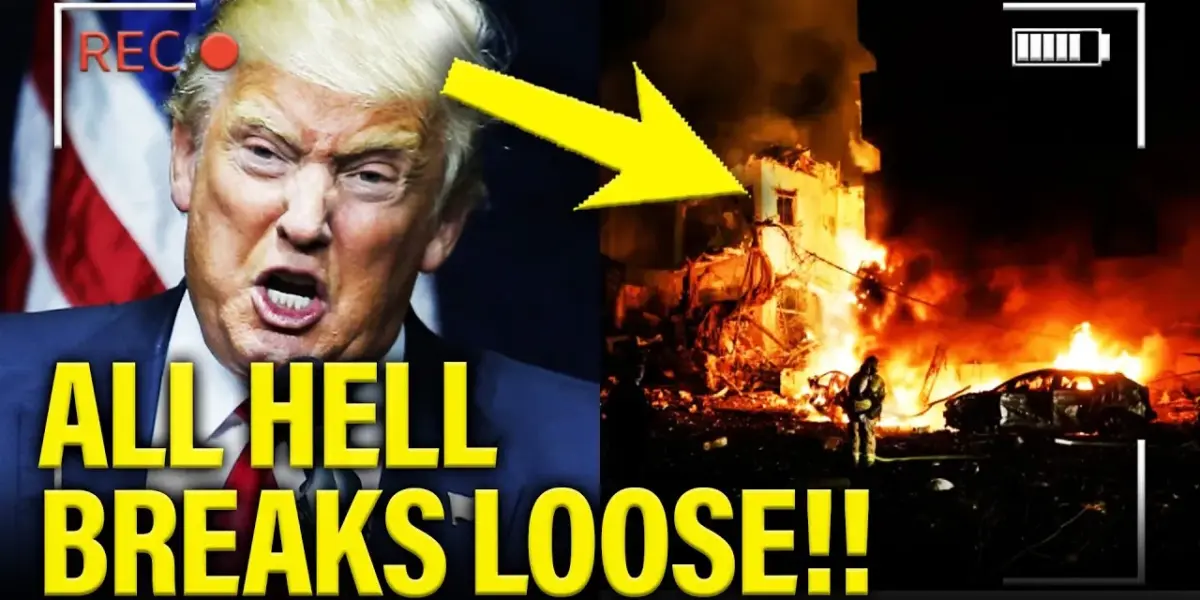
Trump’s Global Gambit Ignites Fury, Allies Flee
The world stage is currently a maelstrom of escalating tensions, with a conflict involving the United States and Iran at its epicenter. What began as a unilateral military action has seemingly backfired, triggering a wave of condemnation from traditional U.S. Allies and sowing seeds of doubt about American reliability. This dramatic shift in international relations, characterized by a breakdown in diplomatic norms and a hardening of stances, raises profound questions about the future of global order and the role of the United States within it.
Allies Sound the Alarm
The immediate aftermath of U.S.-Israeli strikes on Iran, which resulted in the death of the country’s supreme leader, has been met with stark disapproval from key international partners. Leaders from France, the United Kingdom, Canada, and Spain have all voiced strong objections, not only to the legality and justification of the military action but also to the perceived disregard for international law and consultative processes.
French President Emmanuel Macron declared the strikes were conducted “outside of international law” and that France would not participate in any offensive measures. Similarly, UK Prime Minister Keir Starmer stated, “I will not commit our military personnel to unlawful action.” The sentiment is echoed by Spanish Prime Minister Pedro Sanchez, who emphasized the importance of adhering to international law and seeking negotiated solutions over military intervention, particularly when such actions are undertaken without congressional or UN Security Council authorization.
Canadian Prime Minister Mark Carney, while acknowledging the need to prevent Iran from obtaining nuclear weapons, expressed regret that the current conflict was another example of the “failure of the international order.” He noted that the U.S. and Israel acted without engaging the United Nations or consulting allies, a point that resonates with other global leaders.
Perhaps most strikingly, Polish Prime Minister Donald Tusk signaled Poland’s intention to pursue nuclear weapons, a move driven by growing doubts about the U.S.’s commitment to European security. This represents a significant potential shift in the European security landscape, highlighting the deep-seated anxieties arising from the current geopolitical climate.
Trump’s Retaliatory Stance
In stark contrast to the calls for de-escalation and adherence to international norms, the response from Donald Trump has been one of defiance and retaliation. Instead of seeking to mend fractured alliances, Trump has openly attacked leaders who have voiced criticism. He notably dismissed UK Prime Minister Keir Starmer as “no Churchill” and threatened economic sanctions against Spain for its stance, even suggesting that the U.S. could disregard Spain’s control over its military bases.
“I told him, we don’t want to. Spain has absolutely nothing that we need other than great people. They have great people, but they don’t have great leadership.
And as you know, they were the only country that in NATO would not agree to go up to 5%… So we’re going to cut off all trade with Spain. We don’t want anything to do with Spain.”
This confrontational approach, particularly towards allies, stands in sharp contrast to the traditional diplomatic playbook, which typically emphasizes coalition-building during times of international crisis. Trump’s rhetoric and proposed actions risk further isolating the United States at a moment when global cooperation is arguably most needed.
A World in Flux: Broader Implications
The current crisis is not confined to the Middle East. The transcript highlights the far-reaching consequences of these actions, impacting global trade, energy supplies, and even prompting U.S. military involvement in regions as diverse as Ecuador and the Strait of Hormuz.
The disruption of maritime trade through the Strait of Hormuz, a critical chokepoint for global oil exports, has already sent shockwaves through Asian economies. Major shipping companies in Japan and South Korea have rerouted vessels, fearing for their oil supply. This disruption poses a significant threat to energy-dependent nations, potentially leading to price volatility and economic instability.
The U.S. military’s increased presence and escorting of tankers through the Strait of Hormuz, coupled with the provision of political risk insurance, has been framed by some as a move that could disproportionately benefit other nations, such as China, which are major importers of Middle Eastern oil. This raises questions about the strategic objectives and the potential for the U.S. To be drawn into conflicts to protect the energy interests of other global powers.
The transcript also touches upon U.S. military operations in Ecuador, ostensibly against narco-terrorism, but with undertones of potential influence tied to the Ecuadorian president’s family business and his ties to Trump. This suggests a complex web of economic and political interests intertwined with security operations.
Historical Context and Future Outlook
The current situation can be viewed as a culmination of evolving global dynamics and a potential inflection point in international relations. The post-World War II era has been largely defined by multilateral institutions and a U.S.-led security architecture. However, a growing sentiment of dissatisfaction with the existing international order, coupled with the rise of new global powers and shifting alliances, has been building for some time.
The actions described in the transcript represent a significant departure from the established norms of diplomacy and international law. The disregard for alliances, the unilateral use of force, and the retaliatory rhetoric against allies could usher in a new era of international relations characterized by increased unpredictability and a weakening of collective security mechanisms. The implications for global stability, economic prosperity, and the very fabric of international cooperation are profound.
The future outlook remains uncertain. The current trajectory suggests a potential fragmentation of global alliances and a rise in regional conflicts.
The willingness of nations like Poland to consider developing nuclear capabilities highlights the gravity of the perceived erosion of security guarantees. As the world grapples with these challenges, the decisions made by leaders, particularly concerning the use of force and the maintenance of international law, will shape the geopolitical landscape for years to come.
Why This Matters
The events described are not merely geopolitical squabbles; they have tangible consequences for global security and economic stability. The breakdown of trust between allies and the potential for escalating conflicts directly impact energy markets, international trade, and the safety of citizens worldwide.
The erosion of international law and norms, as highlighted by the reactions of European leaders, threatens to destabilize the global order that has, for decades, provided a framework for relative peace and prosperity. The choices made now will determine whether the world moves towards greater cooperation or descends into a more fractured and dangerous landscape.
Source: All HELL BREAKS LOOSE as Trump ENGULFS WORLD in WAR!! (YouTube)

Related Articles
Trump’s Troop Gambit: A Risky Mideast Play?
Reports of thousands of U.S. troops heading to the Middle East clash with President Trump's claims of an impending end to the war. This analysis explores the potential risks and high price of using ground forces as leverage, questioning if the President is prepared for the potential human and political costs.


US Blockades Iranian Ports Amid Escalating Tensions
The United States has initiated a naval blockade on Iranian ports and coastline, escalating tensions in the Middle East. Iran has responded with threats of retaliation and accusations of violating ceasefire agreements. The operation, termed 'Operation Epic Fury,' involves a significant U.S. military presence and aims to cut off vital resources to Iran.
Iran Calls Trump’s Bluff on Ceasefire
Iran is refusing to back down on a ceasefire deal, calling President Trump's bluff. They insist on their own 10-point framework and appear to be exploiting perceived weaknesses in Trump's domestic political standing. This standoff highlights complex international relations and potential shifts in global power dynamics.