Sun Tzu, Clausewitz on Iran War: Experts Weigh In
Military historians are applying the ancient strategies of Sun Tzu and Carl von Clausewitz to the escalating tensions surrounding Iran. Experts question if modern leaders have adequately calculated the risks of a conflict that could prove far more complex and consequential than anticipated.

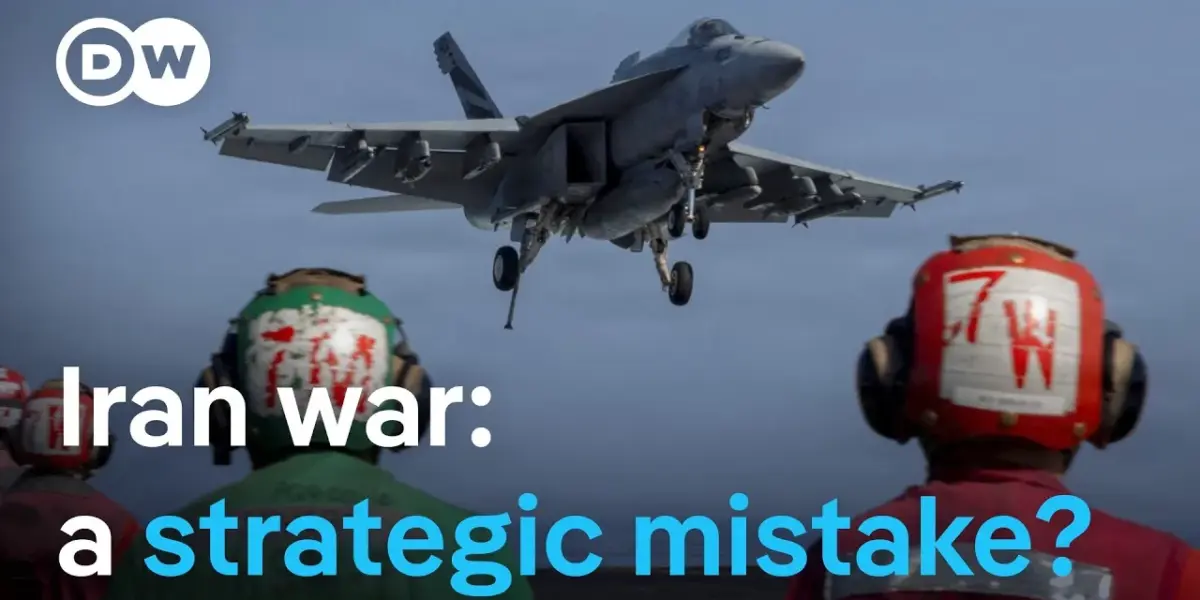
Ancient Strategies Meet Modern Conflict: Iran War Analyzed
In the midst of escalating tensions and the specter of conflict in Iran, military strategists and historians are drawing parallels to timeless principles of warfare articulated by historical giants like Carl von Clausewitz and Sun Tzu. The crucial question facing global leaders, military commanders, and the public alike is whether the current geopolitical landscape in Iran aligns with the strategic doctrines that have guided warfare for centuries, or if it represents a new and unpredictable chapter in international conflict. DW News digs into this complex interplay, consulting with Professor Hugh Strachan, a distinguished military historian from the University of St. Andrews and an advisor to defense institutions, to dissect the potential trajectory of the Iran conflict through the lens of these renowned thinkers.
Clausewitz: The Inherent Escalation of War
Carl von Clausewitz, the 19th-century Prussian military theorist, famously posited that “war is the continuation of politics by other means.” His seminal work, On War, remains a cornerstone of military education worldwide, including at prestigious institutions like West Point. Professor Strachan elaborates on Clausewitz’s perspective regarding the fundamental nature of warfare: “The first thing is that Clausewitz would say does say is that in so far as war has its own dynamic, it tends to escalate.
It will logically go to extremes because killing people actually creates a division in terms of how we behave towards each other. So you cannot assume that a war will remain limited um in the way in which it’s conducted.”
While Clausewitz acknowledged that policy objectives could potentially constrain a conflict, he fundamentally believed that war, by its very nature, possesses an inherent momentum towards escalation. This perspective raises critical questions about the perceived ease with which conflicts can be initiated versus the unpredictable and potentially uncontrollable path they may subsequently take. The statement by former U.S. President Donald Trump, who reportedly envisioned a conflict lasting only four or five weeks, stands in stark contrast to Clausewitz’s warning about the inherent tendency of war to spiral beyond initial intentions.
Sun Tzu: The Art of Calculation and Foresight
More than two millennia before Clausewitz, the ancient Chinese general and philosopher Sun Tzu, author of The Art of War, offered a different, yet equally profound, set of strategic principles. Sun Tzu emphasized meticulous planning and psychological warfare, famously advising, “The general who wins the battle makes many calculations in his temple before the battle is fought.” This tenet highlights the importance of thorough preparation and a deep understanding of both one’s own capabilities and those of the adversary before engaging in hostilities.
The current military buildup in the Gulf, involving the deployment of U.S. Fleets and aircraft carriers, has been more transparent and protracted than some previous interventions. However, Professor Strachan notes the surprise element of a potential escalation, particularly given the rhetoric surrounding peace. He questions whether the necessary calculations, as espoused by Sun Tzu, have been fully undertaken, especially concerning the long-term sustainability of such a conflict for the United States.
“I think the real issue here is that the United States does not have the capacity to sustain this over the long term. And if the Iranians are still in the fight in two weeks time, then exactly where is the United States going to find a way out of this?” Strachan posits.
The Existential Stakes for Iran
The analysis takes a critical turn when considering the differing stakes for the belligerents. While the United States might envision a limited engagement with clearly defined objectives, the Iranian regime, facing what it perceives as an existential threat, has every incentive to escalate the conflict.
Professor Strachan highlights this disparity: “That’s not possibly in Iran’s interests for it to be limited because this is now about the survival of the regime. It’s therefore an existential conflict and they have every interest in escalating it uh even at the expense of their immediate neighbors uh with the consequences that that might bring.”
This divergence in perceived stakes is particularly relevant when considering the position of Israel, which Professor Strachan suggests would view a conflict with Iran as existential. The United States, historically, has encountered difficulties when engaging in conflicts where its opponent’s survival is at stake, especially when the U.S. has not been prepared to commit the necessary resources to match an existential adversary’s commitment. The challenge of removing a regime without a clear vision for what would follow, as seen in the post-invasion landscape of Iraq, looms large.
Echoes of Iraq: A Cautionary Tale
The current situation in Iran inevitably draws comparisons to the U.S. Intervention in Iraq in 2003, a conflict widely regarded as a strategic miscalculation. Professor Strachan recalls Clausewitz’s advice, “First judge the sort of war in which you’re going to get engaged,” suggesting a lack of such critical assessment in the current context. The reliance on air and maritime power, modeled perhaps on recent Israeli military operations, and the hope for a swift, devastating impact, are strategies that carry significant risks.
Professor Strachan argues that Iran presents a far greater challenge than Iraq ever did. He points to the persistent issues that plagued the Iraq War: a fundamental misunderstanding of the country, an overreliance on exile communities for intelligence, an unclear vision for the post-conflict state, and the failure to anticipate the consequences of a quick military victory. These challenges, he contends, appear to be present in the current context, compounded by Iran’s larger size, its deep historical consciousness, and its self-perception as an ancient power.
A Lose-Lose Scenario?
The prevailing sentiment among many security analysts, including Professor Strachan, is that the current conflict in Iran is unlikely to end well, with all parties involved facing a potential lose-lose situation. This bleak outlook echoes Sun Tzu’s timeless wisdom: “The best way to win a war is to do so without ever fighting.” The ongoing developments in the region highlight the profound and enduring relevance of these ancient strategic doctrines in navigating the complexities of modern warfare.
DW News continues to provide in-depth coverage of this breaking story, offering timely updates and comprehensive analyses across its platforms.
Source: What would Sun Tzu and Clausewitz say about the Iran war? | DW News (YouTube)

Related Articles

Trump’s Troop Gambit: A Risky Mideast Play?
Reports of thousands of U.S. troops heading to the Middle East clash with President Trump's claims of an impending end to the war. This analysis explores the potential risks and high price of using ground forces as leverage, questioning if the President is prepared for the potential human and political costs.


US Blockades Iranian Ports Amid Escalating Tensions
The United States has initiated a naval blockade on Iranian ports and coastline, escalating tensions in the Middle East. Iran has responded with threats of retaliation and accusations of violating ceasefire agreements. The operation, termed 'Operation Epic Fury,' involves a significant U.S. military presence and aims to cut off vital resources to Iran.
Iran Calls Trump’s Bluff on Ceasefire
Iran is refusing to back down on a ceasefire deal, calling President Trump's bluff. They insist on their own 10-point framework and appear to be exploiting perceived weaknesses in Trump's domestic political standing. This standoff highlights complex international relations and potential shifts in global power dynamics.