Trump’s ‘Casualties’ Remark: A Betrayal of Service Members?
Donald Trump's remarks on U.S. service members killed in Iran have sparked outrage, with critics accusing him of viewing lives as bargaining chips. This analysis explores the implications of such transactional rhetoric for military morale and national leadership.

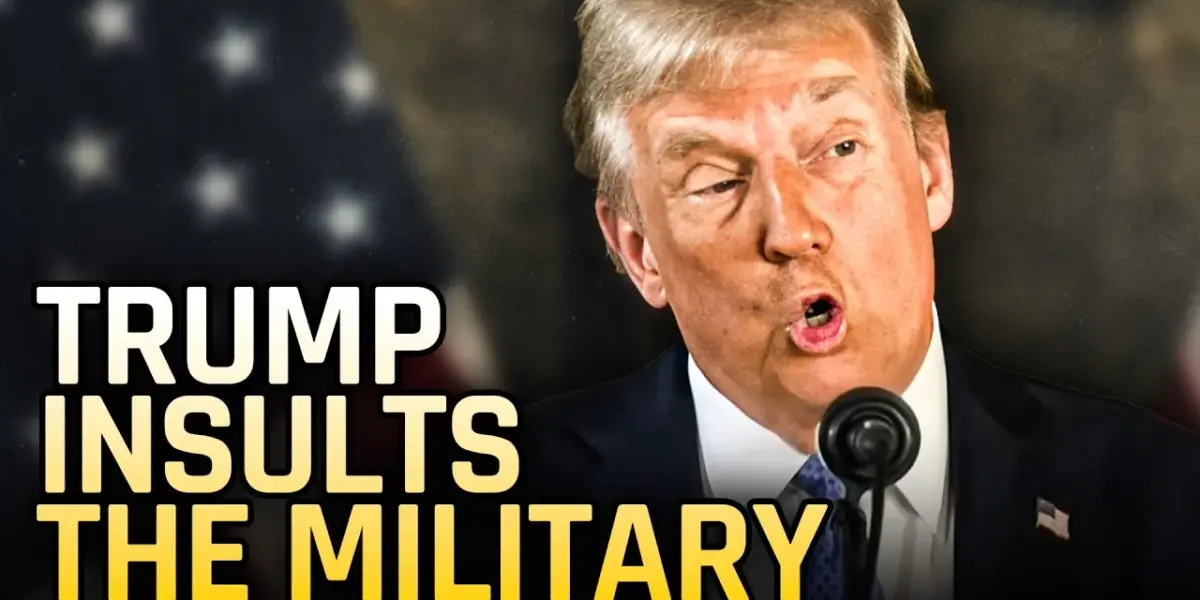
Trump’s ‘Casualties’ Remark: A Betrayal of Service Members?
The recent death of U.S. Service members in Iran, occurring within hours of deployment, has ignited a firestorm of controversy, particularly surrounding remarks made by former President Donald Trump. His comments, described as “callous and disgusting” by critics, have led to accusations that he views military lives as mere bargaining chips, a perspective that has deeply alienated many within the armed forces and their supporters.
The President’s Words and the Outrage They Sparked
Following the announcement of casualties, Trump reportedly stated, “We expect casualties with something like this. We have three, but we expect casualties. But in the end, it’s going to be a great deal for the world.
A great deal.” This statement, intended to contextualize the risks inherent in military operations, was perceived by many as dismissive of the ultimate sacrifice made by service members. The implication that these lives were an acceptable price for a “great deal” has been interpreted as a profound lack of empathy and respect for those in uniform.
The core of the criticism centers on the idea that Trump, a businessman by trade, approaches governance and foreign policy through a transactional lens. According to this viewpoint, the lives of military personnel are reduced to assets in a negotiation, expendable in the pursuit of favorable outcomes, whether they be economic or geopolitical. The suggestion that these lives might be traded for something as tangible as oil, or as abstract as geopolitical leverage with allies like Saudi Arabia and Israel, paints a grim picture of how some perceive his decision-making process.
A Transactional View of National Security?
The analysis suggests that Trump’s alleged “deal-making” approach extends to foreign relations, where military deployments and their associated risks are seen as tools to achieve broader objectives. The specific mention of oil and the influence of Saudi Arabia, coupled with the strategic interests of Israel and the ongoing business of the military-industrial complex, are presented as potential elements in this complex calculus. This perspective posits that the lives lost are not just tragic events, but calculated costs in a larger economic and political transaction, aimed at benefiting specific industries or allies, or perhaps even securing personal or party gains.
This transactional framework, critics argue, renders service members “expendable,” reduced to “nameless, faceless pawns” in a strategic game where the ultimate cost is borne by the individuals and their families. The accusation is not merely that Trump is insensitive, but that his fundamental understanding of leadership and sacrifice is flawed, leading to policies and rhetoric that devalue human life in service of perceived national interest, however narrowly defined.
The Call to Service Members: A Stark Choice
The most pointed criticism is directed at any enlisted service member who continues to support Donald Trump. This stance is framed not as political disagreement, but as a betrayal of one’s “brethren in the military.” The argument is that by supporting a commander-in-chief who allegedly views their lives as bargaining chips, these individuals are complicit in their own potential devaluation. The rhetoric implies that such support is not only misguided but actively harmful, enabling a leader whose actions and words undermine the very essence of military solidarity and honor.
The call to action for these service members is stark: if they truly believe in Trump’s leadership, they should “move on up to the front lines” and “volunteer to be cannon fodder.” This is a provocative assertion, suggesting that only those willing to face the ultimate risk, and who are perceived by Trump as expendable, truly understand the implications of their support. It’s an argument that aims to force a confrontation with the perceived reality of their situation, urging them to recognize their vulnerability within the framework of Trump’s alleged strategic thinking.
Historical Context and the Commander-in-Chief Role
Throughout history, the relationship between a nation’s leader and its military has been a delicate one, often characterized by profound respect and understanding. The role of the Commander-in-Chief is not just about strategic command; it is also about embodying the nation’s gratitude and solemnity towards those who serve.
Rhetoric that appears to trivialize casualties or frame them as mere costs in a transaction stands in stark contrast to this historical ideal. While wartime leaders have always had to make difficult decisions involving risk and loss, the *language* used to describe these realities has often been carefully chosen to honor sacrifice and maintain public trust.
Past presidents have often used moments of loss to highlight the gravity of service and the nation’s commitment to its military personnel. Conversely, any perceived insensitivity or transactional approach to military lives has historically drawn significant criticism, as it can erode morale, undermine public confidence, and create a chasm between leadership and the rank-and-file.
Why This Matters
The implications of this controversy extend far beyond a single controversial statement. It touches upon fundamental questions about leadership, the value of human life, and the nature of political rhetoric in a democracy.
For active-duty service members, the perceived attitude of their Commander-in-Chief can have a profound impact on morale and their sense of purpose. If they believe their lives are not valued beyond their utility as bargaining chips, it can foster cynicism and disillusionment.
This incident highlights the broader debate about how political leaders should engage with issues of war and sacrifice. Should the language used be primarily transactional, focusing on deals and outcomes, or should it prioritize solemnity, respect, and an acknowledgment of the immense personal cost? The criticism leveled against Trump suggests a deep-seated concern that a purely business-like approach to national security can dehumanize those who are asked to bear its greatest burdens.
Trends and Future Outlook
This episode fits into a larger trend of increasingly polarized political discourse, where strong emotional reactions are often amplified. The use of charged language, such as calling supporters of a particular leader “traitors,” reflects a political environment where nuance is often lost. The debate also highlights the ongoing tension between the perceived pragmatism of business-oriented leadership and the ethical and emotional considerations inherent in governing a nation, particularly in matters of life and death.
Looking ahead, the incident is a potent reminder of the scrutiny that political leaders face when discussing military affairs. The expectations for presidential rhetoric regarding service members are high, and any perceived deviation from empathy and respect is likely to be met with significant backlash. The future may see continued debate on how leaders balance strategic objectives with the profound human cost of conflict, and how the language they use shapes public perception and the morale of the armed forces.
Source: Trump Craps All Over Fallen Servicemembers (YouTube)

Related Articles
Maddow: Trump Aims to Humiliate Vance into Quitting
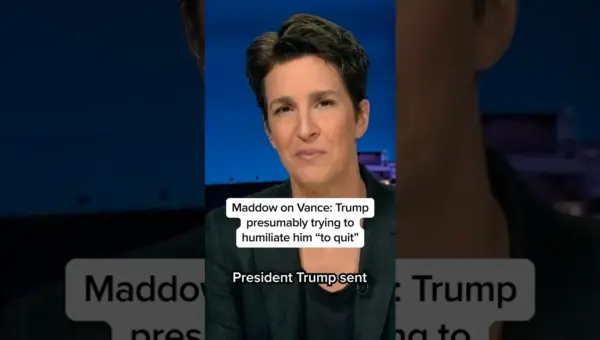
Rachel Maddow suggested on MSNBC that Donald Trump may be intentionally trying to humiliate Vice President JD Vance. Maddow believes Trump's actions could be aimed at pushing Vance to resign. This perspective follows recent setbacks experienced by Vance, highlighting a potential strategy by Trump.

Trump’s Jesus Post Cracks Christian Support Base
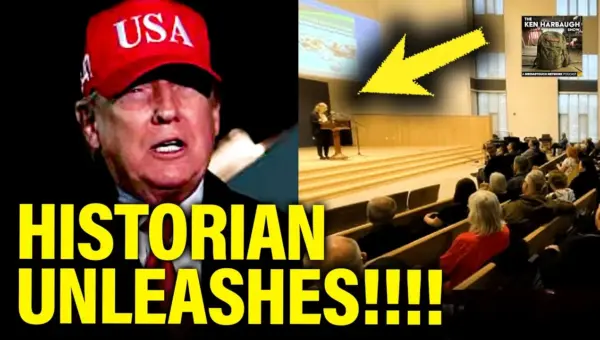
Donald Trump's AI image of himself as Jesus Christ has sparked debate, with some suggesting he may be the Antichrist. Historian Kristen Dum analyzes this event, noting a potential crack in his Christian support base despite past controversies. The incident highlights hypocrisy and divisions within the religious right, particularly between Christian nationalists and Catholics.

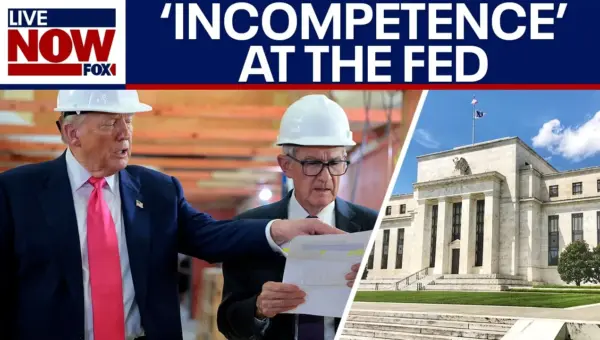
Trump Threatens Fed Chief Powell’s Job Amid Renovation Probe
President Trump has threatened to fire Federal Reserve Chair Jerome Powell if he doesn't leave his post when his term ends, citing disagreements over interest rates and the Fed's performance. The conflict is amplified by a Justice Department probe into Powell's handling of a costly Fed renovation project, which a key Republican senator is using to block a Trump nominee.