Justices Stay Put, But Senate Control Hangs in Balance
Recent reports suggest Justices Alito and Thomas will not retire this term, but the upcoming midterms could shift Senate control and impact future Supreme Court appointments. The political fight over judicial nominations continues, with lessons learned from past confirmation battles.

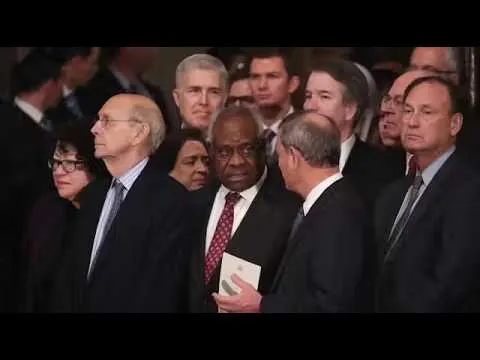
Supreme Court Justices Unlikely to Retire This Term
A recent report from Fox News suggests that Supreme Court Justice Samuel Alito is not expected to retire this term. This news comes as a relief to some who feared that a conservative justice might step down, allowing former President Donald Trump to appoint another judge. Such an appointment could further solidify a conservative majority on the court for decades to come.
This situation is particularly significant because Donald Trump, through his influence over the Senate majority, has the power to push through nominees. Even with a narrow majority, he could confirm justices regardless of public opinion. The idea of a justice retiring now, with Trump holding sway, was a major concern for those worried about the court’s future direction.
Shifting Senate Landscape Could Alter Future Appointments
While the focus has been on potential Supreme Court retirements, the political landscape for the Senate has been changing. Initially, many believed Democrats had a good chance of winning back the House. However, the map for Senate races has proven more challenging for Democrats, with many Republican-held seats now appearing vulnerable.
Several states that were once considered safe for Republicans, like Texas and Iowa, are now seen as competitive. Some reports even suggest Democrats are favored to win two of these three seats.
Meanwhile, Georgia seems likely to remain with a Democratic senator. This shift in the Senate’s potential control could significantly impact future presidential appointments to the Supreme Court.
Alito and Thomas Stay, Rolling the Dice on Senate Control
The reporting indicates that Justice Alito, and potentially Justice Clarence Thomas, are not planning to retire. This means they are choosing to remain on the court, knowing that if Democrats gain control of the Senate, their future appointments could be blocked. If a justice were to retire, and Democrats controlled the Senate, they could refuse to confirm a nominee from a future Republican president.
This decision to stay is seen by some as a gamble. If Democrats do not win the Senate, and a Republican president is re-elected, conservative justices could be appointed for many years. However, if the political tides turn, these justices might have to serve longer than they intended, possibly under a different administration or with a Senate unwilling to confirm their successors.
Clarence Thomas and John Roberts: What’s Next?
Beyond Justice Alito, attention has turned to other conservative justices. Justice Clarence Thomas, the longest-serving member of the current court, has also reportedly indicated he does not plan to retire. He has been on the court since the early 1990s and is known for his strong conservative views.
Chief Justice John Roberts, who is younger and holds a different position on the court, is not expected to retire. His role as Chief Justice and his relative youth suggest he is likely to remain in his post for the foreseeable future. The focus remains on whether any other justices might consider stepping down, though current reports suggest Alito and Thomas are staying put.
The Speed of Confirmation: A Lesson from the Past
The process of confirming a Supreme Court nominee can be incredibly fast. The confirmation of Justice Amy Coney Barrett, for example, took only about 27 days. This speed highlights how quickly a vacancy could be filled, especially if one party controls both the presidency and the Senate.
There’s concern that if Democrats regain the Senate, and a vacancy arises, Republicans might try to rush through a nominee, even between Christmas and New Year’s. This mirrors past actions, like the blocking of Merrick Garland’s nomination, where norms of Senate procedure were debated and sometimes disregarded.
Why This Matters
The composition of the Supreme Court has a profound impact on American law and society. Decisions on everything from voting rights to healthcare and environmental regulations are shaped by the nine justices. If conservative justices remain on the court, and new conservative justices are appointed, it could lead to decades of rulings that align with a particular political ideology.
The current situation highlights the importance of midterm elections. The balance of power in the Senate directly influences a president’s ability to shape the judiciary. If Democrats can win control of the Senate, they gain significant leverage over future appointments, potentially preventing conservative nominees from being confirmed.
Historical Context: Norms and Political Battles
The Supreme Court has often been a battleground for political fights. In the past, there was a greater expectation of bipartisan cooperation in confirming justices. However, recent years have seen increased partisanship, particularly regarding judicial nominations.
The blocking of Merrick Garland’s nomination by Senate Republicans in 2016, arguing it was too close to an election, set a precedent that was later challenged when Republicans confirmed Amy Coney Barrett shortly before the 2020 election. This history suggests that political calculations often override traditional norms when powerful judicial appointments are at stake.
Future Outlook: A Call for Preparedness
The upcoming midterms are crucial for the future of the Supreme Court. If Democrats manage to retake the Senate, they will have a critical window of opportunity to influence judicial appointments. This has led to calls for Democrats to be prepared to act decisively, rather than assuming good faith from their political opponents.
There is a growing sentiment among some Democrats that they must be willing to fight for power and use it to their advantage, learning from past instances where they felt outmaneuvered. This includes being ready to confirm nominees quickly or block opposing party’s choices if they hold the majority. The focus is on having a clear plan and the political will to execute it.
The book “The Day After,” with a foreword by Mark Elias, aims to provide a framework for this proactive approach. It emphasizes the need for Democrats to learn from past compromises that did not lead to reciprocated goodwill. The goal is to ensure that if and when Democrats regain power, they are ready to defend democratic institutions and the courts.
Supporters of this view believe that a failure to plan and act assertively could have serious consequences for the future of democracy. The upcoming midterm elections will be a key indicator of how this political battle for the courts will unfold.
Source: BREAKING UPDATE on Supreme Court justice STEPPING DOWN (YouTube)

Related Articles


Tariff Refunds Begin After Supreme Court Ruling
Businesses can now claim refunds for unlawful tariffs imposed under the Trump administration through a newly launched government website. U.S. Customs estimates $166 billion in refunds are owed. The lead plaintiff in the Supreme Court case described the process as successful, though new tariff challenges are expected.


Retailers Eye Billions in Tariff Refunds After Court Win
Major retailers like Walmart and Target are positioned to potentially recover billions in tariffs following a Supreme Court ruling. Starting April 20th, businesses can file claims, but uncertainty surrounds the process and how companies will use the funds. Analysts are hesitant to include these refunds in financial outlooks due to potential lawsuits and government hurdles.

Clarence Thomas Blames Intellectuals for America’s Problems
Supreme Court Justice Clarence Thomas has voiced strong criticism of intellectuals and universities, blaming them for America's problems. He argued that learning and higher education have caused founding values to be lost. This perspective draws parallels to historical political strategies that have attacked intellectualism.