Space Tech Fuels Global Economy: $455B Invested Since 2009
The global economy is powered by an 'invisible backbone' of space technology, with $455 billion invested since 2009. Recent government directives and a surge in private funding highlight the sector's growing importance. Key areas include infrastructure, distribution, and emerging markets like space stations.

Space Tech Fuels Global Economy: $455B Invested Since 2009
The global economy relies heavily on space technology, acting as an invisible backbone for numerous industries. Recent government directives and significant private investment highlight the growing importance of this sector.
The White House has issued a new space nuclear policy, aiming to prepare NASA and the Department of Defense for deploying high-power reactors in orbit by 2028, on the Moon by 2030, and for deep space missions by 2031. This ambitious plan highlights a renewed focus on space capabilities.
Venture capitalist Chad Anderson, author of “Space Economy: Capitalizing on the Greatest Business Opportunity of Our Lifetime,” argues that the space sector represents a massive opportunity for investors. He notes that while space exploration has occurred for decades, it has only recently become a distinct investment category.
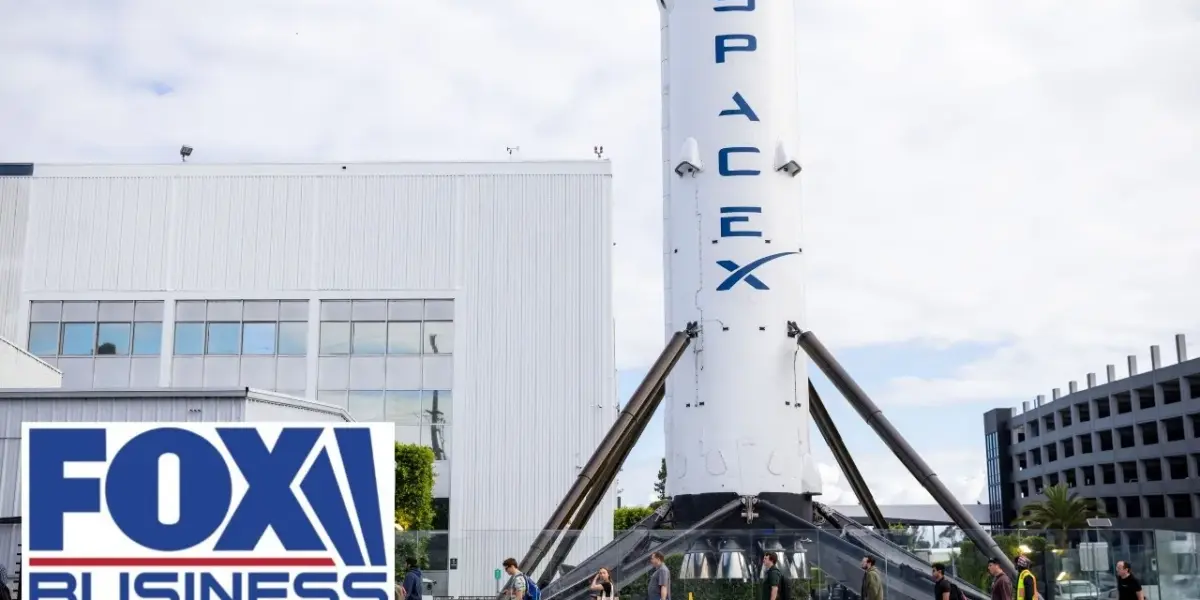
This shift is largely due to SpaceX’s success in dramatically lowering launch costs with its Falcon 9 rocket. This reduction made space accessible for new companies to innovate and test new technologies.
GPS: A Foundation for the Space Economy
Anderson points to the Global Positioning System (GPS) as a prime example of how space technology benefits the global economy. Initially developed by the government, GPS was not intended for public use.
However, in the 1980s, commercial GPS receivers became available, transforming positioning data into a valuable, accessible resource for the world. This technology has since generated trillions of dollars in economic value.
The GPS system involves infrastructure in orbit, commercial receivers that access the signal, and a vast array of software and applications built upon it. These applications support critical sectors like transportation, logistics, agriculture, and construction, fundamentally underpinning the entire global economy. Anderson’s firm, Space Capital, focuses on this broad definition of the space economy, seeing it as a major driver of future growth.
Government Role and Private Investment Surge
Historically, government programs have seeded new technologies and markets where commercial interest was initially low. This was true for space, with early development often driven by competition, such as the space race during the Cold War. Today, a strong public-private partnership is seen as essential for advancing space capabilities.
The first quarter of this year saw a remarkable $36 billion invested into the space economy. This brings the total investment since 2009, the year SpaceX became operational, to an impressive $455 billion. This surge in funding reflects growing confidence in the commercial viability of space-based technologies and services.
Space Capital’s Investment Framework
Space Capital categorizes the space economy into several key areas. Infrastructure, which includes launch services and satellite manufacturing, has attracted significant attention. In the last 36 months alone, this segment raised $56 billion, with SpaceX serving as a major catalyst.
Distribution is another critical area, encompassing companies that provide access to space-based data and services. Trimble, a company focused on positioning and navigation technology, has been a key player. This segment raised $12 billion over the past 36 months.
Applications, which build services and software on top of space data, have seen even greater investment, raising $79 billion in the same period. Companies like Waymo, involved in autonomous driving, demonstrate how space-derived data is integrated into everyday technologies.
Emerging Opportunities in Space
Emerging industries within the space economy, though currently representing a smaller portion of funding at 2%, hold significant future potential. These include areas like space stations, lunar logistics, and industrial applications in space. While many companies in these fields are private, some publicly traded companies are emerging.
Companies like Rocket Lab and Firefly Aerospace are active in launch and space systems. Private firms such as Vast, developing commercial space stations, and Impulse Space, focused on in-orbit mobility, are also attracting attention. The latter is led by a former SpaceX executive and aligns with current administration priorities for space defense and integration with initiatives like “Golden Dome,” which aims to build a robust defense architecture in orbit.
Intuitive Machines is another publicly traded company operating in this space. The ongoing development in these new markets suggests a vast number of opportunities for investors and businesses alike. The space economy’s expansion is poised to continue, driven by innovation, government support, and increasing private capital.
Source: ‘Space technology is the INVISIBLE BACKBONE that powers the global economy:’ Space Capital CEO (YouTube)

Related Articles


UFO Cover-Up Exposed: Whistleblowers Face Congress’s Silence
Mysterious SpaceX satellite signals and widespread drone sightings raise questions about classified defense programs. Despite attempts to debunk UFO reports, officials admit ignorance, while whistleblowers face systemic obstacles to revealing evidence. The upcoming documentary "The Age of Disclosure" aims to shed light on these persistent mysteries.


Claim: US Economy Is ‘Hottest’ With ‘No Inflation’
Donald Trump recently declared the U.S. economy the "hottest in the world" with "no inflation." He cited record investments and stock market highs as proof of his administration's success. This analysis examines his claims against economic data and historical context.


Reusable Rockets Slash Space Costs, Spark New Era
Reusable rocket technology is transforming U.S. space exploration by drastically cutting costs. Unlike old rockets used only once, new designs can land and be flown again, making space more accessible. This shift is fueling innovation and opening doors for more frequent and ambitious missions.