Trump’s War Costs Ignite Fury Across Political Divide
As the US expends billions on a new Middle East conflict, questions about cost, rationale, and broken promises ignite fury across the political divide. Even Fox News and conservative figures are voicing concerns, highlighting the growing public unease with escalating warfare.


Shifting Sands: The Unraveling of Trump’s Anti-War Stance Amidst Escalating Conflict
The once-clear pronouncements of Donald Trump, a candidate who promised an end to “forever wars” and championed peace, are facing a stark and costly reality. As the United States finds itself embroiled in a new conflict in the Middle East, the financial and political ramifications are beginning to ripple through the American electorate and its representatives. What started as a seemingly straightforward message of “no more wars” is now entangled in a complex web of escalating costs, questionable justifications, and a growing chorus of dissent, even from within the Republican base.
The Billion-Dollar Question: Where Does the Money Go?
The sheer financial burden of modern warfare is a sobering reality, and the current conflict in Iran is no exception. Reports indicate the war is costing approximately a billion dollars per day, with a significant portion attributed to the expenditure of high-tech weaponry.
The firing of hundreds of Tomahawk missiles, each costing a hefty $2.2 million, highlights the immense financial outlay. This stark figure raises critical questions about the sustainability of such conflicts, especially when juxtaposed with pressing domestic needs.
The debate over supplemental funding packages and the broader defense budget, with projections reaching $1.5 trillion for 2027, highlights the magnitude of these financial commitments. When even typically pro-military news outlets like Fox News, through figures like Maria Bartiromo, begin questioning the costs, it signals a potential loss of narrative control for the White House. This concern over expenditure is not confined to one network; CNBC interviews with Trump officials, such as Steve Witoff, reveal the difficult position of defending foreign military actions to an increasingly strained American populace.
Domestic Woes vs. Foreign Interventions
The core of the public’s unease lies in the perceived disconnect between the financial demands of overseas conflicts and the daily struggles of ordinary Americans. Rising prices for essentials like gas, groceries, and healthcare, coupled with concerns about housing and making ends meet, create a potent backdrop against which foreign wars are viewed. The argument that Americans “don’t want foreign wars, certainly ones that don’t have end dates and that risk American lives” resonates deeply with a significant portion of the electorate.
The defense offered by Trump loyalists often relies on hypothetical, albeit dramatic, scenarios. Steve Witoff’s assertion that a world without Donald Trump as president would face “30 or 40 nuclear bombs” from Iran, while impossible to definitively refute, sidesteps the immediate economic pressures felt by citizens. This tactic, while designed to underscore perceived presidential strength, fails to address the tangible concerns about affordability and the opportunity cost of military spending.
The Paradox of Security: Obfuscated Objectives and Recycled Rationales
A particularly perplexing aspect of the current conflict is the shifting rationale for military engagement. The initial justification for bombings, described as a “spectacular military success” that “completely and totally obliterated” Iran’s key nuclear enrichment facilities, appears to contradict the subsequent need for further strikes.
The question, “So Iran’s nuclear capabilities were obliterated 6 months ago and yet we needed to go back in because otherwise they would have been able to strike us with the apparently not anymore obliterated capabilities. Please someone make that make sense,” captures the public’s growing confusion and skepticism.
Adding another layer of complexity is the history of the Iran nuclear deal. The agreement, which aimed to prevent Iran from acquiring nuclear weapons through diplomatic means, was unilaterally withdrawn by Donald Trump. His administration then imposed severe economic sanctions, a move championed as preventing “nuclear blackmail.” However, the subsequent need for military intervention suggests that the problem the deal sought to solve persisted, leading to an “endless aimless war” as a perceived alternative, a war that even within the Trump administration’s orbit, is ambiguously defined as either nearly finished or potentially ongoing indefinitely.
A Divided Nation, A Unified Complaint
The financial burden and the unclear objectives of the conflict have fostered an unusual alignment of criticism from across the political spectrum. Figures like Marjorie Taylor Greene, a staunch conservative, express fury over the war’s cost, highlighting the national debt and questioning the rationale for American involvement, particularly when perceived to be serving foreign interests. Her sentiment, “America and Israel definitely started this war and you can’t lie that away to the American people,” reflects a deep-seated frustration.
On the progressive side, Senator Elizabeth Warren echoes similar concerns, pointing out the administration’s inability to articulate clear reasons for entering the war, its goals, or its methods. The stark contrast between the availability of funds for military action and the lack of resources for domestic programs, such as healthcare for millions, is a recurring theme. The observation that “there is no money for 15 million Americans who lost their health care, there is a billion dollars a day to spend on bombing Iran” encapsulates this perceived misallocation of national priorities.
Why This Matters
The convergence of criticism from figures like Greene and Warren signifies a critical juncture. It suggests that the issue transcends partisan politics and points to a fundamental disconnect between the administration’s actions and the public’s expectations and needs.
The war’s opportunity cost is immense; billions spent on munitions could have been allocated to critical domestic areas such as healthcare, education, infrastructure, and emergency assistance for families struggling to afford basic necessities. This is particularly poignant given that Trump’s own campaign rhetoric heavily emphasized these very domestic concerns.
Implications, Trends, and Future Outlook
The current situation poses a significant challenge to the Trump campaign’s narrative of peace and prosperity. The contradiction between his anti-war platform and the current military engagement, coupled with the escalating costs, risks alienating voters who feel betrayed by broken promises. The rising cost of oil, directly linked to the conflict, further exacerbates economic anxieties and undermines the promise of lower gas prices.
The reliance on hypothetical threats and the re-framing of foreign policy objectives highlight a potential strategy of managing public perception rather than addressing root causes. The “voluntary war” with no clear end date or objective, justified by a narrative that is increasingly difficult to sustain, could prove to be a significant vulnerability. The willingness of some within the MAGA movement to prioritize blind devotion over stated principles raises questions about the nature of political allegiance in the current landscape.
Historical Context: The Cycle of Intervention and Disillusionment
The current debate echoes historical patterns in American foreign policy, where periods of interventionism have often been followed by public disillusionment and calls for a return to domestic focus. The withdrawal from the Iran nuclear deal itself represents a departure from established diplomatic frameworks, a move that has arguably led to greater instability rather than enhanced security.
The cycle of engaging in conflicts, only to face questions about their necessity, cost, and effectiveness, is a recurring theme in American political history. The rhetoric of “peace” and “ending wars” has, at times, masked a willingness to engage in military actions when perceived strategic interests are at stake, leaving the public to grapple with the consequences.
The Choice Before the Voter
Ultimately, the narrative presented suggests a fundamental question for voters who supported Trump: Was the objective to elect a leader who would work for them, or one who demands their sacrifice? The increasing personal wealth of the former president contrasted with the persistent economic struggles of his supporters paints a stark picture. The choice appears to be between a leader who cultivates “slavish devotion” and one who upholds campaign promises and prioritizes the “working class.” As the costs of conflict mount, the stark reality of these choices becomes increasingly apparent.
The digital media landscape adds another layer of complexity, with concerns about the potential for censorship and the reliance on platforms controlled by a few tech billionaires. This highlights the importance of independent media and direct communication channels, such as newsletters, for ensuring that critical coverage can reach the public, especially when facing potential suppression.
Source: WHOA: Fox host drops BAD NEWS for Trump amid bombings (YouTube)

Related Articles

White House In Chaos: Trump’s Team Loses Grip
Recent events reveal significant disarray within the White House, marked by conflicting statements and a perceived loss of control. Simultaneously, concerns mount over immigration policy, the influence of billionaires on media, and the rising costs of war, all while proposed budgets heavily favor military spending over domestic programs.
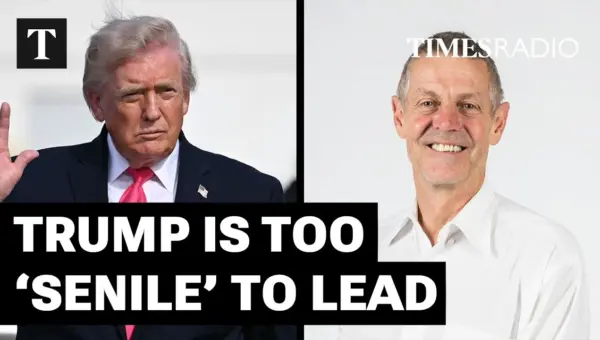
Pundits Claim Trump Shows Cognitive Decline, Urge Removal
Political commentators are raising concerns about Donald Trump's cognitive state, with some likening his behavior to King Lear and suggesting he is 'deranged.' Analysts debate whether his recent policy statements, particularly regarding Iran, reflect strategic bluffing or a genuine cognitive decline. Meanwhile, China's perspective on global conflicts highlights its relative energy independence and a pragmatic, non-ideological foreign policy.


Pence Slams Trump’s Pope Feud, Questions US Global Role
Former Vice President Mike Pence has called Donald Trump's use of AI images and language depicting him as Jesus-like "offensive." Pence also criticized current administration policies on Ukraine and questioned the Republican Party's shift towards isolationism.