Oil Surges Towards $150 Amid Escalating Iran Conflict
Escalating tensions involving Iran and the effective closure of the Strait of Hormuz are fueling fears of oil supply disruptions and potential price surges towards $150 per barrel. While some analysts predict dire consequences, options market data suggests a less extreme outlook. Geopolitical risks continue to dominate market sentiment, though some economic indicators point to underlying resilience.


Global Tensions Escalate: Iran Conflict Threatens Oil Supply
The geopolitical landscape is increasingly fraught as the conflict involving Iran expands, drawing in at least 20 nations and heightening fears of a broader global confrontation not seen since the Cold War. Iran has reportedly targeted at least 10 countries, with a significant focus on oil infrastructure and refining operations. The Strait of Hormuz, a critical chokepoint for global oil transport, is effectively closed, raising significant concerns about supply disruptions and potential price spikes.
Strait of Hormuz Under Threat
The closure of the Strait of Hormuz, through which a substantial portion of the world’s oil passes, presents a major challenge to global energy markets. While former President Donald Trump has suggested taking control of the strait, analysts caution that such a move could be perilous.
The narrow waterway, described as being as wide as Midtown Manhattan, could leave U.S. Navy vessels vulnerable to Iranian and proxy forces armed with Chinese and Russian anti-ship missiles. This proximity to land could negate defensive capabilities, making any naval presence a potential target.
Oil Price Forecasts Diverge Amid Uncertainty
The potential prolonged closure of the Strait of Hormuz has led some analysts to predict a sharp rise in oil prices, with Bloomberg suggesting a potential surge to $150 per barrel. Goldman Sachs, however, has characterized such price levels as recessionary. Despite these forecasts, options market data presents a more nuanced picture.
While call options on Brent crude are trading at a six-year premium, indicating speculative interest in higher prices, the actual strike prices being selected by traders are predominantly in the $70 to $100 range. This suggests a lack of broad market conviction for oil reaching the extreme highs predicted by some.
International Response and Diplomatic Stalemate
The international community’s response to the escalating conflict is mixed. While former President Trump has expressed optimism about de-escalation, other officials paint a starkly different picture. The Pentagon indicated that the conflict will continue until the enemy is defeated, and France is deploying its aircraft carrier to the eastern Mediterranean.
Germany’s Foreign Minister stated that Iran is not yet ready for a diplomatic solution, suggesting that a resolution is contingent on Iran’s willingness to engage. Israel’s Foreign Minister echoed this sentiment, stating that the conflict will continue until partners deem it appropriate to stop, drawing parallels to the prolonged Gaza operation.
Iran’s Stance and Countermeasures
Iran’s intelligence ministry has reported arresting 30 individuals accused of being Israeli spies and agents, while simultaneously asserting no interest in a ceasefire. Iran’s parliament speaker has warned that Tehran would retaliate against any attacks on its infrastructure, a statement made even as Iran is reportedly already targeting infrastructure in countries that have not directly attacked it.
Strategic Reserve Releases and Market Reactions
In response to potential supply shocks, the G7 nations and the International Energy Agency (IEA) are meeting to discuss the release of oil from strategic reserves. The IEA, which coordinates the release of approximately 1.2 billion barrels across 32 member states, is considering options that could include releasing up to 400 million barrels. This quantity could cover roughly four days of global oil consumption.
However, some analysts believe that the market may have already priced in such a release, citing the significant drop in oil prices from $117 to $90 per barrel following former President Trump’s comments and the news of the UAE shutting down its largest refinery. The refinery shutdown, a complete cessation of operations rather than a reduction, highlights the severe risks associated with maintaining operations in a conflict zone, as even a drone strike could ignite a massive fire.
Economic Indicators and Investor Sentiment
Amidst the geopolitical turmoil, recent economic data offers a glimmer of optimism. The ADP jobs report indicated a stronger-than-expected increase of 15,500 jobs for the week, translating to over 62,000 jobs monthly. While this data suggests a potential recovery in the labor market, some analysts remain cautious.
JP Morgan noted that last week’s market movements were characterized by de-risking rather than capitulation, maintaining a tactically bearish stance. The CNN Fear and Greed Index has rebounded to the ‘fear’ level, reflecting investor anxiety, though this may have been influenced by short-term speculation rather than fundamental shifts.
Long-Term Economic Projections Amidst Worst-Case Scenarios
Even in worst-case scenarios, some economic projections offer a less dire outlook. Rabobank scenarios, which include oil prices ranging from $120 to $150 per barrel, predict that headline inflation could rise to nearly 6% by 2026.
Despite this, they anticipate that a recession might be avoided this year, with GDP growth potentially rebounding by 2027. Inflation is projected to fall to 2.5% by next year and 1.6% by 2028, with GDP recovering to 2.5%, suggesting a potential for economic resilience even under significant inflationary pressures.
Corporate Performance and Valuations
In terms of corporate performance, the higher-income consumer segment appears robust, with American Express reporting falling delinquency rates despite declining pricing power. Microsoft’s valuation is currently at a 3-5 year low relative to the S&P 500, with no institutional sell ratings, indicating strong investor confidence in the tech giant.
Market Impact and Investor Considerations
The escalating conflict in the Middle East and the potential for oil supply disruptions remain the primary drivers of market volatility. Investors are closely monitoring developments surrounding the Strait of Hormuz and the effectiveness of strategic reserve releases. While some economic data points suggest underlying strength, geopolitical risks continue to weigh on overall market sentiment.
The divergence between predicted oil price extremes and options market positioning highlights the uncertainty surrounding the conflict’s ultimate impact. Companies with significant exposure to energy markets or those reliant on stable global trade routes may face increased headwinds. Conversely, sectors less directly impacted by energy prices or those benefiting from technological advancements may offer more stable investment opportunities.
Source: The Iran War, Oil, and Stock Market FLIP [March 10] (YouTube)

Related Articles


US Claims Victory, But Iran’s Navy Still Disrupts Shipping
Despite US claims of destroying Iran's conventional navy, recent ship seizures and ongoing disruptions in the Strait of Hormuz raise doubts. The situation highlights Iran's continued ability to threaten maritime traffic, challenging narratives of decisive victory and underscoring persistent regional instability.
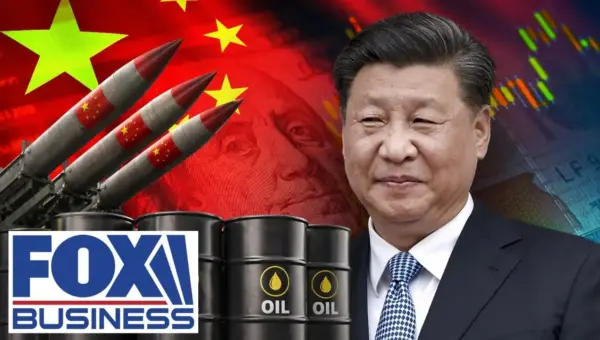
China’s Oil Sales Signal Weak Demand Amid Global Tensions
China's largest oil companies are selling off foreign crude as refinery activity hits a multi-year low, indicating weak demand. This coincides with China's assertive actions, including threats of a Taiwan blockade and pressure on Panama Canal operations. The moves suggest economic struggles may be driving Beijing's aggressive stance.


Iran Tensions Rise, Navy Secretary Fired Amidst Global Crises
Tensions are high as Iran attacks ships in the Strait of Hormuz, prompting continued U.S. blockades. Meanwhile, the Navy's top civilian leader was fired amidst growing international crises. Wildfires rage across the Southeast, and millions brace for severe weather as the NFL Draft kicks off.