Labour MPs Rally Behind Starmer’s Stance Against Trump
Labour MPs are reportedly backing Keir Starmer's critical stance on Donald Trump's Iran policy, a move that has drawn the former US President's ire. While this may strengthen Starmer's domestic position, concerns remain over potential economic repercussions and the UK's defense preparedness amidst escalating global tensions.

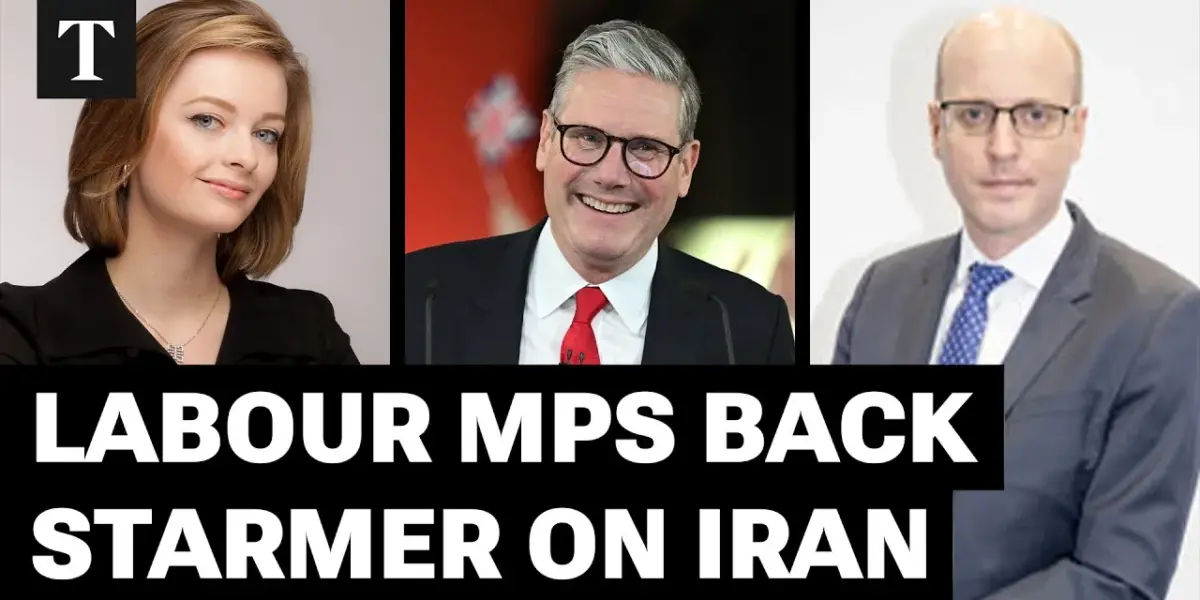
Labour MPs Unite Behind Leader’s Firm Stance on Trump’s Iran Policy
In a surprising display of unity, Labour MPs have largely backed their leader, Keir Starmer, following his critical stance on Donald Trump’s approach to the conflict in Iran. While Starmer’s position has drawn sharp criticism from the former US President, insiders suggest this move has strengthened his standing within the parliamentary party and potentially with the wider electorate.
“Abusive Special Relationship” Echoes in Parliament
During Prime Minister’s Questions, Labour backbenchers vociferously heckled the government, accusing ministers of advocating for escalation in the Iran conflict. This animated response, which felt more genuine than the usual Wednesday ritual, indicated a significant segment of the party privately believes the UK’s relationship with the US, particularly in defense, requires a serious review. Some MPs have privately echoed analyses describing the “special relationship” as “abusive,” suggesting a need for greater UK independence in foreign policy and defense matters.
Anna Mikhailova, Political Editor for Times Radio, observed the mood within the House of Commons, stating, “Privately, this is something MPs say. They do talk about the special relationship as something that perhaps needs to be reviewed even in terms of the way the defense works in terms of how interconnected the UK is with the US.” She added that some MPs echo sentiments that the relationship is “abusive,” a view that was previously promoted by an advisor to David Lammy.
Starmer’s Calculated Risk and Trump’s Retaliation
Steven Swinford, Political Editor at The Times, highlighted that while many Labour MPs are pleased with Starmer’s perceived “Hugh Grant moment”—a reference to the actor’s stance against Trump in the film Love Actually—the situation is far from simple. Starmer’s assertion that the “original US action was illegal” and “wasn’t thought through” and his subsequent remark, “we shouldn’t be hanging on every last word of Donald Trump,” have clearly irked the former President. Trump’s public criticism, including a mocking comparison of Starmer to Winston Churchill, has been seen as a direct personal attack.
However, Swinford cautioned that despite Starmer’s readiness to “fire back in kind,” the fundamental nature of the UK-US relationship, built on intelligence sharing and defense integration, remains deep. The significant concern lies with Donald Trump’s “dominant” power as president, which could be used to inflict “very, very difficult” economic consequences on the UK. Swinford stated, “Donald Trump is a very dominant president in the White House and he has the capacity and power to make it very very difficult for us going forward particularly economically and that is going to be a problem for Star.”
Economic Fallout and Defense Preparedness
The immediate concern for the government, according to Mikhailova, is not Trump’s potential retaliation but the unfolding economic repercussions of the Iran conflict itself. “The immediate issue is they are grappling with the possibility as Rachel Reeves the chancellor called it of an economic shock that could see like our listeners household bills their energy bills jump by £500,” she explained. The government’s optimistic economic forecasts have already been rendered irrelevant by events in the Middle East, highlighting the vulnerability of the UK economy to international instability.
Adding to the economic anxieties, there are serious questions about Britain’s defense preparedness. Despite the escalating tensions, the Royal Navy reportedly lacks a suitable asset in the region, with deployment taking weeks. “Everyone knew this was coming and it is baffling I think when I talk to people, some ministers as to why we weren’t better prepared for the situation,” Mikhailova commented, questioning the lack of foresight given the known responses to military actions in the region.
Defense Spending Dilemma: Rhetoric vs. Reality
The government has acknowledged the need for increased defense spending, with the Prime Minister calling for a faster and larger investment. However, the practicalities of funding such an uplift remain unclear. Treasury Minister James Murray offered “woolly answers” when pressed on the funding mechanisms, suggesting a significant gap between ambition and financial planning.
Mikhailova elaborated on the fiscal challenges: “What is needed is cuts in other budgets in a situation where there is such sluggish growth and on top of that additional economic shocks coming down the road. So what does that mean in practice for the British public?
That means a smaller welfare state, not a bigger one as is forecast. That means less spending on things like hospitals, schools, the things that Labour has been focusing on.” This points to a potential conflict between the government’s defense priorities and its commitments to public services.
Treasury-Defense Tensions and Tax Hikes
Swinford confirmed that significant tension exists between the Ministry of Defence and the Treasury over spending priorities. He noted the difficulty of making cuts, particularly to welfare, given the government’s lack of political capital.
“I can guarantee you John, that the government will not be doing any of those things [cutting welfare],” Swinford asserted. This suggests that increased defense spending, if it materializes, will likely be funded through tax rises.
The Office for Budget Responsibility has already projected that taxes will reach a record high by 2030, raising concerns about disincentivizing work and aspiration. Swinford concluded, “This isn’t a government that has a track record of making difficult choices.
There are 14 U-turns already for a reason. So, there are real question marks about where that funding is going to come from.” The current political and economic climate presents a formidable challenge for the government in balancing its defense ambitions with fiscal responsibility and public service commitments.
The recent alignment of Labour MPs behind Keir Starmer’s firm stance against Donald Trump’s foreign policy, coupled with the pressing economic and defense challenges facing the UK, sets the stage for significant political debate. As the geopolitical landscape remains volatile and domestic economic pressures mount, all eyes will be on the government’s ability to navigate these complex issues and secure the necessary funding for national security without unduly burdening the public.
Source: Labour MPs Back Starmer In Trump Row | Steven Swinford and Anna Mikhailova (YouTube)

Related Articles
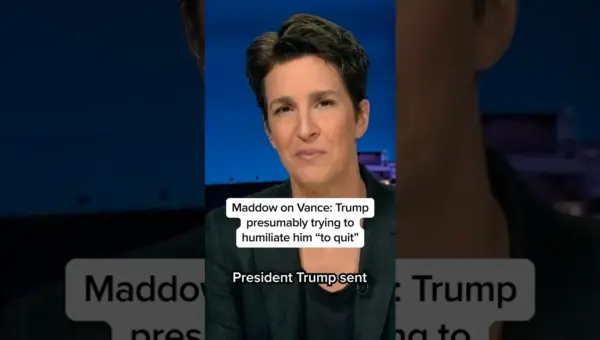
Maddow: Trump Aims to Humiliate Vance into Quitting
Rachel Maddow suggested on MSNBC that Donald Trump may be intentionally trying to humiliate Vice President JD Vance. Maddow believes Trump's actions could be aimed at pushing Vance to resign. This perspective follows recent setbacks experienced by Vance, highlighting a potential strategy by Trump.

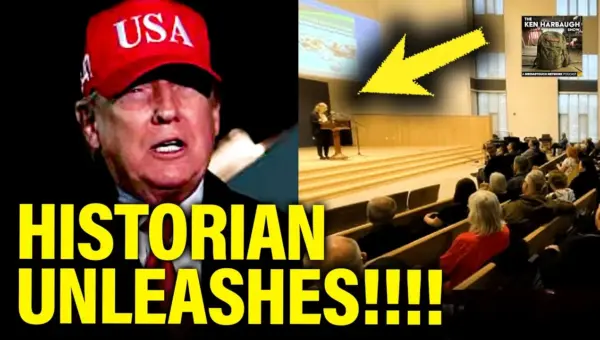
Trump’s Jesus Post Cracks Christian Support Base
Donald Trump's AI image of himself as Jesus Christ has sparked debate, with some suggesting he may be the Antichrist. Historian Kristen Dum analyzes this event, noting a potential crack in his Christian support base despite past controversies. The incident highlights hypocrisy and divisions within the religious right, particularly between Christian nationalists and Catholics.
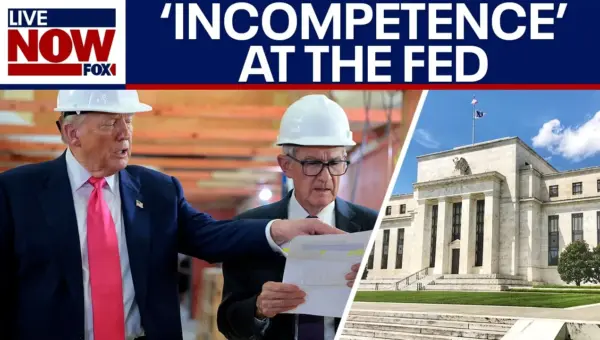
Trump Threatens Fed Chief Powell’s Job Amid Renovation Probe
President Trump has threatened to fire Federal Reserve Chair Jerome Powell if he doesn't leave his post when his term ends, citing disagreements over interest rates and the Fed's performance. The conflict is amplified by a Justice Department probe into Powell's handling of a costly Fed renovation project, which a key Republican senator is using to block a Trump nominee.