Trump’s Iran Crisis: Begging Journalists for Strategy?
Former President Donald Trump is reportedly contacting journalists to 'workshop' ideas on handling the Iran situation, signaling a potential lack of strategic advisors. This unusual approach raises concerns about leadership and foreign policy decision-making.

Trump’s Iran Crisis: Begging Journalists for Strategy?
In a development that has raised eyebrows and sparked considerable debate, former President Donald Trump has reportedly been reaching out to journalists, seeking their counsel on how to navigate the complex situation in Iran. This unusual approach, detailed by sources claiming to have received direct calls, suggests a potential vacuum in strategic thinking within Trump’s current circle, particularly concerning foreign policy and military action.
A Desperate Plea for Guidance?
According to accounts from journalists who have allegedly been contacted, Trump is actively soliciting ideas on how to address the escalating tensions with Iran. The transcript suggests these calls are not merely for informational purposes but are framed as a plea for strategic brainstorming, with Trump essentially asking reporters, “What the hell should I do over here?” This alleged behavior paints a picture of a leader seemingly adrift, lacking a clear plan or experienced advisors to guide his decisions.
The urgency of the situation is amplified by the context of recent events, where Trump was reportedly “pressured” by allies like Israel and Saudi Arabia into taking a stronger stance, or potentially military action, against Iran. The implication is that this pressure may have pushed him into a corner, leaving him unprepared for the ramifications and uncertain of the next steps.
The Exodus of Expertise?
A significant point raised in the transcript is the alleged departure of competent and skilled military strategists from the Pentagon during Trump’s previous administration. The reasons cited for these departures are varied, including a desire to remove individuals associated with diversity, equity, and inclusion initiatives, or those not perceived as loyal to Trump. This narrative suggests a pattern of sidelining experienced personnel in favor of ideological alignment or personal fealty, potentially leaving a void in critical decision-making capabilities.
Without a cadre of seasoned military minds to draw upon, the argument goes, Trump is left with few options. His own lack of direct military experience is highlighted as a contributing factor, further exacerbating the perceived strategic deficit.
The comparison is drawn to the George W. Bush administration, which, despite its controversial actions in the Middle East, is characterized as having possessed a discernible, albeit often misrepresented, plan.
Historical Context: Leadership and Strategy
The reliance on external, non-traditional sources for strategic advice is not unprecedented in political history, though the specific context of a former president calling journalists for guidance on matters of national security is particularly striking. Historically, leaders have consulted a wide range of advisors, from cabinet members and military brass to academics and even trusted informal confidants. However, the act of directly engaging journalists, whose primary role is to report on events rather than formulate policy, suggests a deviation from established protocols.
The situation also touches upon the broader trend of political polarization and its impact on governance. The emphasis on loyalty over expertise, as suggested in the transcript, can lead to a hollowing out of institutional knowledge and a weakening of deliberative processes. This can leave leaders isolated and reliant on unconventional sources of information and advice when faced with complex geopolitical challenges.
Why This Matters
This alleged situation is significant for several reasons. Firstly, it highlights the critical importance of experienced advisors and robust strategic planning in foreign policy, especially in volatile regions like the Middle East. The consequences of impulsive or ill-conceived actions can be severe, leading to regional instability, humanitarian crises, and potentially broader conflicts.
Secondly, it raises questions about the role of the media in the political landscape. While journalists are vital for informing the public and holding power accountable, their involvement in policy formulation, even indirectly, can blur ethical lines and compromise their independence. The perceived reliance on journalists for strategic input could be seen as an attempt to shape narratives or to leverage their insights for personal political advantage.
Thirdly, the narrative highlights the potential dangers of a leadership style that prioritizes personal loyalty and ideological purity over professional competence and diverse perspectives. Such an approach can lead to critical decision-making being made in an echo chamber, devoid of the rigorous debate and expert analysis necessary for effective governance.
Implications, Trends, and Future Outlook
The implications of Trump’s alleged actions are far-reaching. If true, it suggests a persistent challenge for any future Trump administration to assemble a team capable of effectively managing complex international relations. The perceived lack of strategic depth could be a significant vulnerability in an increasingly unpredictable global environment.
This situation also speaks to broader trends in political communication and leadership. In a time of social media and 24/7 news cycles, leaders are increasingly under pressure to project strength and decisiveness, sometimes at the expense of careful deliberation. The blurring lines between public relations, political strategy, and actual policy formulation are a growing concern.
Looking ahead, the incident is a cautionary tale about the importance of institutional strength, the value of expert advice, and the potential pitfalls of leadership detached from seasoned counsel. As geopolitical challenges continue to mount, the ability of leaders to engage in thoughtful, strategic decision-making, informed by a diverse range of expertise, will be more critical than ever.
The alleged reliance on journalists for strategic guidance, while unconventional, reflects a deeper concern about the availability of sound judgment and well-developed plans when faced with critical foreign policy decisions. The situation in Iran, with its intricate history and potential for escalation, demands a level of strategic acumen that, according to these accounts, may be in short supply.
Source: Trump BEGGING journalists to fix his Iran screw up (YouTube)

Related Articles
Maddow: Trump Aims to Humiliate Vance into Quitting
Rachel Maddow suggested on MSNBC that Donald Trump may be intentionally trying to humiliate Vice President JD Vance. Maddow believes Trump's actions could be aimed at pushing Vance to resign. This perspective follows recent setbacks experienced by Vance, highlighting a potential strategy by Trump.
Trump’s Jesus Post Cracks Christian Support Base
Donald Trump's AI image of himself as Jesus Christ has sparked debate, with some suggesting he may be the Antichrist. Historian Kristen Dum analyzes this event, noting a potential crack in his Christian support base despite past controversies. The incident highlights hypocrisy and divisions within the religious right, particularly between Christian nationalists and Catholics.
Pakistan Navigates Tehran’s Tense Diplomacy
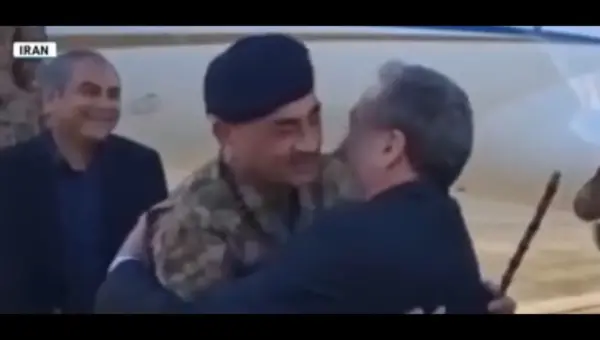
Pakistani officials are mediating talks between Iran and the US amid rising tensions, while the US also works to calm conflict between Israel and Lebanon over Hezbollah. Israel remains militarily prepared and committed to disarming Hezbollah.