Maine Democrats Divided: Primary Pits Newcomer Against Incumbent
Maine Democrats face a critical Senate primary, with Governor Janet Mills challenged by progressive newcomer Graham Plattner. Polls show Plattner leading, highlighting a generational divide and voter desire for change. The race reveals a disconnect between national party leadership and local sentiments, as Democrats weigh experience against perceived electability in their bid to unseat Republican Senator Susan Collins.

Maine Democrats Divided: Primary Pits Newcomer Against Incumbent
Maine Democrats are facing a crucial U.S. Senate primary that could determine their party’s chances of winning control of the Senate in November. The race highlights deep divisions within the party over ideology and generational change.
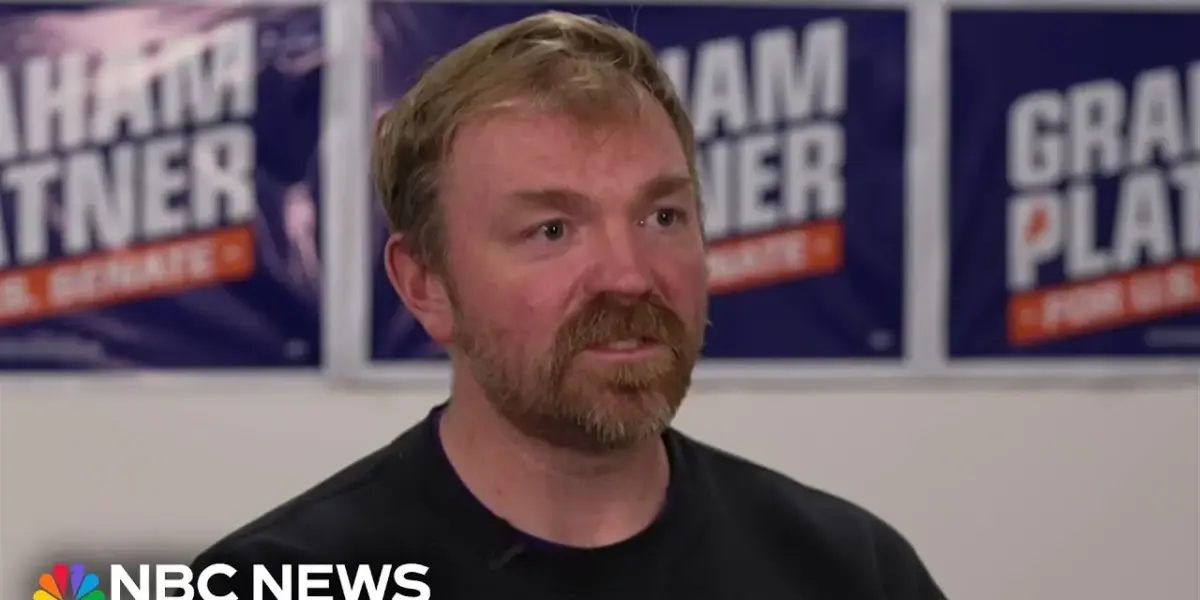
Incumbent Governor Janet Mills, 78, is running against 41-year-old progressive newcomer Graham Plattner. Polls show Plattner leading by a significant margin, suggesting voters may be looking for a fresh face over the established politician.
Governor Mills, seen as the establishment candidate, believes her experience and record speak for themselves. She told NBC News reporter Sahil Kapur that she focuses on direct engagement with voters, talking to people one-on-one and in small groups. Mills emphasized her ability to get things done for Maine, suggesting voters already know her and her accomplishments.
“I do what I always do and that is go out and talk to people one on one, small groups, getting to know what’s on people’s minds. I’ve done things, I’ve gotten stuff done for people in Maine.”
However, some voters, like Jennifer, 61, a moderate from Holden, are leaning towards Plattner despite some reservations. She expressed a desire for change and sees Plattner as younger and new, but worries about Mills’ age.
Mills responded to these concerns by pointing out that Plattner is the same age as other politicians, like J.D. Vance, suggesting age alone is not the deciding factor.
Mills argued that her experience is key. “Age isn’t the issue; I have experience.
I know how I can go there on day one and get things done,” she stated. This highlights a core difference: Mills emphasizes proven leadership and readiness to govern, while Plattner and some voters are prioritizing a new perspective and perceived electability.
Plattner’s Appeal and Party Disconnect
Graham Plattner, who has campaigned with figures like Senator Elizabeth Warren, attributes his polling lead to voter exhaustion with traditional politics. He believes negative ads from Mills’ campaign have backfired, increasing his support. Plattner argues that voters are tired of negative and performative politics that avoid policy discussions.
“I think there’s just an exhaustion with this kind of politics now in the electorate,” Plattner said. “Our support has gone up. And so I think people are sick and tired of this, this negative performative politics, a politics that is not remotely built around discussing policy.” He positions his campaign as different, focusing on direct community connection and organization.
NBC News reporter Sahil Kapur noted a significant disconnect between Democratic leadership in Washington and the sentiments of voters on the ground in Maine. While party leaders like Senator Chuck Schumer back Mills, seeing her as a safe choice to defeat Republican Senator Susan Collins, the feeling among many Maine Democrats is different. Kapur observed that these voters are ready for change and have lost trust in party leadership, favoring younger, more populist candidates.
Voters Seek Electability and New Ideas
Interviews with Maine voters revealed a complex mix of priorities. Some expressed concerns about Plattner’s past statements on sexual assault and a controversial tattoo, questioning his readiness.
Others, however, are willing to overlook these issues if they believe he can defeat Senator Collins. Jennifer, a voter, stated, “I have issues with Graham Plattner’s past, and I don’t know if zebras can change their stripes, but I’m curious, and I basically I’m for anyone who can defeat Susan Collins.”
Conversely, some voters strongly support Mills, citing her experience and intellect. One voter commented, “Janet Mills is the one who has the the the grit, the experience, the intellect to go up against Susan Collins and finally, finally get her out of the Senate.” Yet, the desire for new perspectives is strong, with another voter saying, “I think she’s done a great job as governor, but I’m excited to have someone else with new ideas and who’s really willing to fight for Maine people.”
The question of electability looms large. Many voters are not necessarily enthusiastic about Plattner personally but see him as the more viable option to unseat Collins.
Kapur observed that voters are looking for qualities beyond simple likeability, seeking someone who stands out and can win. He noted the “yawning gap” between the candidates’ standing and party leadership’s preferences, suggesting a potential shift in the Democratic base’s priorities.
Plattner’s Anti-War Stance and Vision for Power
Plattner, an Iraq War veteran, brings a unique perspective on foreign policy and the use of power. He expressed frustration with what he sees as a continuation of past mistakes by those in power, likening it to the decisions that led him to war. Plattner feels that politicians can act without justification, a sentiment he connects to current events.
He advocates for reimagining how power is exercised, especially by Democrats. Plattner believes the party has forgotten that power comes from more than just institutions.
He calls for organizing an anti-war movement and mobilizing people outside of traditional structures. “Power can be secondary outside of the institutions coming from things like movements, coming from things like organizing people,” Plattner stated.
Voters in Maine are reportedly angry about the war in Iraq, linking it to rising prices and a desire for domestic investment. Plattner is seen as capitalizing on this sentiment, using his personal experience to connect with voters on a deeper level. Governor Mills has also sharpened her attacks on the war, presenting constitutional, moral, and economic arguments against it.
Looking Ahead: The Road to November
Senator Susan Collins, who has voted to continue the war, has indicated she might change her stance after 60 days. This suggests she is aware of the public’s sentiment, including in Maine. The primary outcome in Maine will be a significant indicator of whether the Democratic Party can bridge the gap between its leadership and its base, and whether a progressive challenger can overcome an entrenched incumbent to face Collins in the general election.
Source: ‘Jarring disconnect’: Maine voters at odds with Democratic leadership in high-stakes Senate primary (YouTube)

Related Articles


Iraq War Fuels Outsider’s Surge in Key Maine Senate Race
Oyster farmer Grant Platner is surging in Maine's Senate primary, using his veteran status and anti-war stance against Governor Janet Mills. Platner leads Mills significantly in polls, despite past controversial Reddit posts. The winner will face Republican Senator Susan Collins, who is also facing pressure over her support for military action.


US Senate Forum: Support for a Free, Non-Nuclear Iran
A US Senate forum focused on how America can support a free, non-nuclear Iran, featuring lawmakers and the NCRI. Speakers highlighted the Iranian regime's oppression and the organized resistance movement's role in seeking democratic change. The event underscored the need for international backing for the Iranian people's aspirations for freedom and human rights.


Senate Advances Markwayne Mullin for DHS Chief Role
The U.S. Senate has voted to advance Markwayne Mullin's nomination for Secretary of Homeland Security, with a final confirmation vote expected soon. The procedural vote passed 54-37, overcoming controversy from Mullin's confirmation hearing. Meanwhile, Allen Armstrong has been chosen to replace Mullin in the Senate.